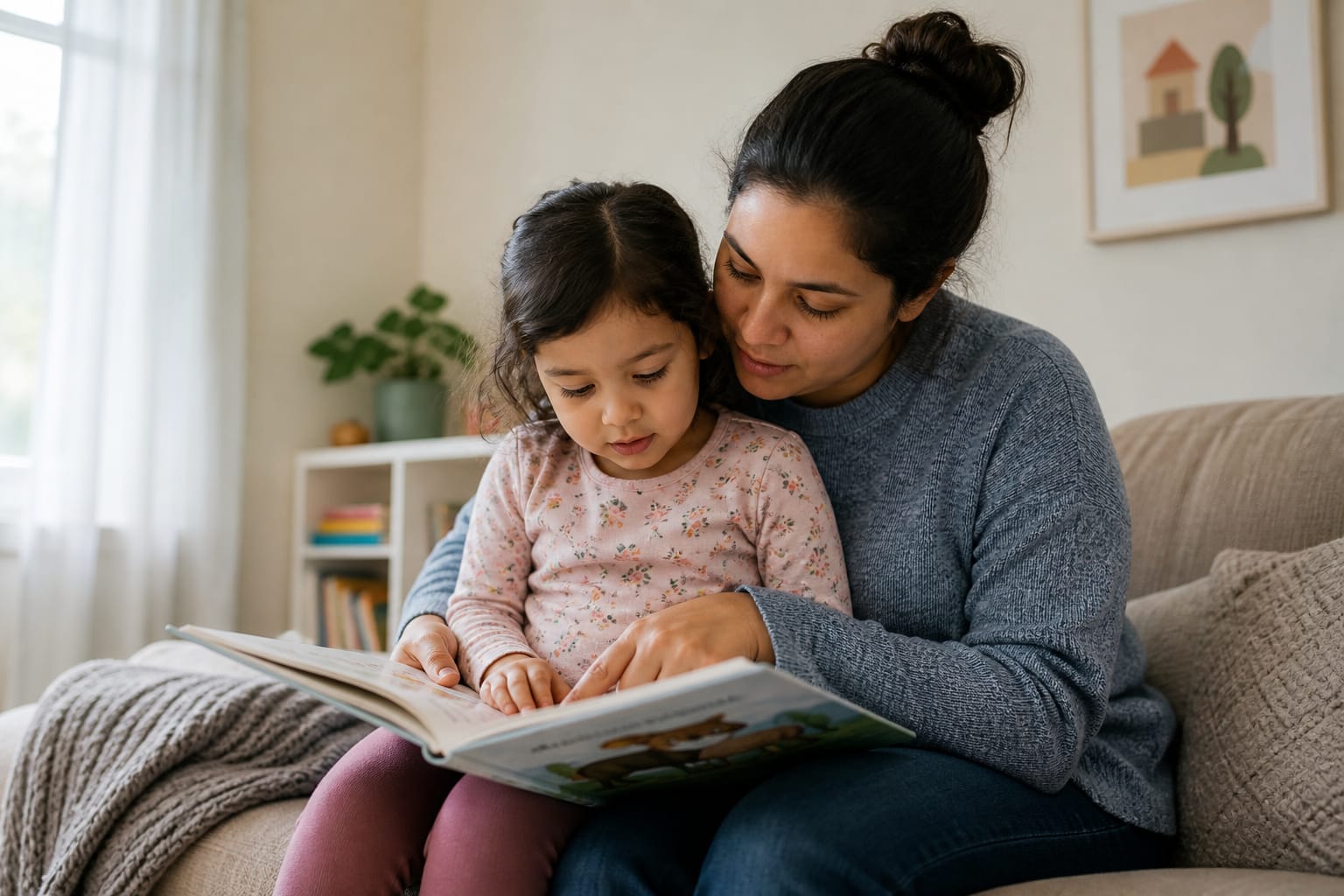
Exploring Parent-Child Shared Reading Practices with Preschoolers Before, During, and After the COVID-19 Pandemic
-
By
-
Kwanghee Jung
-
W. Steven Barnett
-
August 31, 2026
Clinical Scorecard: Exploring Parent-Child Shared Reading Practices with Preschoolers Before, During, and After the COVID-19 Pandemic
At a Glance
| Category | Detail |
|---|
| Condition | Parent-Child Shared Reading Practices |
| Key Mechanisms | Impact of COVID-19 on reading frequency and associated socioeconomic factors. |
| Target Population | Parents of preschool-aged children (3-5 years) in the US. |
| Care Setting | Home learning contexts. |
Key Highlights
- Frequent reading defined as reading at least 3 times weekly.
- Reading frequency decreased significantly during the pandemic.
- Parental education and household income positively associated with reading frequency.
- Single-parent households showed reduced odds of frequent reading.
- Access to physical books linked to higher odds of frequent reading.
Guideline-Based Recommendations
Diagnosis
- Evaluate patterns of shared reading among preschool-aged children.
Management
- Encourage access to physical books and culturally relevant materials.
Monitoring & Follow-up
- Track changes in reading frequency and associated factors over time.
Risks
- Consider potential recall and social desirability bias in parent-reported measures.
Patient & Prescribing Data
Parents of children aged 3 to 5 years.
Interventions should pair book access with culturally responsive approaches.
Clinical Best Practices
- Promote shared reading as part of daily routines.
- Address barriers to reading such as parental stress and work schedules.
- Support families in integrating reading into everyday activities.
Related Resources & Content