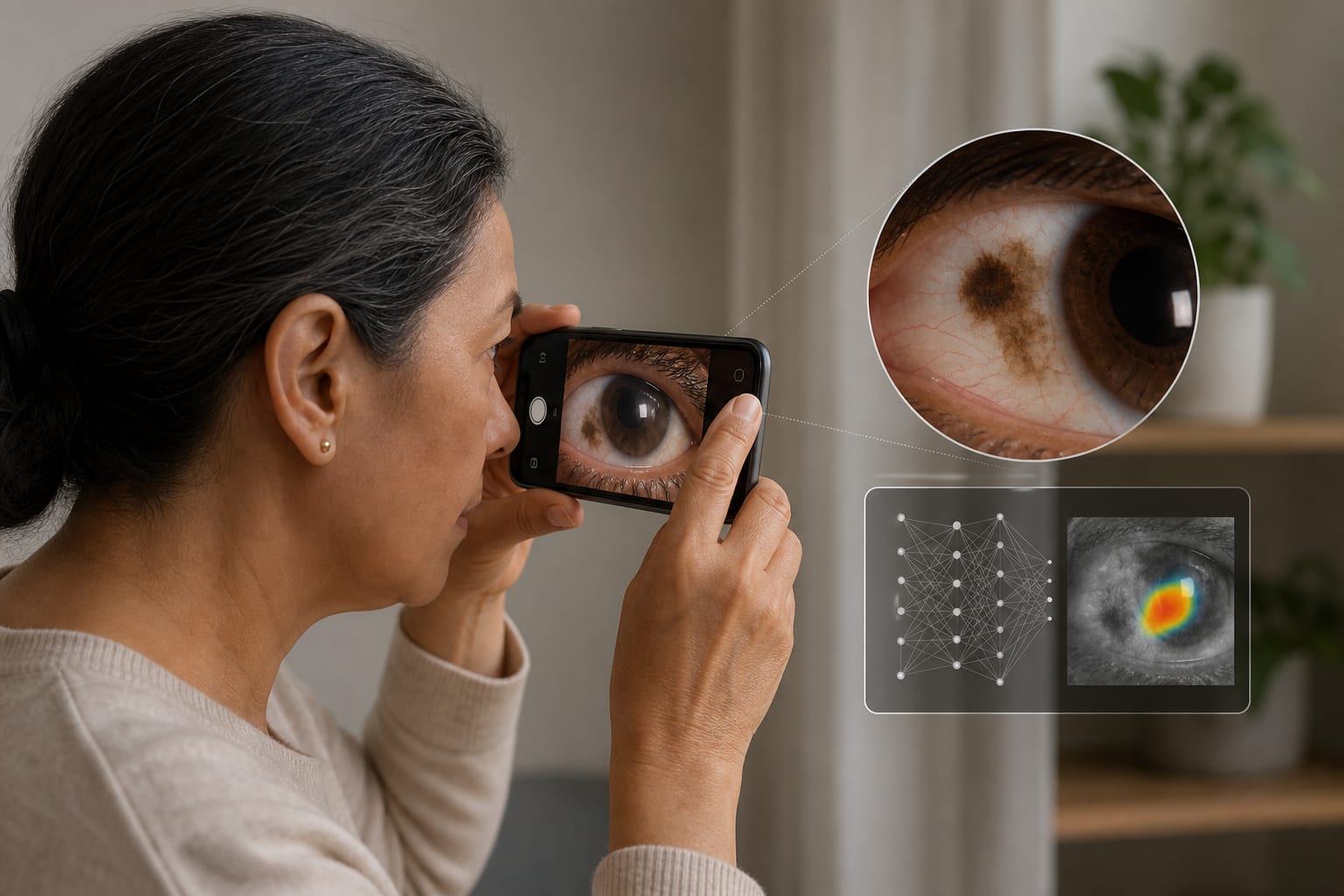
Smartphone-Based Proactive Self-Screening for Ocular Surface Malignancies: A Nonrandomized Clinical Trial - Scorecard - MDSpire

Mobile Device-Enabled Proactive Self-Assessment for Ocular Surface Cancers: A Nonrandomized Clinical Investigation

  • By

  • Ruixin Wang

  • Shaowei Bi

  • Duoru Lin

  • Mingyuan Li

  • Lanqin Zhao

  • Yukun Zhou

  • Ling Jin

  • Wenben Chen

  • Ruiyang Li

  • Yuanjun Shang

  • Huasheng Yang

  • Rongxin Chen

  • Wei Xiao

  • Siming Ai

  • Jianbing Li

  • Shiqi Ling

  • Xiaohang Wu

  • Zhixiong Li

  • Guiqin Liu

  • Yinyue Lu

  • Wen Lin

  • Huiying Rao

  • Xiangda Meng

  • Hua Yan

  • Cong Nie

  • Min Zhu

  • Huijing Ye

  • Haotian Lin

  • July 1, 2026

Share

Clinical Scorecard: Mobile Device-Enabled Proactive Self-Assessment for Ocular Surface Cancers: A Nonrandomized Clinical Investigation

At a Glance

CategoryDetail
ConditionOcular Surface Cancers
Key MechanismsAI-driven diagnostic system for smartphone deployment, integrating public education and self-screening.
Target PopulationIndividuals at risk for ocular surface tumors, particularly in regions with low disease awareness.
Care SettingMobile health platforms for screening and referral.

Key Highlights

  • 42% of patients with rare diseases are initially misdiagnosed.
  • Ocular surface tumors often misinterpreted as benign lesions.
  • Mobile health platforms can enhance early detection and access to care.
  • CaptureTumor (CaT) combines AI, public education, and referral pathways.
  • Study involved a nationwide implementation trial across China.

Guideline-Based Recommendations

Diagnosis

  • Utilize AI-enhanced smartphone applications for early detection of ocular surface tumors.

Management

  • Implement structured referral pathways to specialized ocular oncology centers.

Monitoring & Follow-up

  • Conduct regular screenings using mobile health tools to identify at-risk individuals.

Risks

  • Delays in diagnosis can lead to advanced disease, facial disfigurement, and vision loss.

Patient & Prescribing Data

Individuals with potential ocular surface lesions, particularly in underserved areas.

Mobile applications can facilitate proactive self-assessment and timely referrals.

Clinical Best Practices

  • Integrate mobile health solutions with public education to raise awareness.
  • Ensure accessibility of AI-driven screening tools for broader populations.
  • Establish feedback loops between screening and specialist care.

Related Resources & Content

Original Source(s)

Related Content