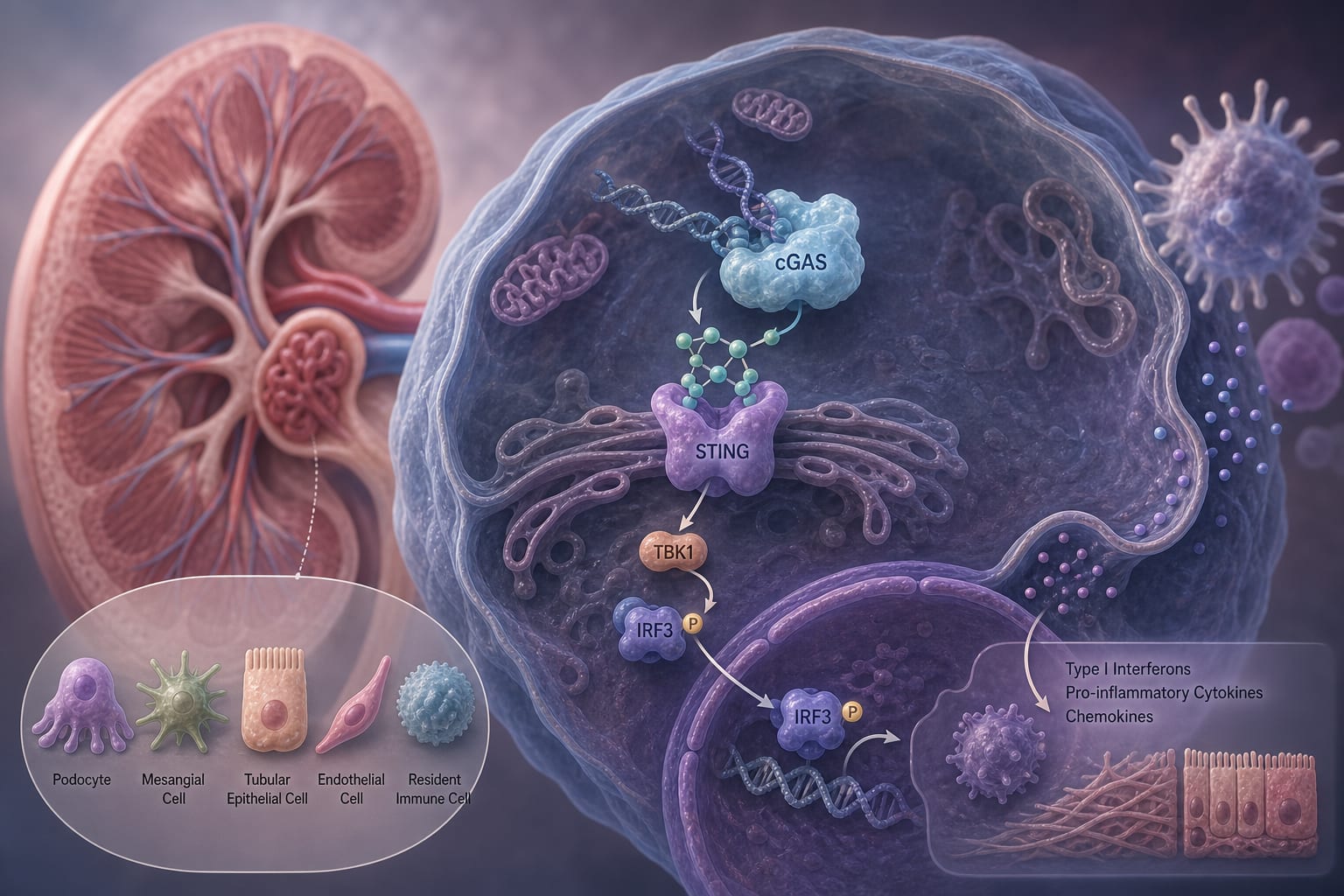
cGAS-STING pathway in innate immunity and its cell-specific role in kidney diseases
-
By
-
Miaotao Wei
-
Huasheng Luo
-
Wanglong Liu
-
Tongtong Ma
-
Peng Wang
-
June 23, 2026
-
Clinical Scorecard: The Role of the cGAS-STING Signaling Pathway in Innate Immunity and Its Cell-Specific Functions in Renal Disorders
At a Glance
| Category | Detail |
|---|
| Condition | Kidney Diseases |
| Key Mechanisms | Activation of the cGAS-STING pathway triggers inflammatory responses through the production of type I interferon and pro-inflammatory cytokines. |
| Target Population | Patients with chronic kidney disease (CKD) and acute kidney injury (AKI). |
| Care Setting | Clinical treatment and basic research. |
Key Highlights
- cGAS detects cytoplasmic DNA and initiates immune responses.
- The cGAS-STING pathway is implicated in inflammation, fibrosis, and cell injury in renal disorders.
- Dysregulation of this pathway contributes to the pathogenesis of kidney diseases.
- The pathway's activation is observed in various renal cell types.
- Potential therapeutic target for innovative treatments in kidney diseases.
Guideline-Based Recommendations
Diagnosis
- Monitor activation of the cGAS-STING pathway in renal disorders.
Management
- Consider targeting the cGAS-STING pathway for therapeutic interventions in kidney diseases.
Monitoring & Follow-up
- Assess inflammatory markers associated with cGAS-STING pathway activation.
Risks
- Dysregulated activation may lead to exacerbation of kidney disease.
Patient & Prescribing Data
Individuals with chronic kidney disease and acute kidney injury.
Research indicates the cGAS-STING pathway may be a viable target for new therapies.
Clinical Best Practices
- Evaluate the role of the cGAS-STING pathway in individual patient cases.
- Incorporate findings from basic research into clinical practice for kidney disease management.
Related Resources & Content