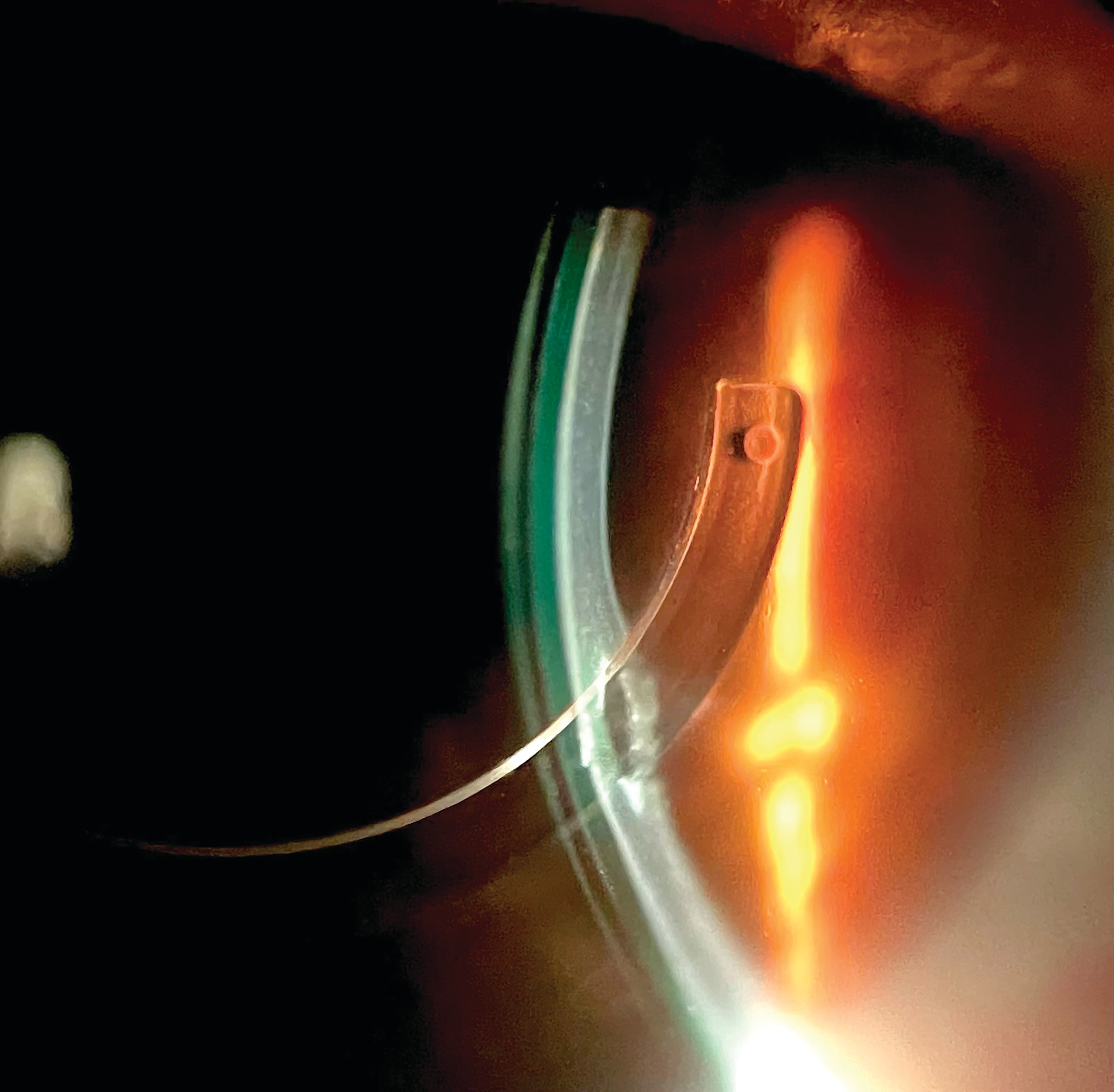
GP Insights: Aspheric and EDOF Lenses for Presbyopia
Explore how new multifocal contact lens technologies are enhancing visual freedom for presbyopic patients, with unique design options tailored to individual needs (Frogozo, 2024).
Clinical Scorecard: GP Insights: Aspheric and EDOF Lenses for Presbyopia
At a Glance
Category Detail
Condition Presbyopia Key Mechanisms Multifocal contact lenses (MF) designed to provide visual freedom from spectacles through aspheric and extended depth of focus (EDOF) optics. Target Population Individuals with presbyopia requiring vision correction for multiple distances. Care Setting Optometry and ophthalmology practices.
Key Highlights
Aspheric MF lenses utilize diffractive optics for flexible vision across distances. EDOF lenses provide a continuous focal point, enhancing depth of focus without discrete foci. Both lens types can leverage the eye's natural higher-order aberrations for improved vision. Aspheric lenses may cause glare and halos, particularly at higher add powers. EDOF lenses may struggle with providing sufficient near power for higher presbyopia corrections. Guideline-Based Recommendations
Diagnosis
Assess visual needs and lifestyle to determine appropriate MF lens design. Management
Consider both aspheric and EDOF lenses based on individual patient requirements. Monitoring & Follow-up
Evaluate patient comfort and visual acuity regularly after lens fitting. Risks
Monitor for symptoms of glare and halos with aspheric lenses and retinal image quality with EDOF lenses. Patient & Prescribing Data
Presbyopic individuals seeking multifocal vision correction.
Increased parameter choices such as daily disposability and astigmatism correction enhance fitting options.
Clinical Best Practices
Utilize knowledge of lens optics to recommend the best MF lens for each patient. Stay updated on advancements in MF technologies to provide optimal care. Related Resources & Content