Clinical Scorecard: Preoperative nTMS Evaluation: An Effective Method for Identifying Potential Motor Impairments in Patients with Brain Tumors
At a Glance
Category
Detail
Condition
Motor impairments related to brain tumors in motor eloquent areas
Key Mechanisms
Preoperative navigated Transcranial Magnetic Stimulation (nTMS) mapping of motor cortex and corticospinal tract involvement, neurophysiological parameters including resting motor threshold (RMT), recruitment curve (RC), and cortical silent period (CSP)
Target Population
Patients with malignant glioma in presumed motor eloquent brain areas
Care Setting
Preoperative neurosurgical planning and evaluation
Key Highlights
nTMS enables individualized preoperative mapping of motor eloquent cortex to guide surgical resection strategies.
A regression model using tumor infiltration, tumor-to-corticospinal tract distance, and RMT ratio predicts postoperative motor deficits.
Additional neurophysiological parameters (RC and CSP) assessed by nTMS may improve prognostic accuracy for postoperative motor outcomes.
Guideline-Based Recommendations
Diagnosis
Use nTMS to localize motor eloquent areas preoperatively in patients with brain tumors.
Assess tumor infiltration of motor cortex and distance to corticospinal tract via MRI and nTMS data.
Measure neurophysiological parameters including RMT, RC, and CSP to evaluate motor system excitability.
Management
Integrate nTMS mapping data into surgical planning software to optimize resection while preserving motor function.
Use individualized risk stratification models based on nTMS and tractography to guide extent of tumor resection.
Monitoring & Follow-up
Perform preoperative and early postoperative MRI scans (within 24 hours) to assess tumor resection and motor tract integrity.
Evaluate motor function using standardized scales (MRCS, KPS) preoperatively, on postoperative day 7, and at 3 months follow-up.
Risks
Postoperative motor deficits correlate with reduced quality of life and shorter survival; thus, accurate risk assessment is critical.
Incomplete mapping or inaccurate localization may increase risk of functional deficits.
Patient & Prescribing Data
170 patients aged 20–82 years with malignant glioma in motor eloquent areas
Preoperative nTMS mapping combined with MRI and neurophysiological parameters informs surgical strategy to maximize tumor resection while minimizing motor deficits.
Clinical Best Practices
Apply bihemispheric nTMS evaluation of resting motor threshold (RMT) to determine motor cortex excitability.
Measure recruitment curve (RC) by applying multiple TMS pulses at varying intensities to assess corticospinal neuron excitability.
Assess cortical silent period (CSP) as a marker of GABA-B receptor-mediated cortical inhibition using standardized stimulation protocols.
Use nTMS motor positive stimulation sites as seed regions for tractography to delineate corticospinal tract involvement.
Incorporate nTMS data into neuronavigation systems for precise surgical planning.
by Ina Moritz, Melina Engelhardt, Tizian Rosenstock, Ulrike Grittner, Oliver Schweizerhof, Rutvik Khakhar, Heike Schneider, Andia Mirbagheri, Anna Zdunczyk, Katharina Faust, Peter Vajkoczy, Thomas Picht
Aviva Abosch, M.D., Ph.D., a neurosurgeon at Baptist Health Miami Neuroscience Institute, part of Baptist Health Brain and Spine Care, was installed as the Esernia Endowed Chair in Surgical Treatment of Adult Epilepsy and Movement Disorders.
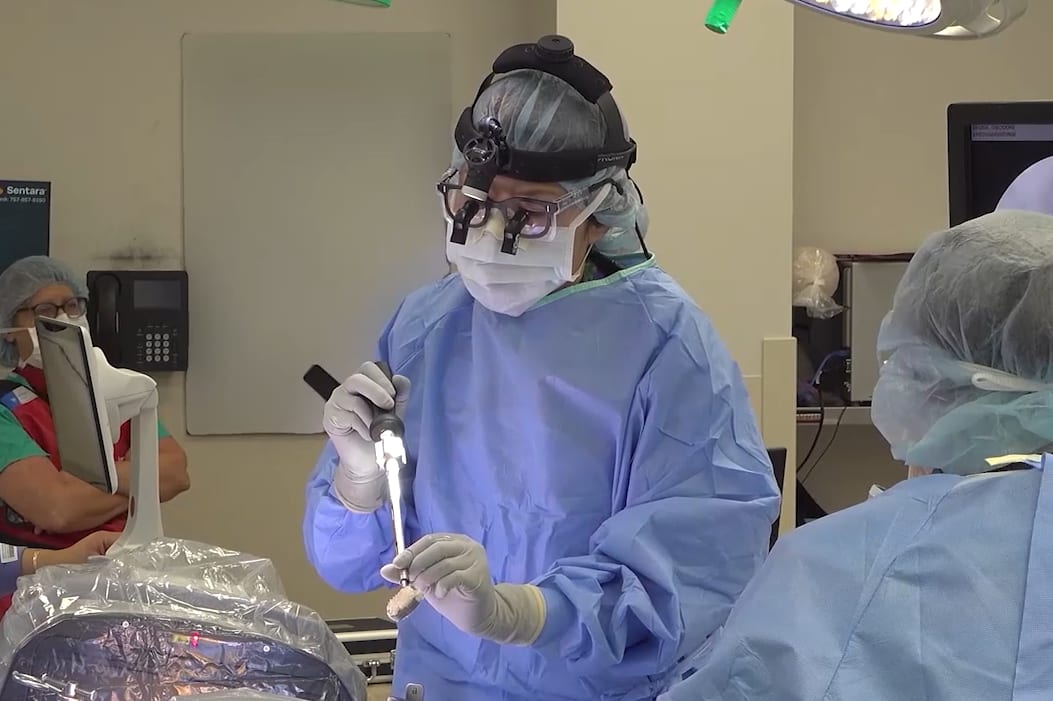
In this procedural case review, vascular surgeon Dr. Samuel Steerman and neurosurgeon Dr. Shannon Clark collaborate to perform an anterior lumbar interbody fusion (ALIF).