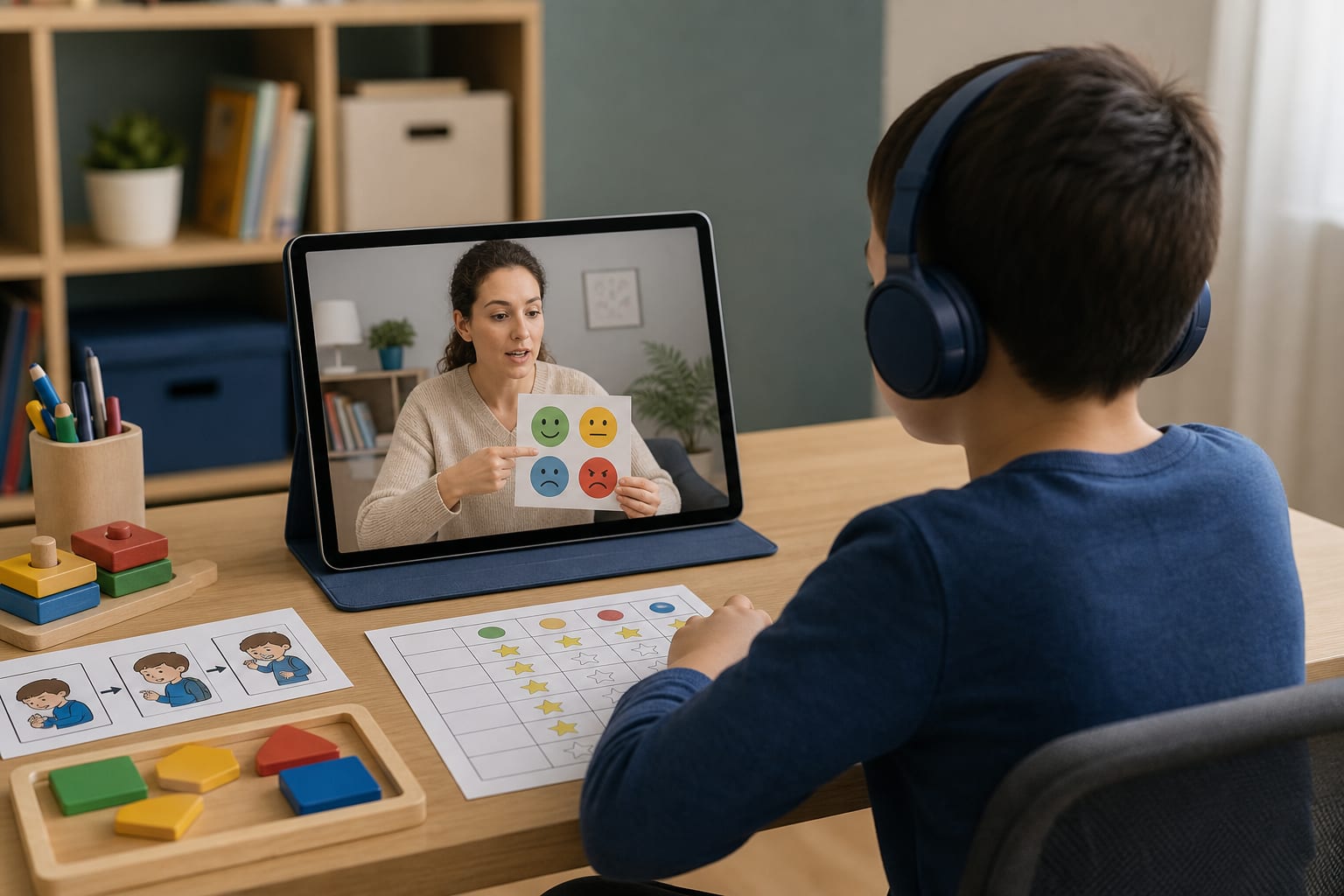
Telerehabilitation in children and adolescents with intellectual disability: a systematic review
-
By
-
Martina Micai
-
Letizia Gila
-
Angela Caruso
-
Daniela Morelli
-
Maria Grazia Totino
-
Giulia Balboni
-
Carmen Belacchi
-
Alessandra Colucci
-
Chiara Fantini
-
Tiziana Metitieri
-
Margherita Orsolini
-
Alessandra Rampazzi
-
Ciro Ruggerini
-
Cristiana Stefani
-
Marco Bertelli
-
Francesca Fulceri
-
Maria Luisa Scattoni
-
June 11, 2026
-
Clinical Scorecard: Telehealth Rehabilitation for Youth with Intellectual Disabilities: A Comprehensive Review
At a Glance
| Category | Detail |
|---|
| Condition | Intellectual Disability (ID) |
| Key Mechanisms | Telerehabilitation utilizing telecommunications technologies to deliver rehabilitation services. |
| Target Population | Children and adolescents (≤18 years) with intellectual disabilities. |
| Care Setting | Remote healthcare delivery through telemedicine. |
Key Highlights
- Telerehabilitation interventions showed improvements in language, communication skills, and challenging behaviors.
- Parent-mediated and telehealth-delivered behavioral interventions were effective in reducing externalizing behaviors.
- Digital cognitive training programs demonstrated feasibility and short-term gains in working memory and attention.
- Interventions targeting lifestyle and mental health showed preliminary positive results.
- Studies exhibited substantial variability in design, intervention protocols, and outcome measures.
Guideline-Based Recommendations
Diagnosis
- Utilize a multidisciplinary approach for assessment, including psychiatry, neurology, and psychology.
Management
- Incorporate caregiver involvement in telerehabilitation interventions.
Monitoring & Follow-up
- Use telemonitoring to assess progress and adapt interventions as needed.
Risks
- Consider methodological limitations and variability in study designs when interpreting results.
Patient & Prescribing Data
Children and adolescents with intellectual disabilities.
Telerehabilitation can improve access to care and support functional outcomes.
Clinical Best Practices
- Engage caregivers actively in the rehabilitation process.
- Tailor digital interventions to individual cognitive and sensory profiles.
- Adopt a triadic model involving clinician, caregiver, and individual for effective telerehabilitation.
Related Resources & Content