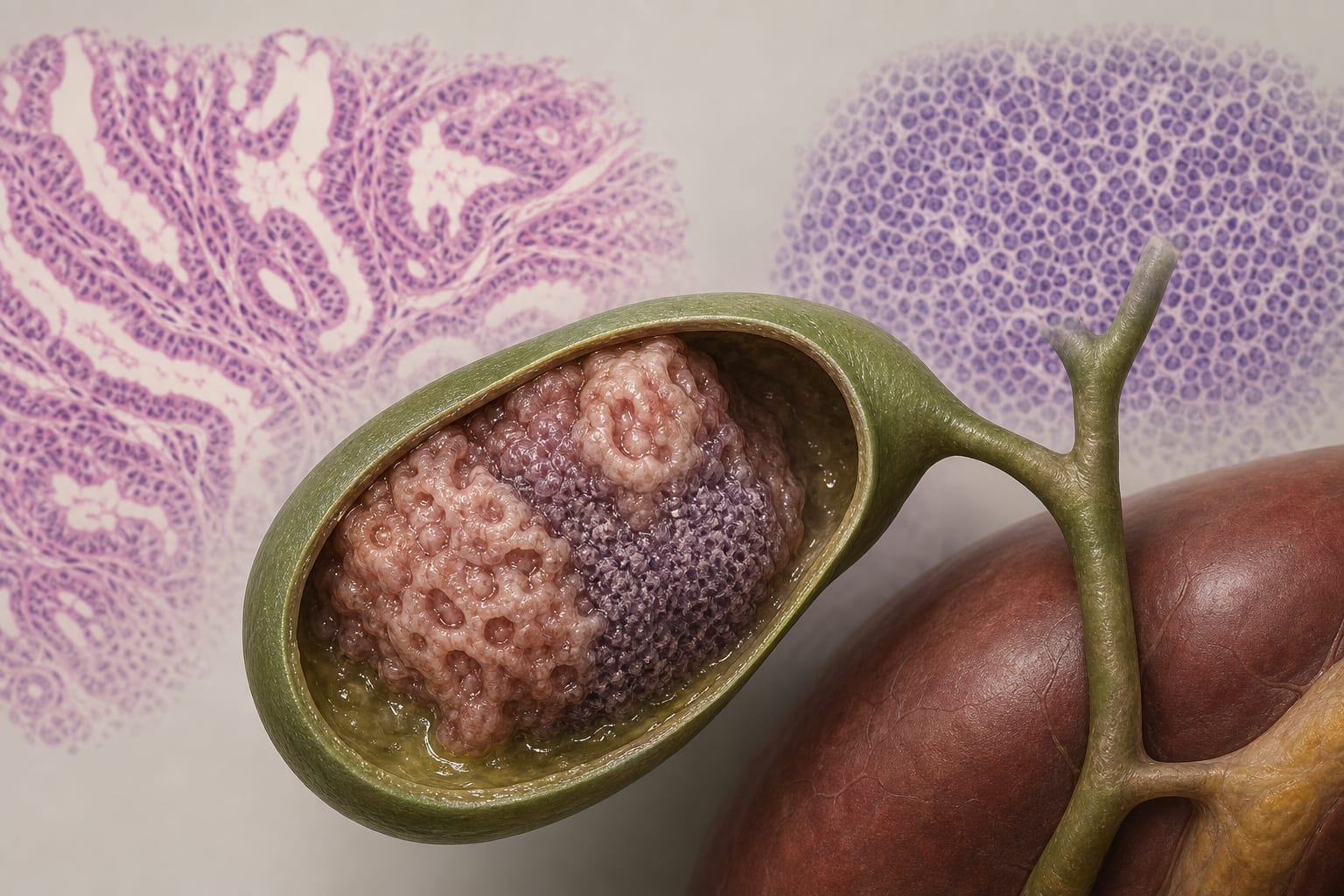
Mixed adenoneuroendocrine carcinoma of the gallbladder: a case report and literature review
By
Zhenghui Sui
Wei Wang
De Zhang
Yifan Sun
Jiajing Li
Xingwei Gu
Ganggang Miao
June 29, 2026
Clinical Scorecard: Gallbladder Mixed Adenoneuroendocrine Carcinoma: A Case Study and Review of Existing Literature
At a Glance
Category Detail
Condition Gallbladder Mixed Adenoneuroendocrine Carcinoma (GB-MANEC) Key Mechanisms Characterized by the coexistence of adenocarcinoma and neuroendocrine carcinoma components, each accounting for at least 30% of the tumor. Target Population Patients diagnosed with gallbladder neuroendocrine neoplasms, specifically GB-MANEC. Care Setting Oncology and surgical departments managing rare gallbladder cancers.
Key Highlights
GB-MANEC is a rare and aggressive subtype of gallbladder cancer with poor prognosis. Diagnosis is primarily established through postoperative histopathology and immunohistochemistry. Surgical treatment, including radical resection, is the cornerstone of potentially curative treatment. Adjuvant chemotherapy with cisplatin, gemcitabine, etoposide, and trastuzumab was initiated post-surgery. The patient remained free of recurrence during 7 months of follow-up. Guideline-Based Recommendations
Diagnosis
Postoperative histopathological examination is essential for definitive diagnosis. Management
Radical surgical resection is recommended as the primary treatment approach. Monitoring & Follow-up
Long-term surveillance is necessary to define durable outcomes and monitor for recurrence. Risks
High aggressiveness and early metastasis are associated with GB-MANEC. Patient & Prescribing Data
A 51-year-old female with non-specific abdominal complaints and anemia.
Adjuvant chemotherapy combined with targeted therapy was initiated postoperatively.
Clinical Best Practices
Utilize a multidisciplinary approach for the management of GB-MANEC. Consider high-throughput sequencing for identifying genetic alterations in tumors. Related Resources & Content