Efficacy and safety of phototherapy for jaundice in full-term newborns: a meta-analysis
-
By
-
Xingzhen Feng
-
Zijun Liang
-
Huishi Ye
-
Shubin Xie
-
June 24, 2026
-
Clinical Scorecard: Effectiveness and Safety of Phototherapy for Treating Jaundice in Full-Term Infants: A Meta-Analysis
At a Glance
| Category | Detail |
|---|
| Condition | Neonatal Jaundice |
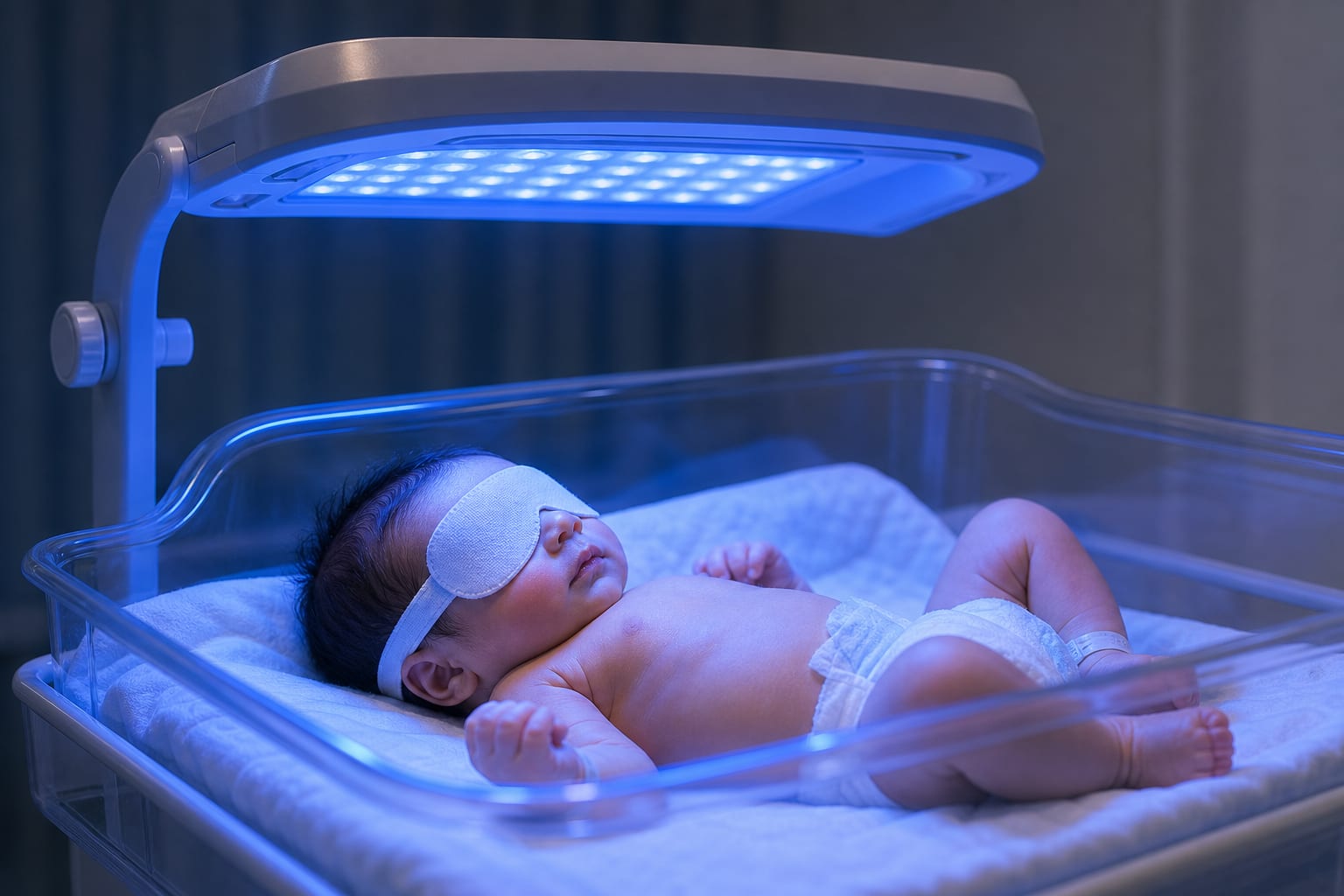
| Key Mechanisms | Phototherapy reduces serum total bilirubin levels by converting unbound bilirubin into water-soluble isomers. |
| Target Population | Full-term neonates |
| Care Setting | Neonatal care units |
Key Highlights
- Pooled mean reduction in serum total bilirubin (STB) was 5.43 mg/dL.
- Phototherapy is effective in treating pathological jaundice in full-term infants.
- Light-emitting diode (LED) phototherapy shows higher efficacy than fluorescent tube systems.
- Treatment is generally safe with minimal adverse effects.
- Monitoring of serum bilirubin levels is essential during phototherapy.
Guideline-Based Recommendations
Diagnosis
- Identify jaundice type: physiologic or pathological based on bilirubin levels and timing.
Management
- Initiate phototherapy when total serum bilirubin levels approach or exceed age-specific thresholds.
Monitoring & Follow-up
- Regularly monitor serum bilirubin levels and ensure adequate hydration and urine output.
Risks
- Potential adverse reactions include fever, hypothermia, diarrhea, rash, and DNA damage.
Patient & Prescribing Data
Full-term neonates with elevated serum bilirubin levels.
Phototherapy is the primary treatment for elevated unbound bilirubin levels.
Clinical Best Practices
- Use continuous blue light irradiation for effective bilirubin reduction.
- Supplement fluids during phototherapy to maintain hydration.
- Monitor temperature and bilirubin levels throughout treatment.
Related Resources & Content