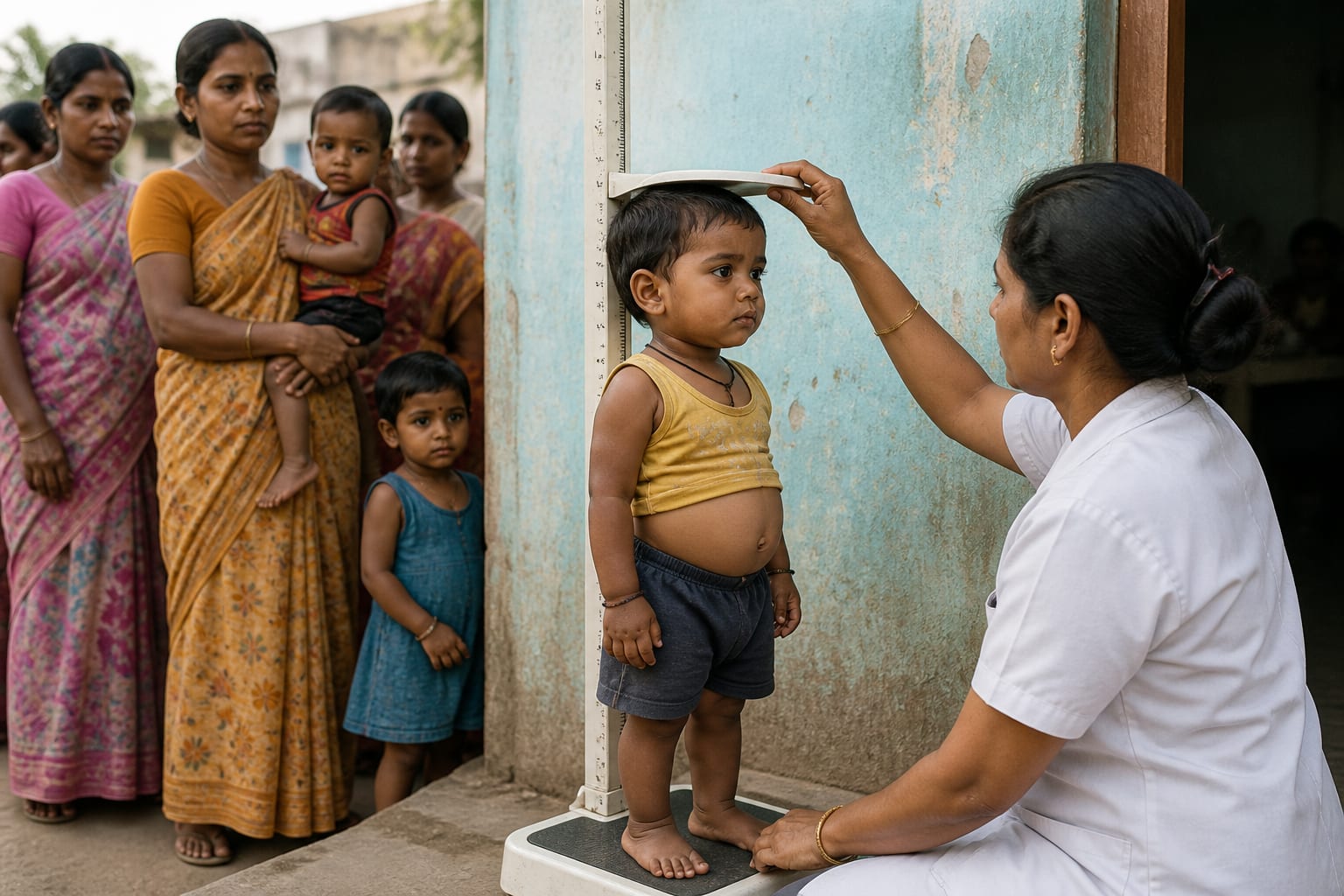
Frequency of Overweight and Obesity in Children Under 5 Years Old in India
-
By
-
Rajesh Kumar Rai
-
Mika Matsuzaki
-
Jan-Walter De Neve
-
Sumaira Zafar
-
Sabri Bromage
-
Rockli Kim
-
S. V. Subramanian
-
September 29, 2026
Clinical Scorecard: Frequency of Overweight and Obesity in Children Under 5 Years Old in India
At a Glance
| Category | Detail |
|---|
| Condition | Overweight and Obesity in Children Under 5 Years |
| Key Mechanisms | Increased likelihood of chronic conditions, social and psychological difficulties, economic burden. |
| Target Population | Children younger than 5 years in India |
| Care Setting | Public health policy and nutrition interventions |
Key Highlights
- Overweight prevalence among children under 5 in India increased from 1.6% in 2006 to 3.4% in 2021.
- A 2024 estimate reported a decline to 1.3%, indicating regional disparities.
- The Indian Academy of Pediatrics links childhood overweight to maternal characteristics and nutritional exposures.
- Sustainable Development Goal 2.2 aims to eliminate childhood overweight and obesity by 2030.
- The National Nutrition Mission seeks to address childhood malnutrition, including overweight.
Guideline-Based Recommendations
Diagnosis
- Use WHO standards for measuring overweight and obesity in children.
Management
- Implement tailored interventions involving multiple sectors to address childhood overweight.
Monitoring & Follow-up
- Long-term assessment of overweight and obesity prevalence across states and UTs.
Risks
- Increased risk of chronic conditions such as type 2 diabetes, hypertension, and psychological difficulties.
Patient & Prescribing Data
Children aged 0 to 59 months in India.
Focus on holistic nourishment and addressing maternal health factors.
Clinical Best Practices
- Engage public health policy at both national and state levels.
- Utilize data from National Family Health Surveys for informed decision-making.
- Promote breastfeeding and reduce junk food intake among children.
Related Resources & Content