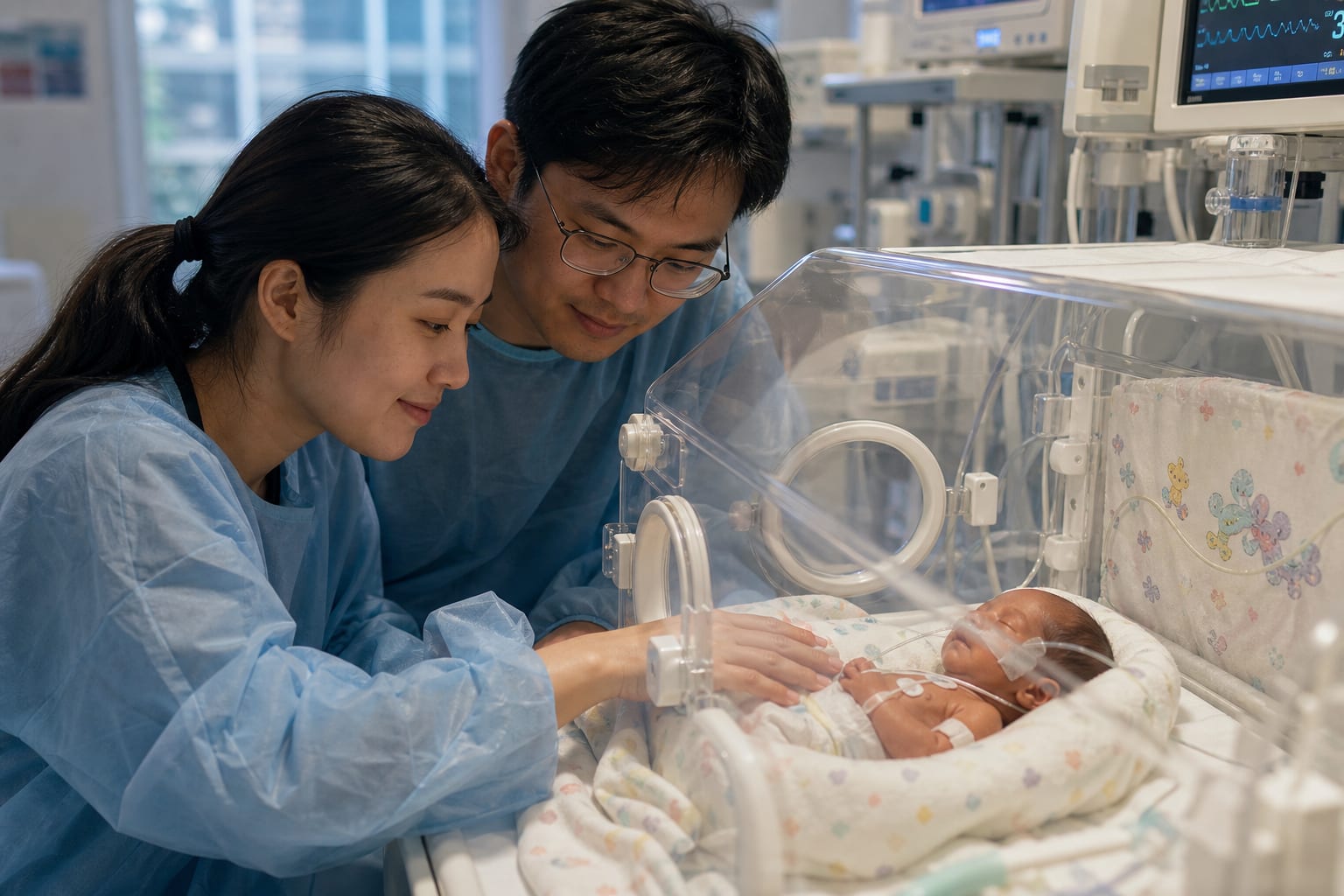
Optimizing discharge outcomes in very preterm infants by a novel integrated family and rehabilitation care model—a retrospective case-matched study - Scorecard - MDSpire
Advertisement
Optimizing discharge outcomes in very preterm infants by a novel integrated family and rehabilitation care model—a retrospective case-matched study
Clinical Scorecard: Enhancing Discharge Results for Very Preterm Infants Through an Innovative Integrated Family and Rehabilitation Care Approach: A Retrospective Case-Matched Analysis
At a Glance
Category
Detail
Condition
Very Preterm Infants
Key Mechanisms
Integrated family-centered care model combining family involvement, bedside rehabilitation, and professional NICU care.
Target Population
Infants with gestational age <32 weeks.
Care Setting
Level 4 Neonatal Intensive Care Unit (NICU)
Key Highlights
NIFCC group showed 92.5% oxygen independence compared to 73.6% in FCC group.
Full oral feeding established in 100% of NIFCC infants versus 86.8% in FCC.
Neonatal Behavioral Observation scores were higher in NIFCC group (51 vs. 49).
No significant differences in complications, hospital stay, or costs between groups.
NIFCC model addresses limitations of traditional family-centered care.
Guideline-Based Recommendations
Diagnosis
Assess respiratory function, feeding maturity, and neurodevelopmental status in very preterm infants.
Management
Implement integrated family-centered care models to enhance discharge outcomes.
Monitoring & Follow-up
Monitor oxygen therapy duration and feeding progression.
Risks
Consider potential caregiver burnout and the need for professional support in NICU settings.
Patient & Prescribing Data
Very preterm infants (gestational age <32 weeks).
NIFCC model improves key discharge outcomes without increasing complications.
Clinical Best Practices
Incorporate family involvement in daily care to enhance infant outcomes.
Utilize bedside rehabilitation to support respiratory and feeding development.
Provide professional care during nighttime to reduce caregiver burden.