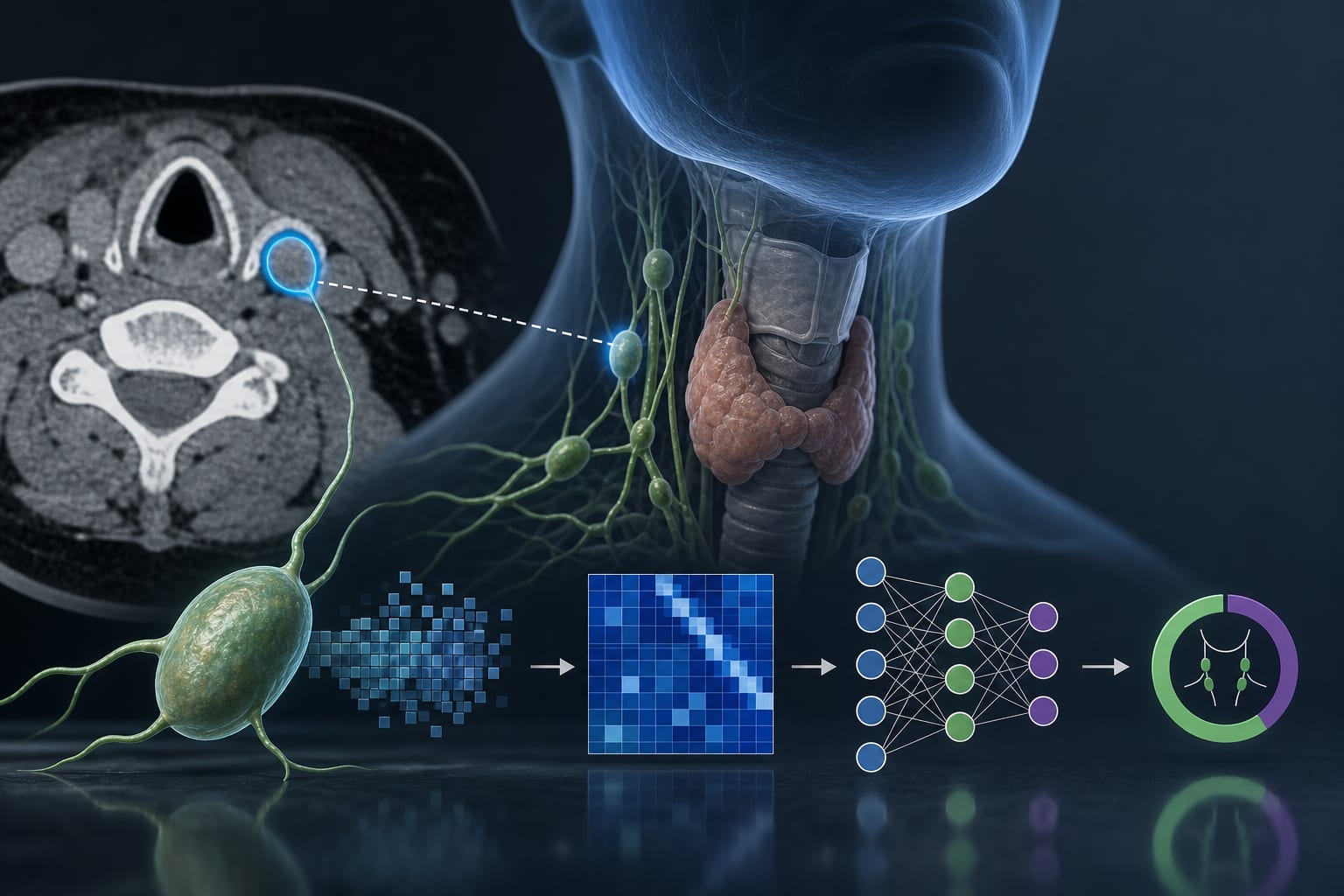
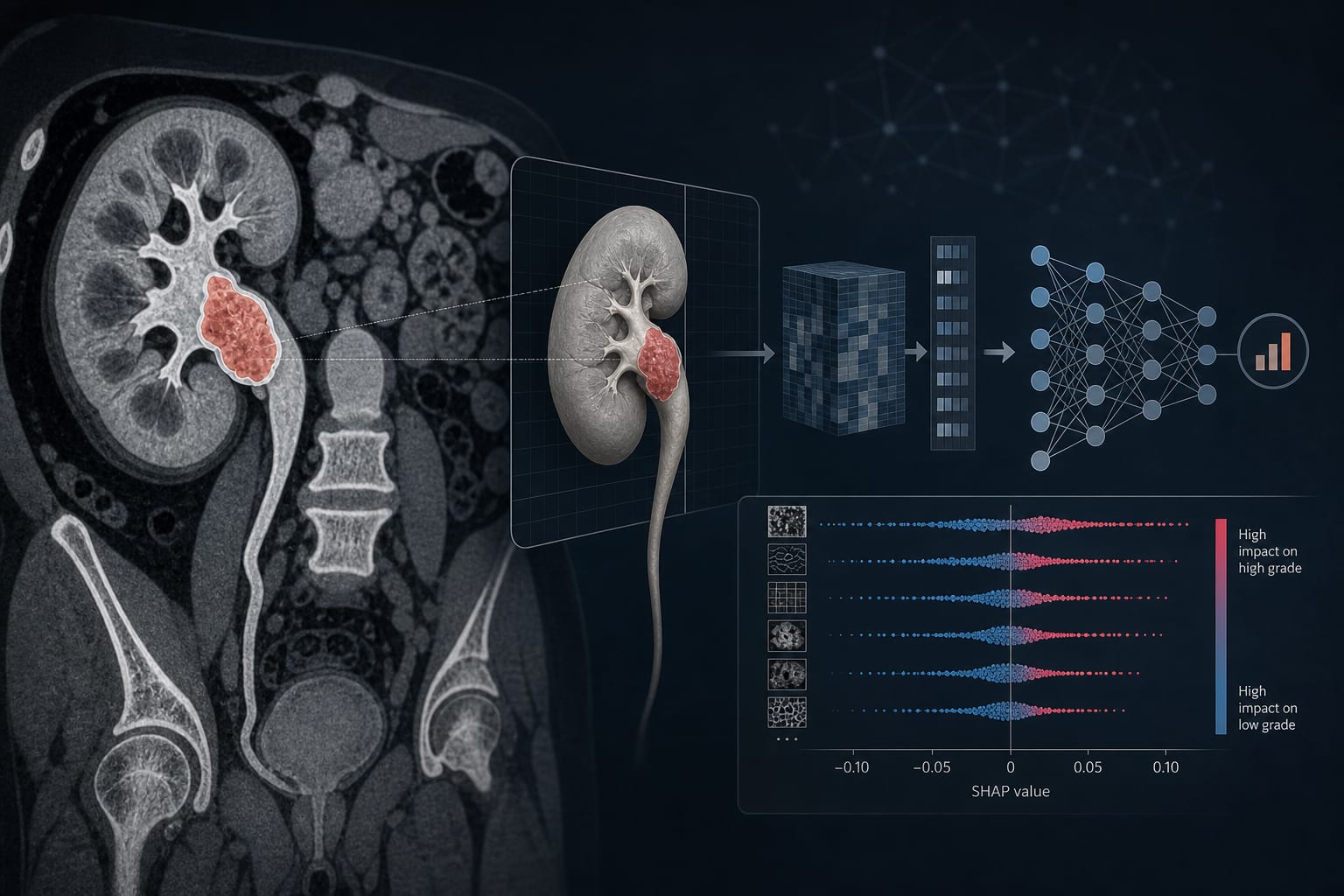
Clinical Scorecard: Evaluating Cervical Lymph Node Reaction to 131I Treatment in Differentiated Thyroid Cancer through Radiomics and Clinical Characteristics
At a Glance
Category
Detail
Condition
Differentiated Thyroid Cancer (DTC)
Key Mechanisms
Integration of clinical and radiomics features to evaluate treatment response.
Target Population
Patients with pathologically confirmed DTC undergoing 131I therapy.
Care Setting
Single-center retrospective cohort study.
Key Highlights
Development of a radiomics-based predictive model for cervical lymph node response.
Patients stratified into Excellent and Non-Excellent response groups.
Model demonstrated favorable discrimination and calibration in training and validation cohorts.
Integration of inflammatory-related targets and radiomics features.
Need for external validation and comparison with existing predictive strategies.
Guideline-Based Recommendations
Diagnosis
Pathological confirmation of DTC with suspicious cervical lymph node metastases.
Management
Utilization of 131I therapy post-surgery for residual and metastatic lesions.
Monitoring & Follow-up
Assessment of biochemical, imaging, and follow-up outcomes to evaluate treatment response.
Risks
Suboptimal responses to 131I therapy leading to persistent lesions or radioactive iodine-refractory status.
Patient & Prescribing Data
Patients with postoperative cervical lymph node metastases from DTC.
Efficacy of 131I therapy influenced by tumor differentiation and molecular characteristics.
Clinical Best Practices
Incorporate radiomics features in predicting treatment response.
Utilize a multimodal predictive model for precision stratification.
Consider inflammatory pathways in treatment response variability.