Early Response to Calcipotriol and Betamethasone Dipropionate PAD-Cream at Week 4 in Patients with Mild-to-Moderate Plaque Psoriasis: A Post-Hoc Pooled Analysis of Two Phase III Trials - Scorecard - MDSpire
Conexiant’s news site is now MDSpire News. Learn more
Advertisement
Assessment of Early Efficacy of Calcipotriol and Betamethasone Dipropionate PAD-Cream at Four Weeks in Individuals with Mild-to-Moderate Plaque Psoriasis: A Combined Analysis of Two Phase III Studies
Clinical Scorecard: Assessment of Early Efficacy of Calcipotriol and Betamethasone Dipropionate PAD-Cream at Four Weeks in Individuals with Mild-to-Moderate Plaque Psoriasis: A Combined Analysis of Two Phase III Studies
At a Glance
Category
Detail
Condition
Plaque Psoriasis
Key Mechanisms
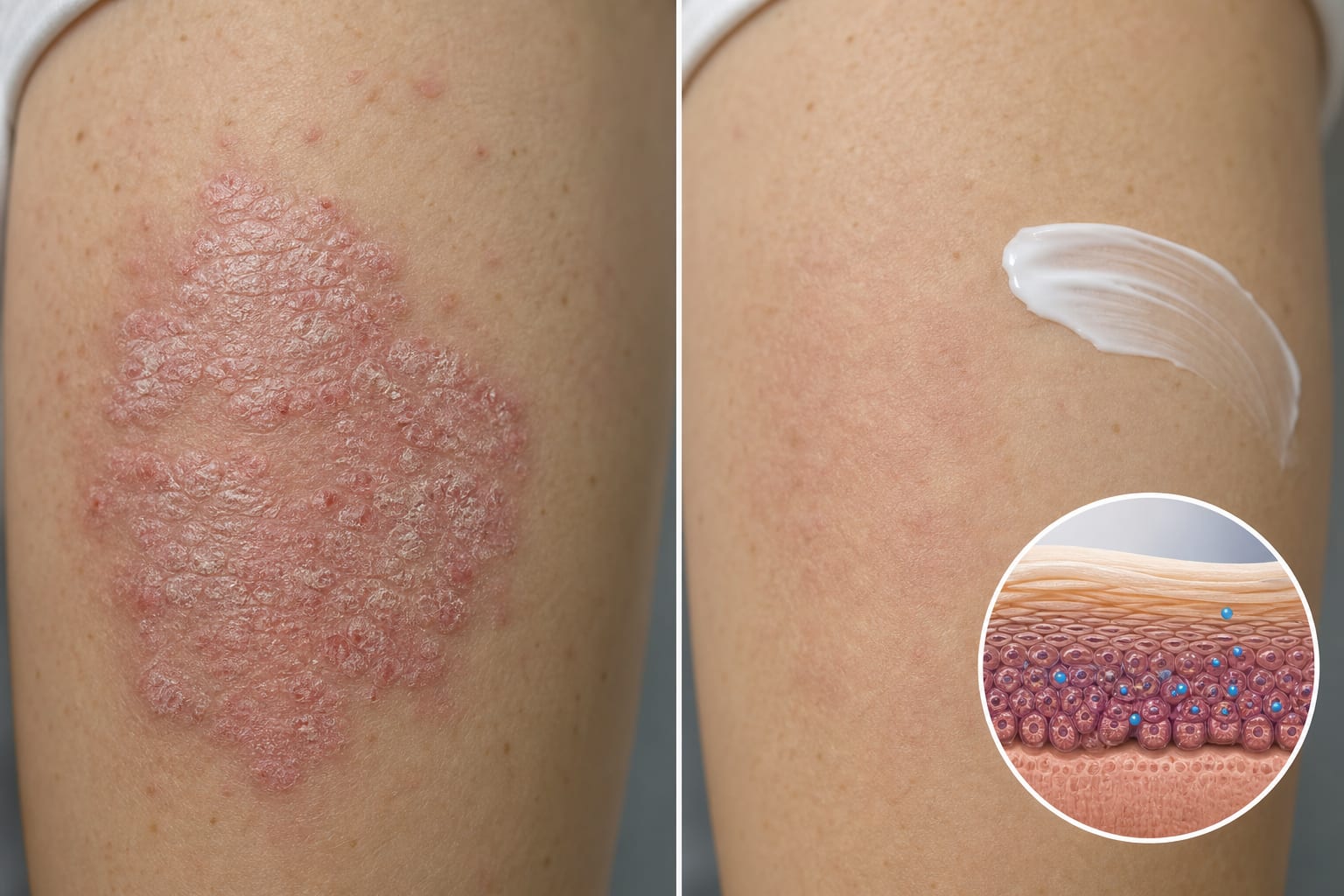
Calcipotriol and betamethasone dipropionate cream based on polyaphron dispersion technology enhances skin penetration and absorption.
Target Population
Adults with mild-to-moderate psoriasis
Care Setting
Phase III clinical trials
Key Highlights
CAL/BDP PAD-cream showed significantly higher early response rates at Week 4 compared to CAL/BDP gel and vehicle.
Approximately 70% of patients demonstrated concordance between physician and patient assessments of treatment success.
Early treatment response is crucial for persistence with topical therapies.
Guideline-Based Recommendations
Diagnosis
Use Physician Global Assessment (PGA) to evaluate treatment response.
Management
Consider CAL/BDP PAD-cream for patients with mild-to-moderate psoriasis.
Monitoring & Follow-up
Assess PGA and patient-reported outcomes (PROs) at baseline, Week 1, and Week 4.
Risks
Monitor for treatment ineffectiveness and patient dissatisfaction.
Patient & Prescribing Data
Adults with mild-to-moderate psoriasis, including those with scalp psoriasis.
CAL/BDP PAD-cream is administered once daily for 8 weeks.
Clinical Best Practices
Align treatment goals between physicians and patients to improve satisfaction and adherence.
Evaluate both PGA and SGA to assess treatment outcomes.
The expanded indication is supported by pharmacokinetic, safety, tolerability, exploratory efficacy, and long-term safety data from studies in children aged 2 to 5 years.