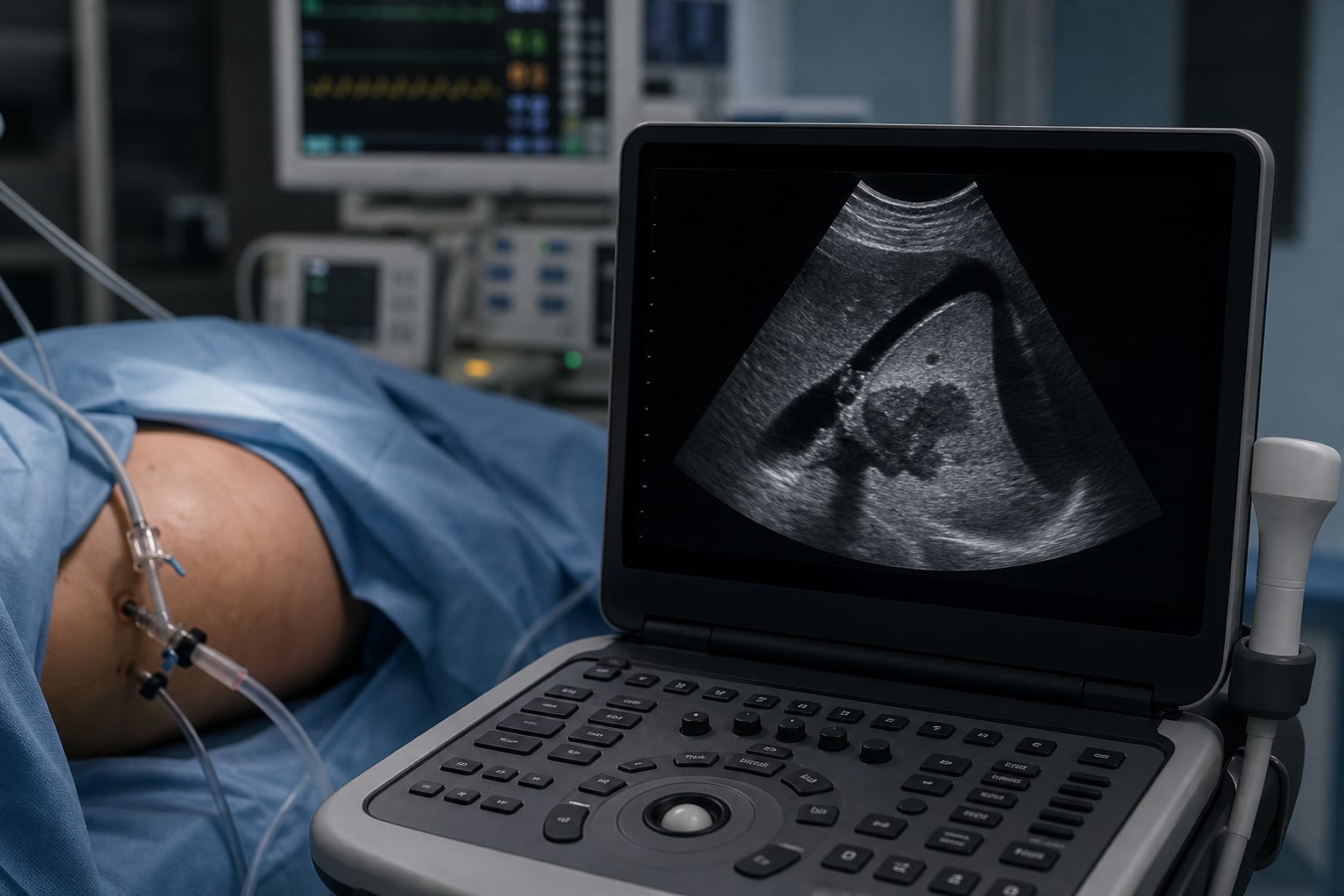
Clinical Scorecard: Case Study: Hidden Splenic Rupture Identified During Left-Sided VATS Decortication: The Importance of Early Perioperative FAST Diagnostics
At a Glance
Category
Detail
Condition
Splenic Rupture during VATS
Key Mechanisms
Inadvertent injury to the spleen and its vasculature during thoracoscopic procedures.
Target Population
Patients undergoing Video-Assisted Thoracic Surgery (VATS) for thoracic diseases.
Care Setting
Intraoperative and postoperative care in surgical settings.
Key Highlights
VATS offers advantages such as minimal trauma and reduced postoperative pain.
Splenic rupture is a rare but life-threatening complication of VATS.
Early bedside FAST diagnostics are crucial in identifying complications like splenic rupture.
The case involved a 69-year-old male with hemodynamic instability during VATS.
The patient achieved full recovery after prompt management of the splenic rupture.
Guideline-Based Recommendations
Diagnosis
Perform FAST ultrasound early when hemodynamic instability occurs during VATS.
Management
Prompt surgical intervention is necessary for identified splenic rupture.
Monitoring & Follow-up
Continuous monitoring of hemodynamic status during and after VATS.
Risks
Risk of splenic injury during left-sided thoracoscopic procedures.
Patient & Prescribing Data
Elderly patients or those with compromised cardiopulmonary function.
Management of comorbid conditions is essential prior to surgery.
Clinical Best Practices
Utilize ultrasound guidance for invasive procedures to minimize complications.
Ensure thorough preoperative assessment of comorbidities.
Implement early intervention protocols for intraoperative complications.
As ASE convenes its 37th Scientific Sessions near Denver, the meeting will spotlight echocardiographic AI and big data, contrast-enhanced ultrasound, evolving guidelines, the Feigenbaum Lecture, and the future of the sonographer workforce.
Qualitative interviews identified four themes involving emergency challenges and response, teamwork, psychological stress and coping, and professional growth needs in trauma surgery.