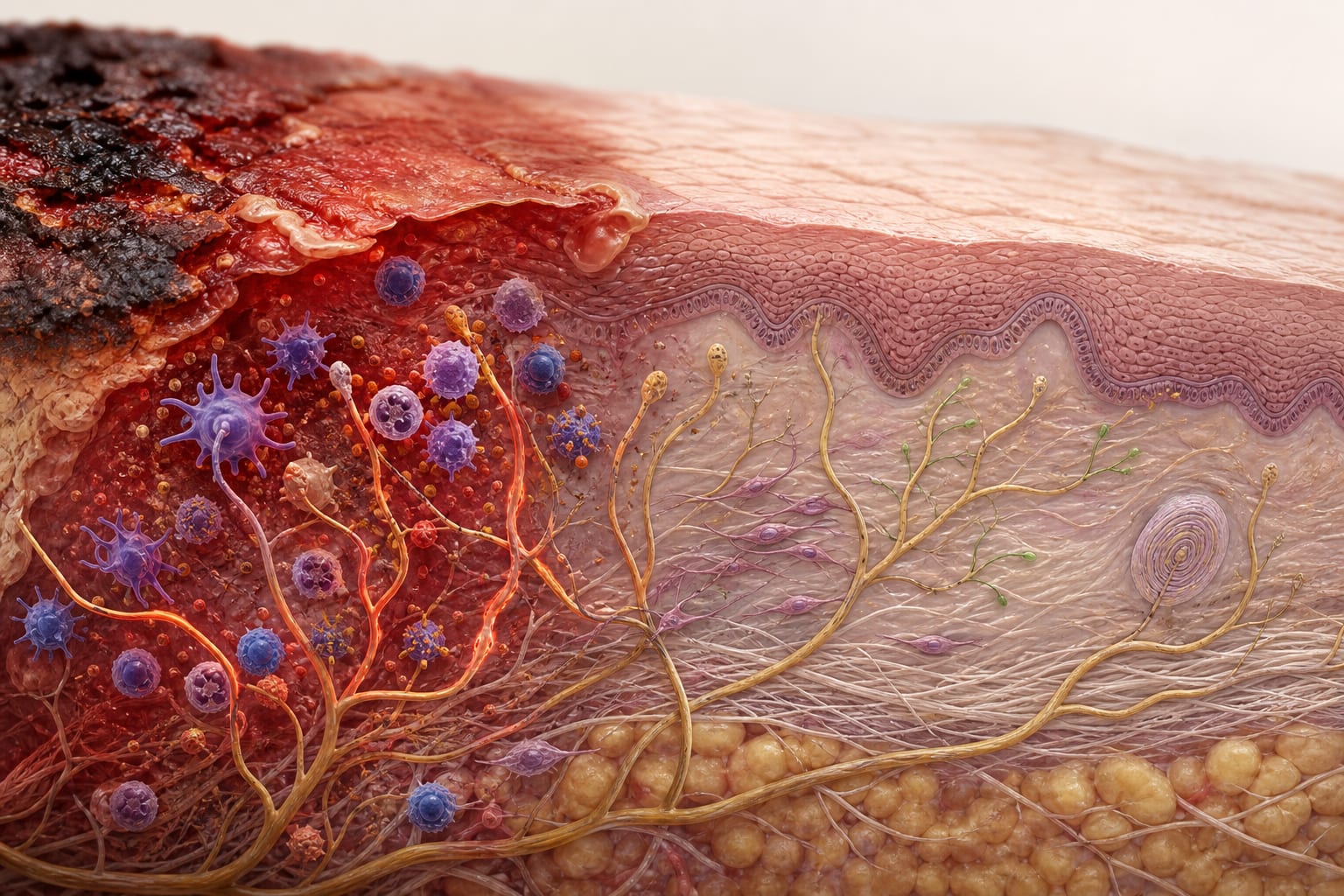
Alterations at the Cellular and Molecular Level in Skin Contributing to Enhanced Pain Sensation Following Burn Injury and Healing
-
By
-
Chiara Nappi
-
Francisco J. Taberner
-
July 2, 2026
Clinical Scorecard: Alterations at the Cellular and Molecular Level in Skin Contributing to Enhanced Pain Sensation Following Burn Injury and Healing
At a Glance
| Category | Detail |
|---|
| Condition | Burn Injury |
| Key Mechanisms | Alterations in cutaneous cell populations and neuroimmune interactions leading to nociceptor sensitization. |
| Target Population | Individuals with burn injuries, particularly those experiencing chronic pain. |
| Care Setting | Acute care and rehabilitation settings for burn treatment. |
Key Highlights
- Burn injuries lead to extensive tissue destruction and a robust inflammatory environment.
- Chronic pain in burn survivors often exhibits neuropathic features.
- Key cell populations, including keratinocytes and immune cells, modulate nociception.
- Dysregulated inflammation can lead to systemic complications and chronic pain syndromes.
- 30%-50% of burn survivors may develop chronic pain post-injury.
Guideline-Based Recommendations
Diagnosis
- Assess burn depth, total body surface area, and patient characteristics.
Management
- Implement targeted therapies to accelerate wound healing and alleviate pain.
Monitoring & Follow-up
- Monitor for signs of chronic pain and neuropathic symptoms in burn survivors.
Risks
- Infection, sepsis, hypertrophic scarring, and long-term pain.
Patient & Prescribing Data
Burn survivors, particularly those with moderate to severe injuries.
Focus on managing inflammation and pain through pharmacological and non-pharmacological interventions.
Clinical Best Practices
- Integrate immune and non-immune cellular dynamics in treatment planning.
- Address both acute and chronic pain management strategies.
Related Resources & Content