Diabetes-duration-related shifts in inflammation-resolving lipid mediator signatures and their association with 3-month functional outcome in large artery atherosclerotic stroke - Scorecard - MDSpire
Advertisement
Diabetes-duration-related shifts in inflammation-resolving lipid mediator signatures and their association with 3-month functional outcome in large artery atherosclerotic stroke
Clinical Scorecard: Impact of Diabetes Duration on Inflammatory Lipid Mediator Profiles and Their Correlation with Three-Month Functional Outcomes in Patients with Large Artery Atherosclerotic Stroke
At a Glance
Category
Detail
Condition
Large Artery Atherosclerotic Stroke
Key Mechanisms
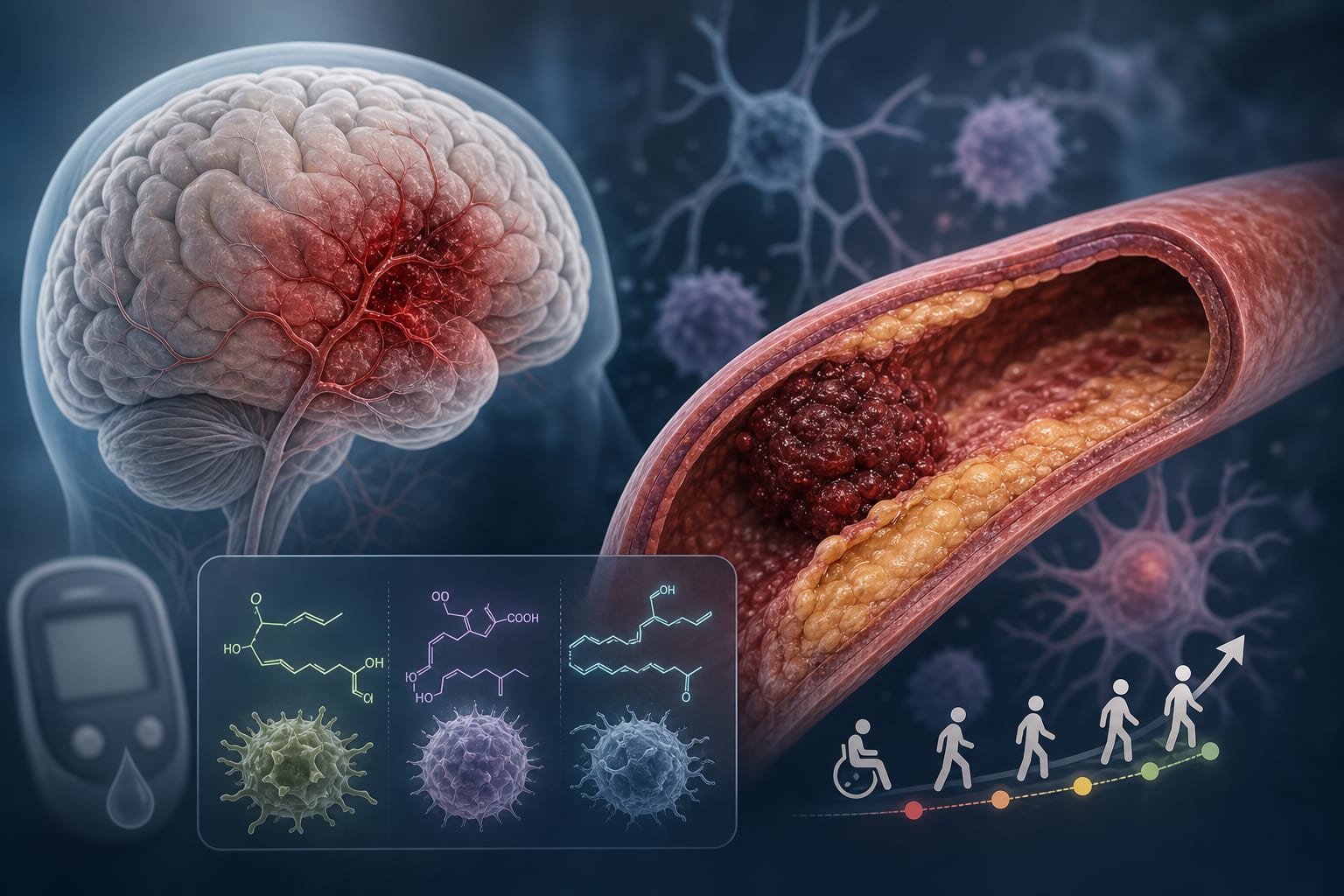
Inflammatory lipid mediators (LXA4, LTB4, RvD2) and their correlation with diabetes duration
Target Population
Patients with Large Artery Atherosclerotic Stroke and Type 2 Diabetes Mellitus
Care Setting
Neurology Department, Affiliated Hospital of Hebei University
Key Highlights
Higher levels of LXA4 in patients with favorable outcomes, though not statistically significant.
Diabetes duration of ≥5 years correlates with higher LXA4 and LTB4 levels.
No significant differences in lipid mediators between patients with and without T2DM.
Exploratory analyses suggest LXA4 may be a candidate signaling molecule for further investigation.
Diabetes duration may better reflect metabolic-inflammatory heterogeneity than diabetes status alone.
Guideline-Based Recommendations
Diagnosis
Acute ischemic stroke diagnosed according to Chinese Guidelines.
Management
Focus on post-stroke inflammation-regulatory networks.
Monitoring & Follow-up
Assess functional outcomes using the modified Rankin Scale at 3 months.
Risks
Increased stroke risk associated with longer diabetes duration.
Patient & Prescribing Data
175 patients with LAA stroke, including those with T2DM.