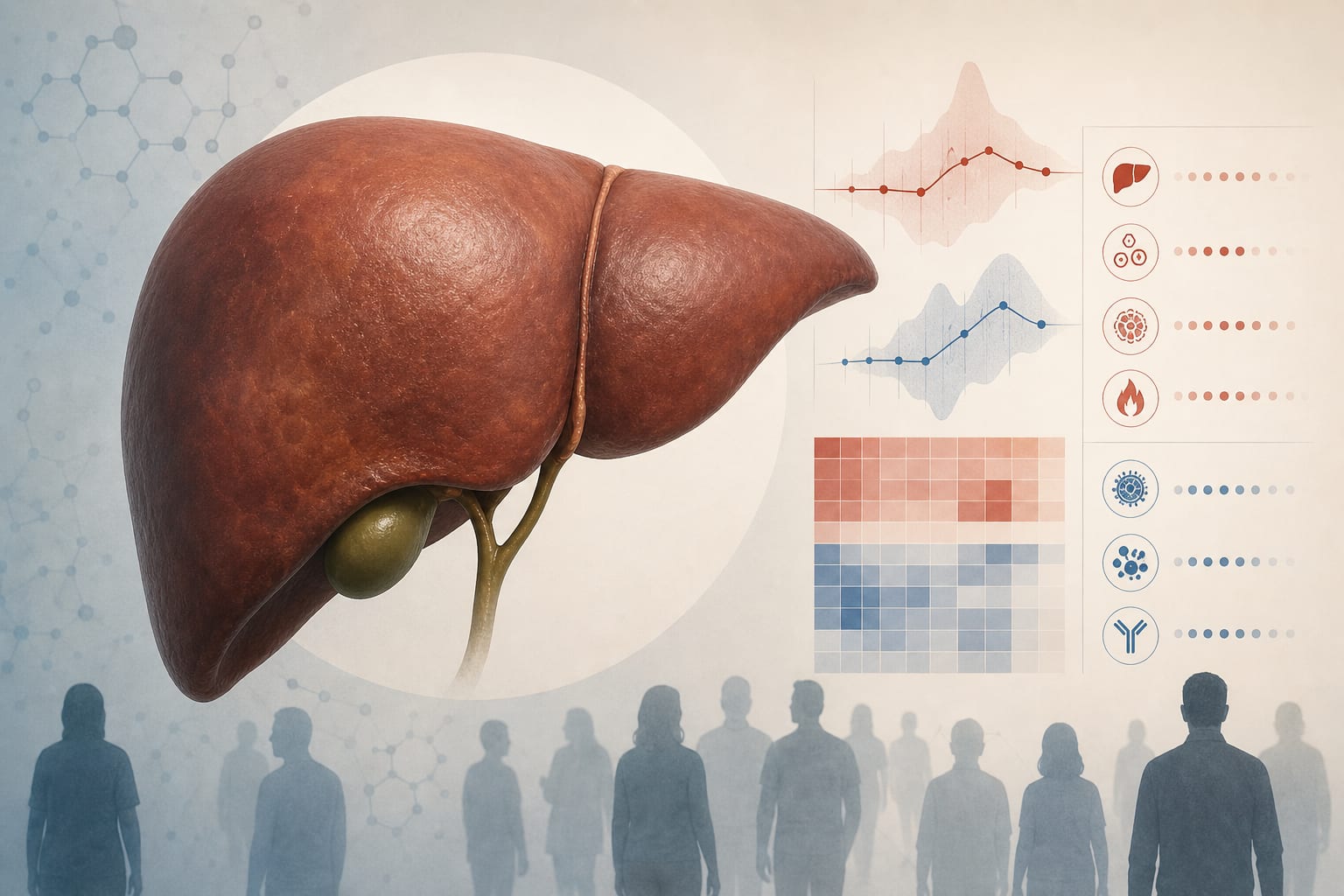
PNPLA3 inhibition reduces liver fat but increases cardiovascular risk mediated partly by LDL-C and total cholesterol
Target Population
Patients with MASLD, particularly those with PNPLA3 I148M gene mutation
Care Setting
Clinical trials and specialized hepatology and cardiology care settings
Key Highlights
ARO-PNPLA3 effectively lowers PNPLA3 expression and reduces liver fat by ~40% in Phase I trials.
Genetically predicted PNPLA3 inhibition increases risk of coronary atherosclerosis, coronary heart disease, and myocardial infarction.
Blood LDL-C and total cholesterol mediate 14% to 30% of the increased cardiovascular risk associated with PNPLA3 inhibition.
Guideline-Based Recommendations
Diagnosis
Use genetic testing for PNPLA3 variants (e.g., rs738409 C>G) to identify at-risk individuals.
Assess liver fat percentage via imaging modalities such as MRI for MASLD diagnosis.
Management
Consider PNPLA3 inhibition as a therapeutic target to reduce liver fat in MASLD.
Monitor lipid profiles closely due to potential increases in LDL-C and total cholesterol with PNPLA3 inhibition.
Monitoring & Follow-up
Regular cardiovascular risk assessment including evaluation for coronary atherosclerosis, myocardial infarction, and heart failure.
Monitor blood lipid levels (LDL-C and total cholesterol) as mediators of cardiovascular risk.
Risks
Increased risk of major cardiovascular diseases including coronary atherosclerosis, coronary heart disease, myocardial infarction, heart failure, and atrial fibrillation with PNPLA3 inhibition.
Potential long-term safety concerns due to cardiovascular risk despite liver fat reduction.
Patient & Prescribing Data
Patients with MASLD, especially those homozygous for PNPLA3 I148M mutation
ARO-PNPLA3 shows dose-dependent hepatic fat reduction with acceptable safety in short-term trials; however, cardiovascular risk mediated by LDL-C and total cholesterol warrants caution and further long-term evaluation.
Clinical Best Practices
Incorporate genetic screening for PNPLA3 variants in MASLD patient evaluation.
Balance benefits of liver fat reduction with potential cardiovascular risks when considering PNPLA3 inhibition therapy.
Implement comprehensive cardiovascular risk monitoring including lipid management during PNPLA3-targeted treatments.
Use Mendelian randomization data to inform clinical trial design and anticipate drug side effects.