An updated review on the role of extracellular vesicles in immune system modulation in breast cancer with special emphasis on immune checkpoint regulators - Scorecard - MDSpire
Advertisement
An updated review on the role of extracellular vesicles in immune system modulation in breast cancer with special emphasis on immune checkpoint regulators
Clinical Scorecard: A Comprehensive Overview of Extracellular Vesicles in Modulating Immune Responses in Breast Cancer, Focusing on Immune Checkpoint Regulators
At a Glance
Category
Detail
Condition
Breast Cancer
Key Mechanisms
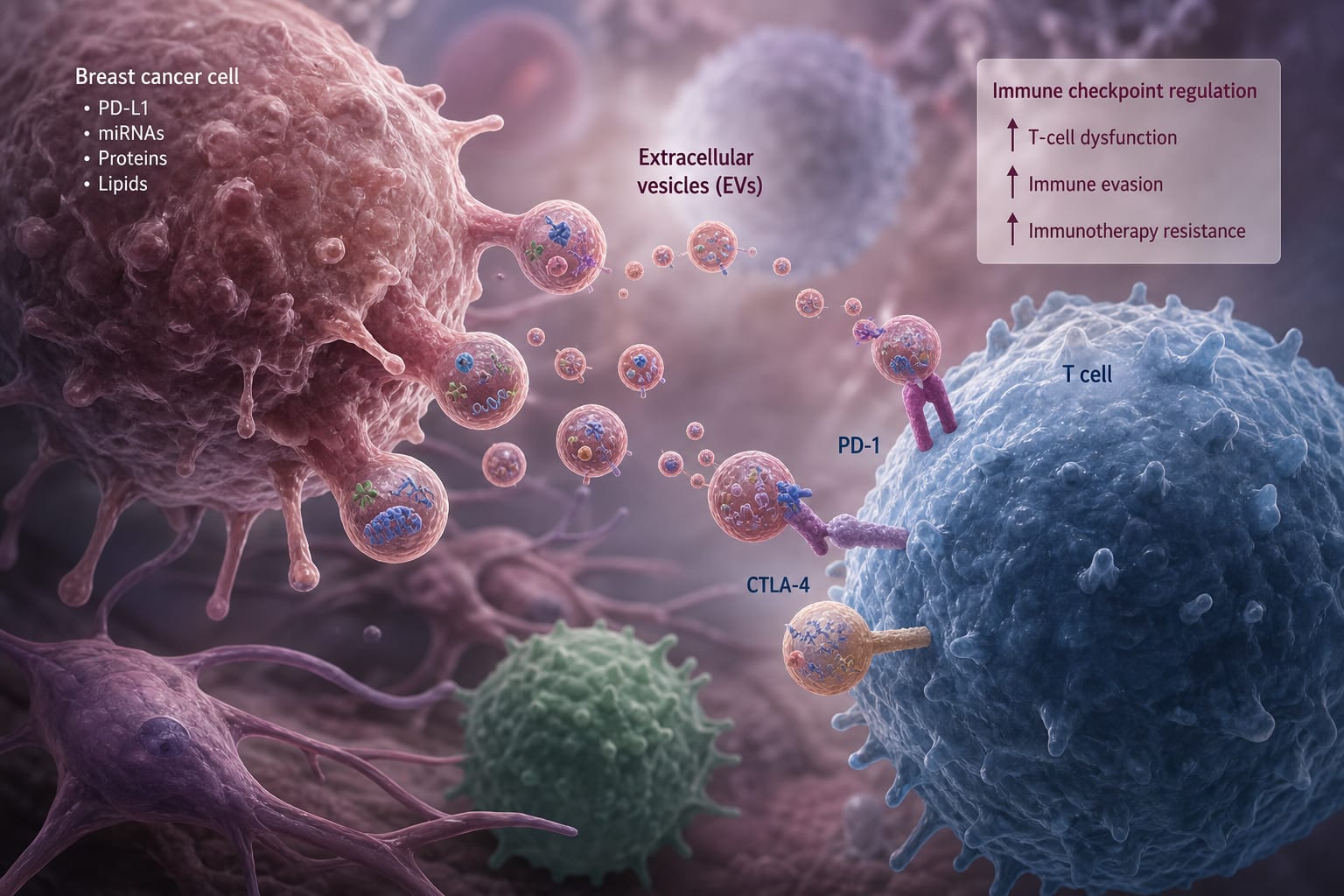
Extracellular vesicles (EVs) regulate immune checkpoint signaling, promoting immune evasion and resistance to therapy.
Target Population
Patients with breast cancer, particularly those with varying subtypes including triple-negative, luminal, and HER2-positive.
Care Setting
Oncology and immunotherapy clinics
Key Highlights
Extracellular vesicles regulate immune checkpoint signaling and drive immune evasion in breast cancer.
EV-associated PD-L1, CTLA-4, and other immunosuppressive cargos promote T-cell dysfunction and resistance to immunotherapy.
Tumor-derived EVs contribute to immunosuppression by impairing T-cell function and facilitating metastatic progression.
Breast cancer heterogeneity affects immune evasion and responses to immunotherapy.
EVs show potential as minimally invasive biomarkers for disease monitoring.
Guideline-Based Recommendations
Diagnosis
Consider the role of extracellular vesicles in the immune landscape of breast cancer.