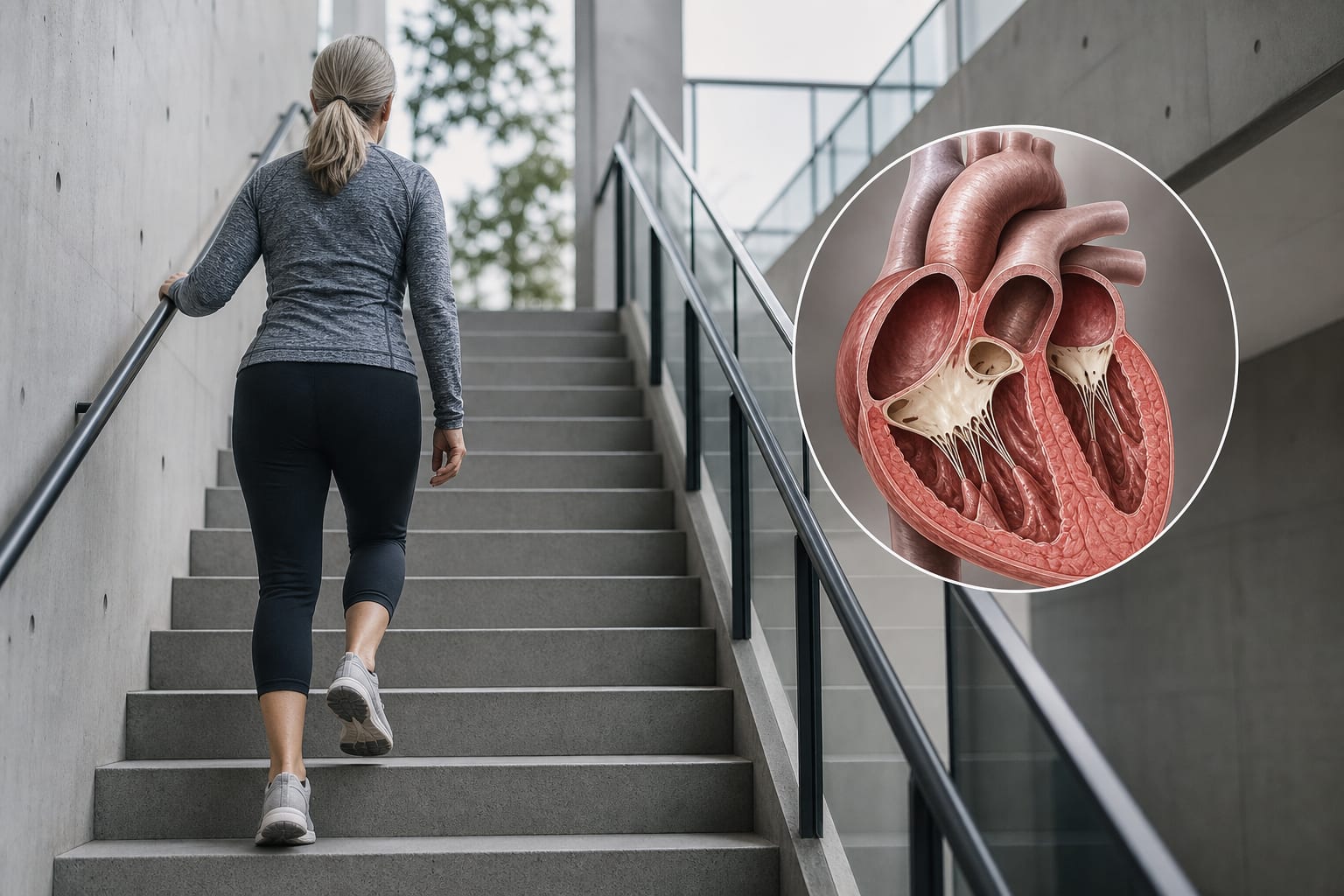
Clinical Scorecard: Association Between Stair Climbing and the Development of Rheumatic and Non-Rheumatic Valvular Heart Disease: Findings from a UK Biobank Cohort Study
At a Glance
Category
Detail
Condition
Valvular Heart Disease (VHD)
Key Mechanisms
Stair climbing is associated with reduced risk of incident VHD and its subtypes.
Target Population
Adults aged 40-69 years from the UK Biobank study.
Care Setting
Population-based cohort study
Key Highlights
3.6% of participants developed new-onset VHD during a median follow-up of 13 years.
Climbing ≥160 steps per day was associated with a 20% reduced risk of VHD.
Significant reductions in risk were observed for both rheumatic and non-rheumatic valve diseases.
Guideline-Based Recommendations
Diagnosis
New-onset VHD defined using ICD-10 codes.
Management
Promote regular stair climbing as a preventive intervention for VHD.
Monitoring & Follow-up
Follow-up on stair climbing habits and incidence of VHD.
Risks
Participants with lower levels of total physical activity showed more pronounced benefits from stair climbing.
Patient & Prescribing Data
Participants from the UK Biobank aged 40-69 years.
Increased stair climbing is associated with lower incidence of VHD.
Clinical Best Practices
Encourage stair climbing as a simple, cost-effective form of physical activity.
Assess stair climbing frequency in routine evaluations of cardiovascular health.
In a study of 50 echocardiography reports, GPT-5 mini extracted 55 cardiovascular fields from free-text echocardiography reports with 92.5% exact-match agreement with expert annotation.