Concomitant transcatheter edge-to-edge treatment for mitral regurgitation and the K-Clip system for tricuspid regurgitation: one case report - Scorecard - MDSpire
Advertisement
Concomitant transcatheter edge-to-edge treatment for mitral regurgitation and the K-Clip system for tricuspid regurgitation: one case report
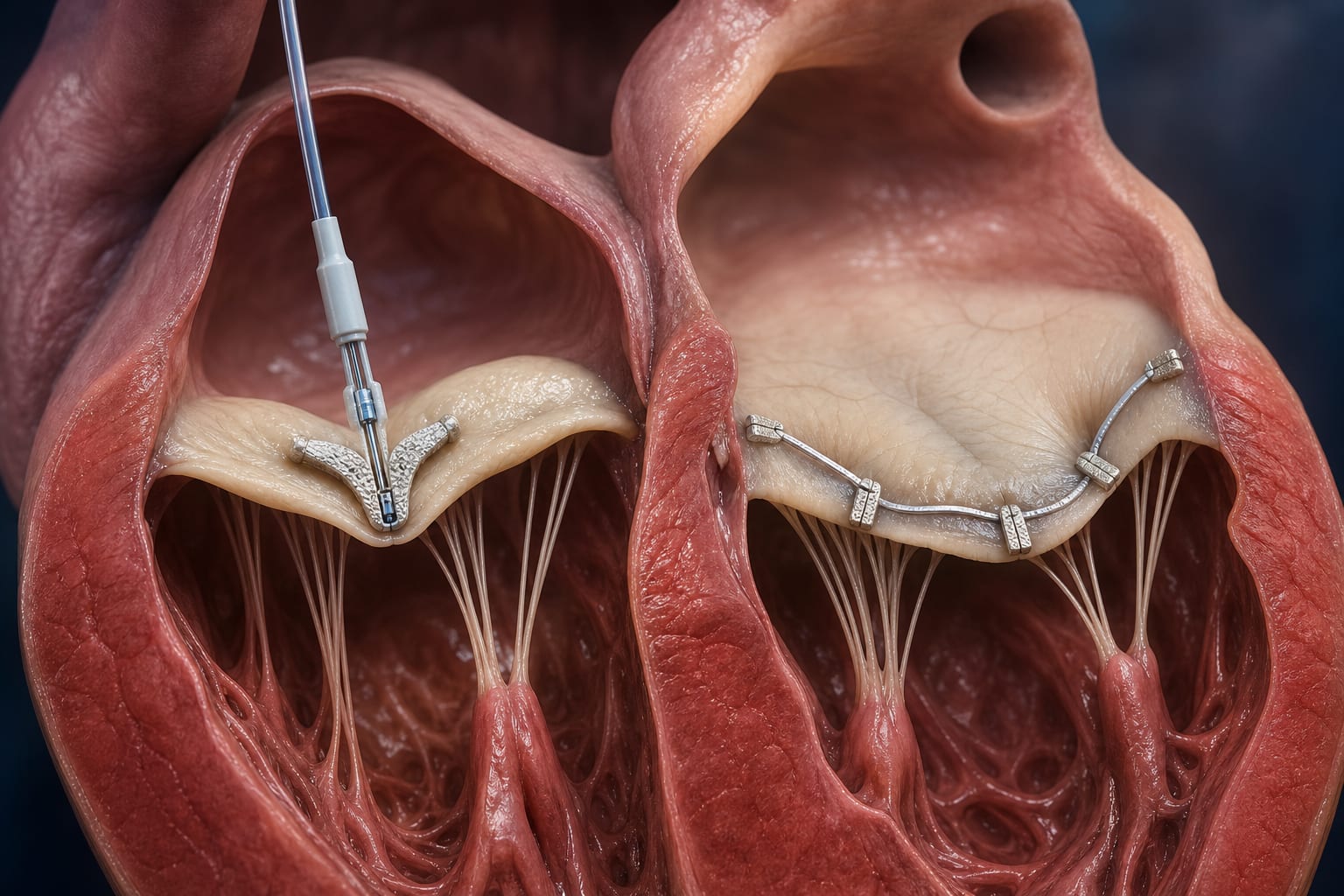
Clinical Scorecard: Simultaneous Transcatheter Edge-to-Edge Repair for Mitral Regurgitation and K-Clip Annuloplasty for Tricuspid Regurgitation: A Case Study
At a Glance
Category
Detail
Condition
Severe Mitral Regurgitation (4+) and Tricuspid Regurgitation (4+)
Key Mechanisms
Transcatheter edge-to-edge repair (TEER) and K-Clip™ annuloplasty
Target Population
Patients with severe valvular regurgitation at high surgical risk
Care Setting
Wuhan Asia Heart Hospital
Key Highlights
Simultaneous TEER and K-Clip™ annuloplasty effectively reduced regurgitation from severe to mild
Patient exhibited persistent heart failure symptoms despite optimal medical therapy
Postoperative follow-up showed improved quality of life, stable vital signs, and specific echocardiographic metrics
Guideline-Based Recommendations
Diagnosis
Use echocardiography for assessment of mitral and tricuspid regurgitation severity
Management
Consider transcatheter interventions for high-risk patients with severe MR and TR
Postoperative management should include monitoring for arrhythmias and heart failure symptoms
Monitoring & Follow-up
Regular follow-up with echocardiography to assess valve function post-intervention
Risks
Higher risks associated with concurrent dual-valve repair compared to single-valve procedures
Patient & Prescribing Data
59-year-old female with history of hypertension and atrial fibrillation
Postoperative medication adjustments included increasing dosages of Sacubitril/valsartan and metoprolol to optimize heart failure management
Clinical Best Practices
Adopt a 'one-stop' interventional approach to minimize risks associated with multiple procedures
Utilize echocardiography and fluoroscopy for guidance during transcatheter interventions, ensuring procedural accuracy and safety