Survival beyond treatment: patterns and determinants of disease-free survival in cervical cancer at a tertiary care center in India
By
Bajarang Bahadur
Sunil Choudhary
Deshna Oswal
Tej Singh
Shraddha Chaurasiya
Mayank Singh
July 10, 2026
Clinical Scorecard: Factors Influencing Disease-Free Survival in Cervical Cancer Patients at a Tertiary Care Facility in India
At a Glance
Category Detail
Condition Cervical Cancer
Key Mechanisms Tumor burden and locoregional spread influence disease-free survival.
Target Population Cervical cancer patients in India, particularly those diagnosed at advanced stages.
Care Setting Tertiary care center in India
Key Highlights
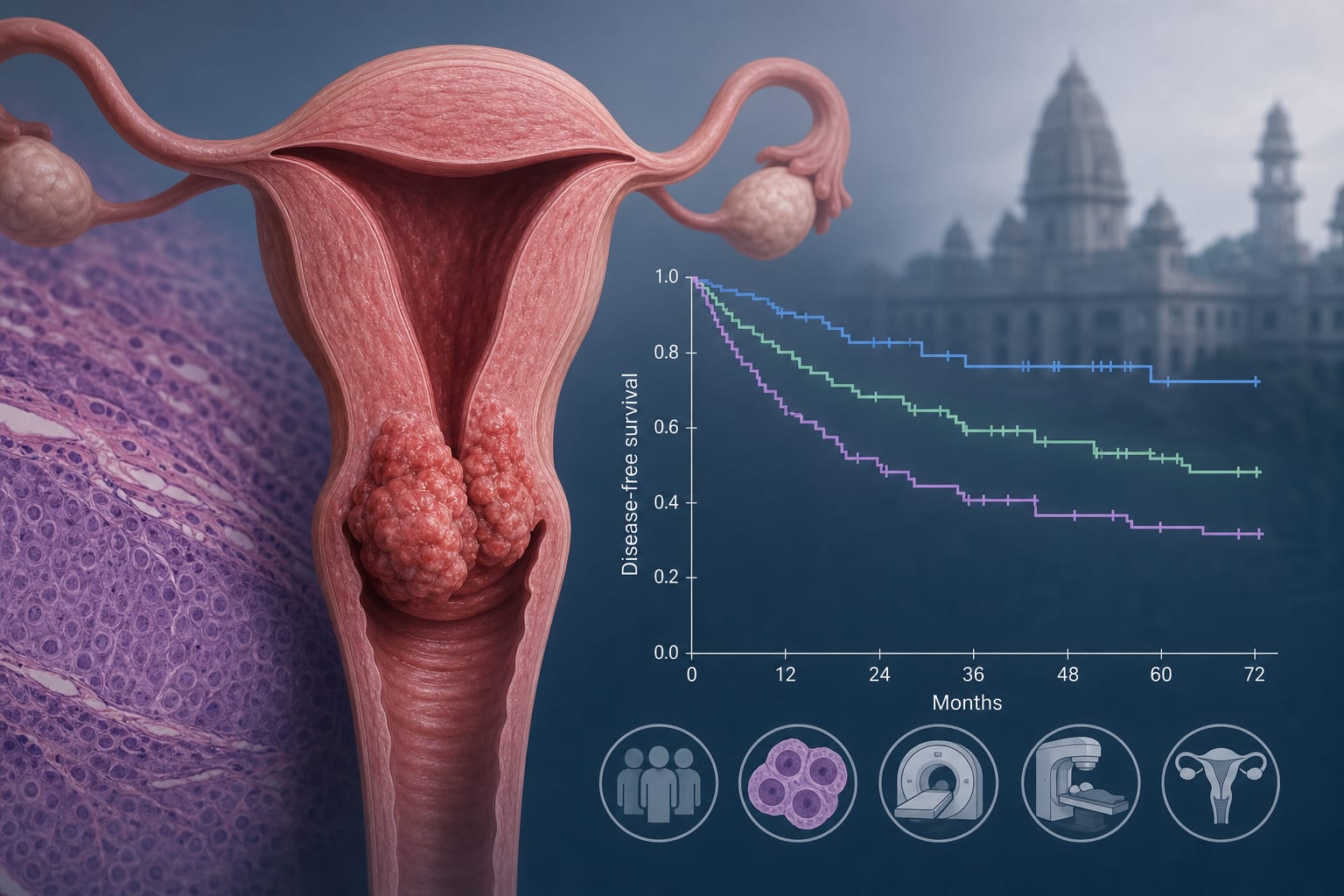
Median follow-up duration was 23.4 months. Significant predictors of poorer DFS include age ≤50 years, tumor size ≥4 cm, and vaginal involvement. Squamous cell carcinoma accounted for 91.8% of cases. DFS showed a sharp decline during early follow-up, indicating higher recurrence risk.
Guideline-Based Recommendations
Diagnosis
Utilize clinical and radiological tests to confirm recurrence.
Management
Focus on intensive follow-up during the first two years post-treatment.
Monitoring & Follow-up
Implement risk-stratified management based on tumor characteristics.
Risks
Advanced disease stage and larger tumor size are associated with increased recurrence risk.
Patient & Prescribing Data
Cervical cancer patients diagnosed between 2011 and 2021.
Treatment response evaluated at first follow-up visit, typically within one month after completion of primary treatment.
Clinical Best Practices
Encourage early detection and organized screening programs. Tailor follow-up strategies based on individual risk factors.
Related Resources & Content