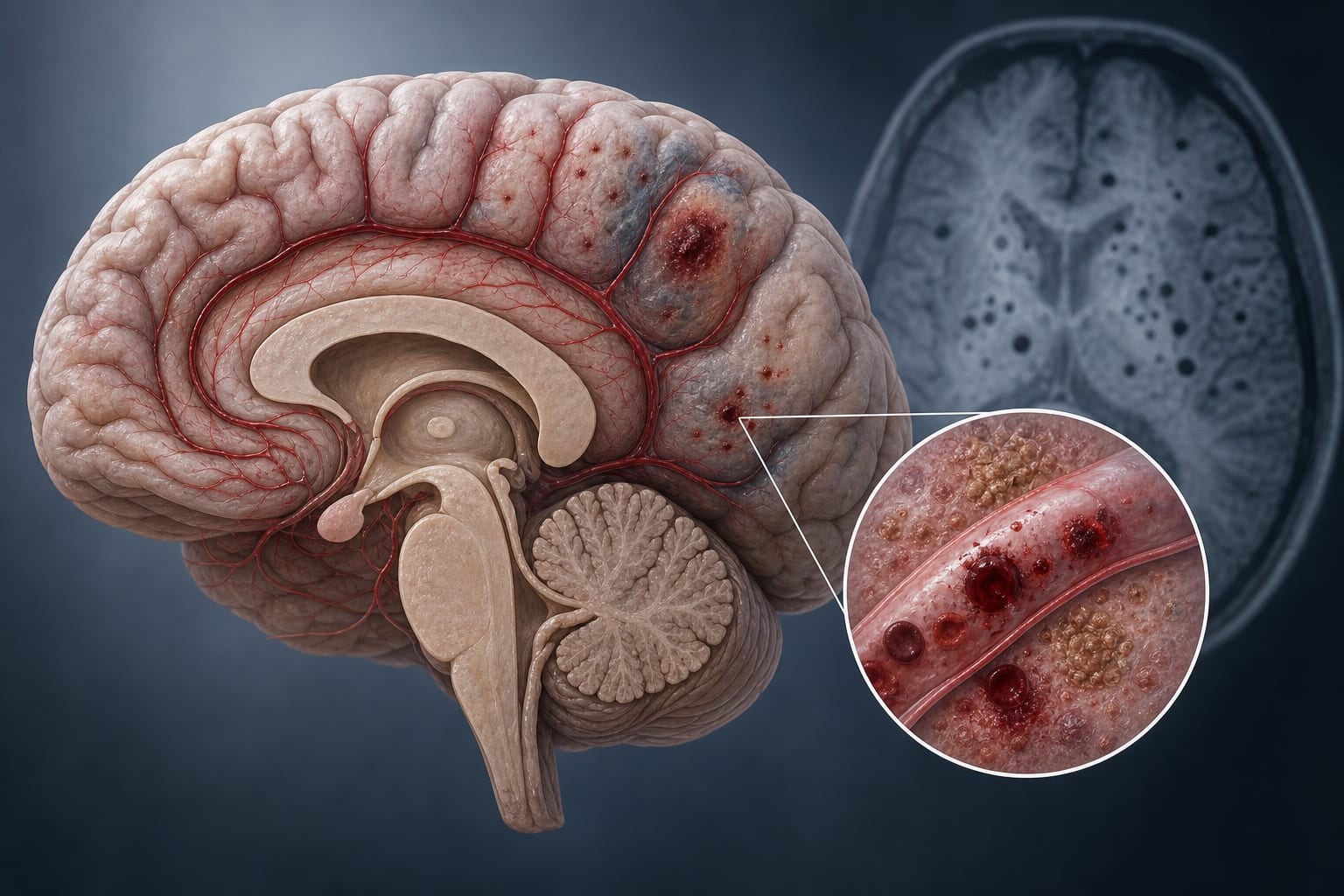
Clinical Scorecard: Reduced cingulate grey matter as a mediator in the link between dual-task gait performance and the onset of dementia
At a Glance
Category
Detail
Condition
Mild cognitive impairment progressing to dementia
Key Mechanisms
High dual-task gait cost linked to reduced grey matter volume in right anterior and middle cingulate cortices mediates dementia risk
Target Population
Individuals with mild cognitive impairment
Care Setting
Aging brain and memory clinics; clinical research settings
Key Highlights
High dual-task gait cost (≥20% slowing) during cognitive tasks triples risk of progression to dementia in MCI.
Reduced grey matter volume in right anterior and middle cingulate cortices mediates nearly half of the association between dual-task gait cost and incident dementia.
Motor cortex metabolite alterations (choline-to-creatine ratio) associate with dual-task cost but do not mediate dementia risk.
Guideline-Based Recommendations
Diagnosis
Use dual-task gait testing (walking plus cognitive task) to assess risk of dementia progression in MCI.
Calculate dual-task cost as percentage change in gait speed between dual-task and usual gait.
Management
Monitor individuals with high dual-task cost (≥20%) closely for cognitive decline.
Consider interventions targeting cognitive-motor interaction and cingulate cortex integrity.
Monitoring & Follow-up
Perform regular cognitive and gait assessments every 6 months to track progression.
Use MRI to evaluate grey matter volume changes in cingulate cortices when feasible.
Risks
High dual-task cost indicates increased risk of progression from MCI to dementia.
Grey matter loss in cingulate cortex is a neural substrate linking gait impairment to dementia onset.
Patient & Prescribing Data
Individuals with mild cognitive impairment exhibiting high dual-task gait cost
Dual-task gait performance serves as a motor biomarker to identify patients at elevated risk for dementia, enabling targeted monitoring and early intervention.
Clinical Best Practices
Incorporate dual-task gait assessments into routine evaluation of patients with mild cognitive impairment.
Use dual-task cost thresholds (≥20%) to stratify dementia risk.
Recognize the importance of right anterior and middle cingulate cortex grey matter volume as a mediator in cognitive-motor decline.
Combine gait testing with neuroimaging when possible to enhance risk stratification.
by Pauline Ali, Frederico Pieruccini-Faria, Cédric Annweiler, Mickaël Dinomais, Surim Son, Scott K Wilson, Richard Camicioli, Susan Muir-Hunter, Robert Bartha, Manuel Montero-Odasso