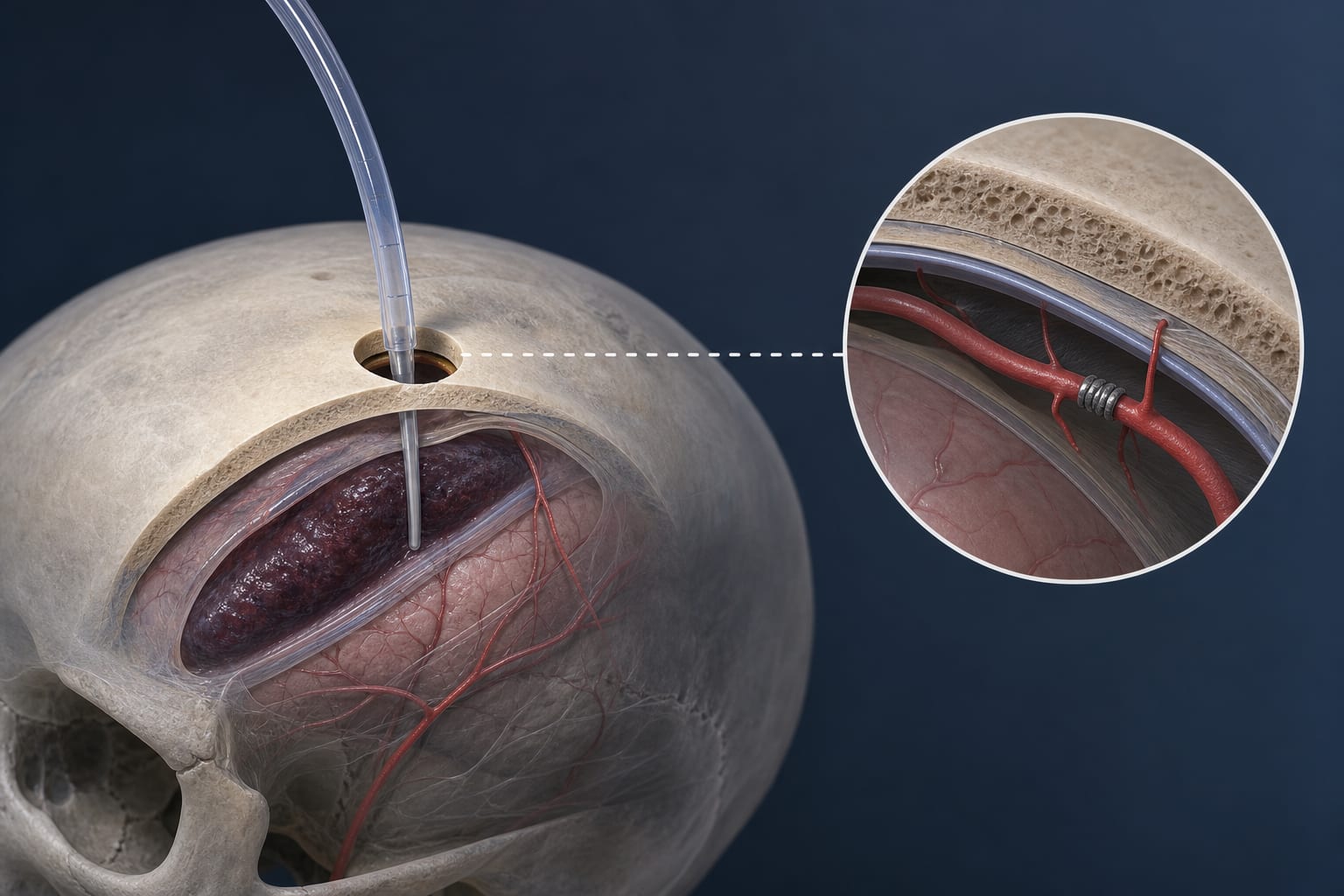
Simultaneous Burr hole drainage and middle meningeal artery occlusion through a single incision for chronic subdural hematoma guided by 3D reconstruction - Scorecard - MDSpire
Advertisement
Simultaneous Burr hole drainage and middle meningeal artery occlusion through a single incision for chronic subdural hematoma guided by 3D reconstruction
Clinical Scorecard: Combined Burr Hole Drainage and Middle Meningeal Artery Occlusion via a Single Incision for Chronic Subdural Hematoma Utilizing 3D Reconstruction Techniques
At a Glance
Category
Detail
Condition
Chronic Subdural Hematoma (CSDH)
Key Mechanisms
Burr hole drainage (BHD) and middle meningeal artery (MMA) occlusion through a single cranial burr hole using 3D reconstruction technology.
Target Population
Patients aged 18 or older diagnosed with CSDH.
Care Setting
Department of Neurosurgery at Ziyang Hospital of West China Hospital, Sichuan University.
Key Highlights
Observation group had a lower hematoma recurrence rate (4.9%) compared to control group (20.0%) at 6 months postoperatively.
Shorter drainage duration and hospitalization duration in the observation group (p < 0.001).
Less hematoma residual volume at 1 month postoperatively in the observation group (p < 0.001).
Both groups showed no significant differences in intraoperative indicators and perioperative complications.
Guideline-Based Recommendations
Diagnosis
Diagnosis of CSDH confirmed by cranial CT or MRI with clinical symptoms.
Management
Burr hole drainage combined with MMA occlusion for improved outcomes.
Monitoring & Follow-up
Monitor for hematoma recurrence and assess mRS score at 6 months postoperatively.
Risks
Postoperative recurrence rates of hematoma can range from 10 to 30%.
Patient & Prescribing Data
116 patients with CSDH treated from January 2021 to June 2025.
Single-point burr hole drainage combined with MMA occlusion may reduce recurrence and improve recovery metrics.
Clinical Best Practices
Utilize 3D reconstruction technology for precise localization of MMA during surgery.
Implement standardized nursing and postoperative care for all patients.
From Medicare payment updates to drug approvals and device access, these federal actions may affect reimbursement, prescribing, patient access, and clinical workflows.