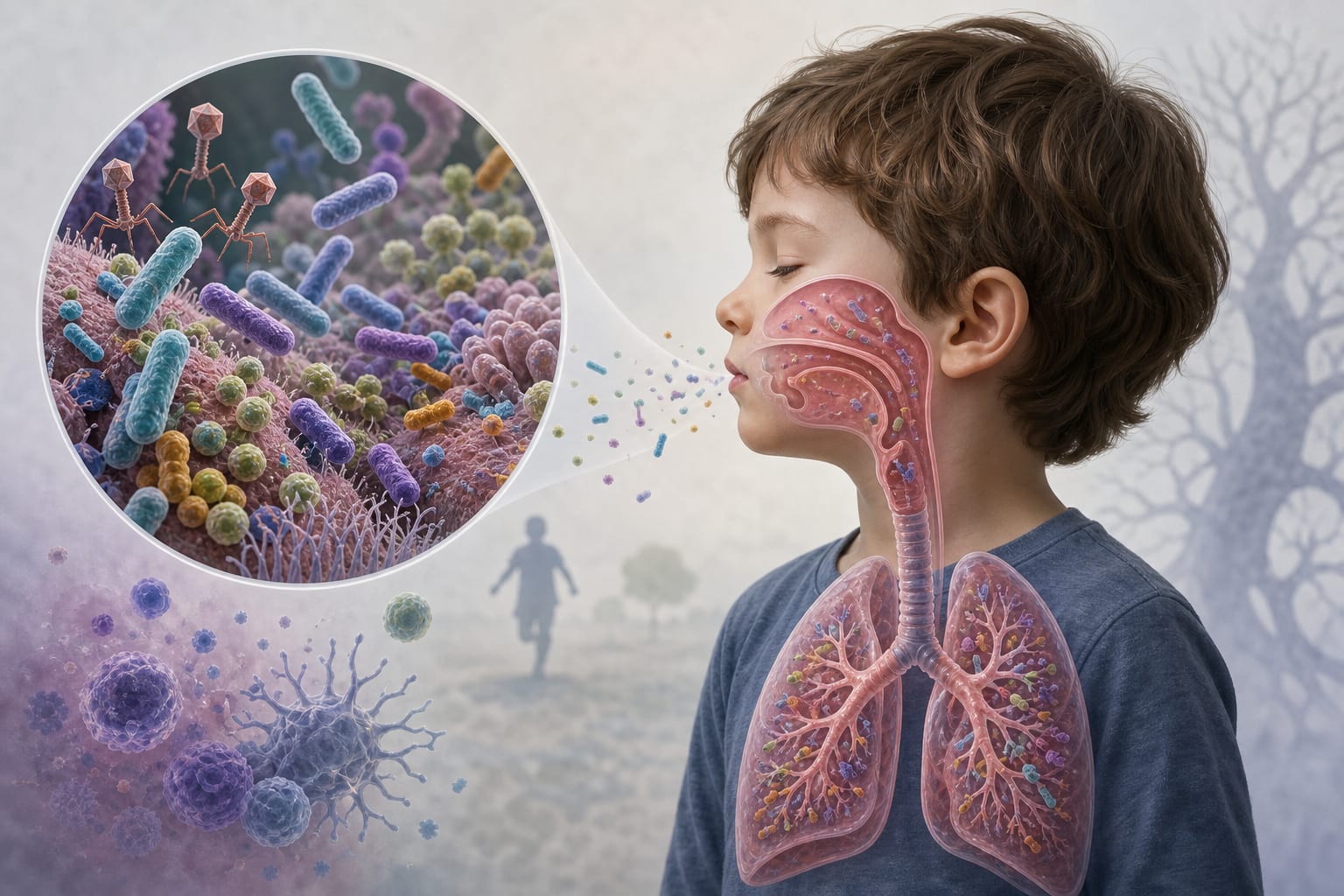
The respiratory microbiome influences the occurrence of respiratory diseases in children
-
By
-
Zheng, Kui
-
Zhou, Shuhong
-
Han, Zhoubo
-
Liao, Shunli
-
Wang, Bo
-
April 27, 2026
-
Clinical Scorecard: The Impact of the Respiratory Microbiome on Pediatric Respiratory Disease Development
At a Glance
| Category | Detail |
|---|
| Condition | Pediatric Respiratory Diseases |
| Key Mechanisms | Respiratory microbiome composition and metabolites influence susceptibility and severity of respiratory diseases. |
| Target Population | Children |
| Care Setting | Clinical and research settings |
Key Highlights
- Respiratory microbiome is linked to respiratory disease susceptibility in children.
- Microbial composition affects respiratory infections and allergic airway inflammation.
- Dysbiosis of the respiratory microbiome is associated with asthma and other disorders.
- Novel therapeutic strategies include probiotic therapy, phage therapy, and antimicrobial peptide therapy.
- Research focuses on the interaction between the microbiome and the host immune system.
Guideline-Based Recommendations
Diagnosis
- Assess microbial composition in children with respiratory diseases.
Management
- Consider novel therapies such as probiotics and phage therapy.
Monitoring & Follow-up
- Monitor changes in respiratory microbiome composition during treatment.
Risks
- Dysbiosis may lead to increased severity of respiratory diseases.
Patient & Prescribing Data
Children with respiratory diseases
Emerging therapies targeting the respiratory microbiome may provide new treatment avenues.
Clinical Best Practices
- Incorporate microbiome assessment in the evaluation of pediatric respiratory diseases.
- Explore the use of probiotics and other microbiome-modulating therapies.
Related Resources & Content