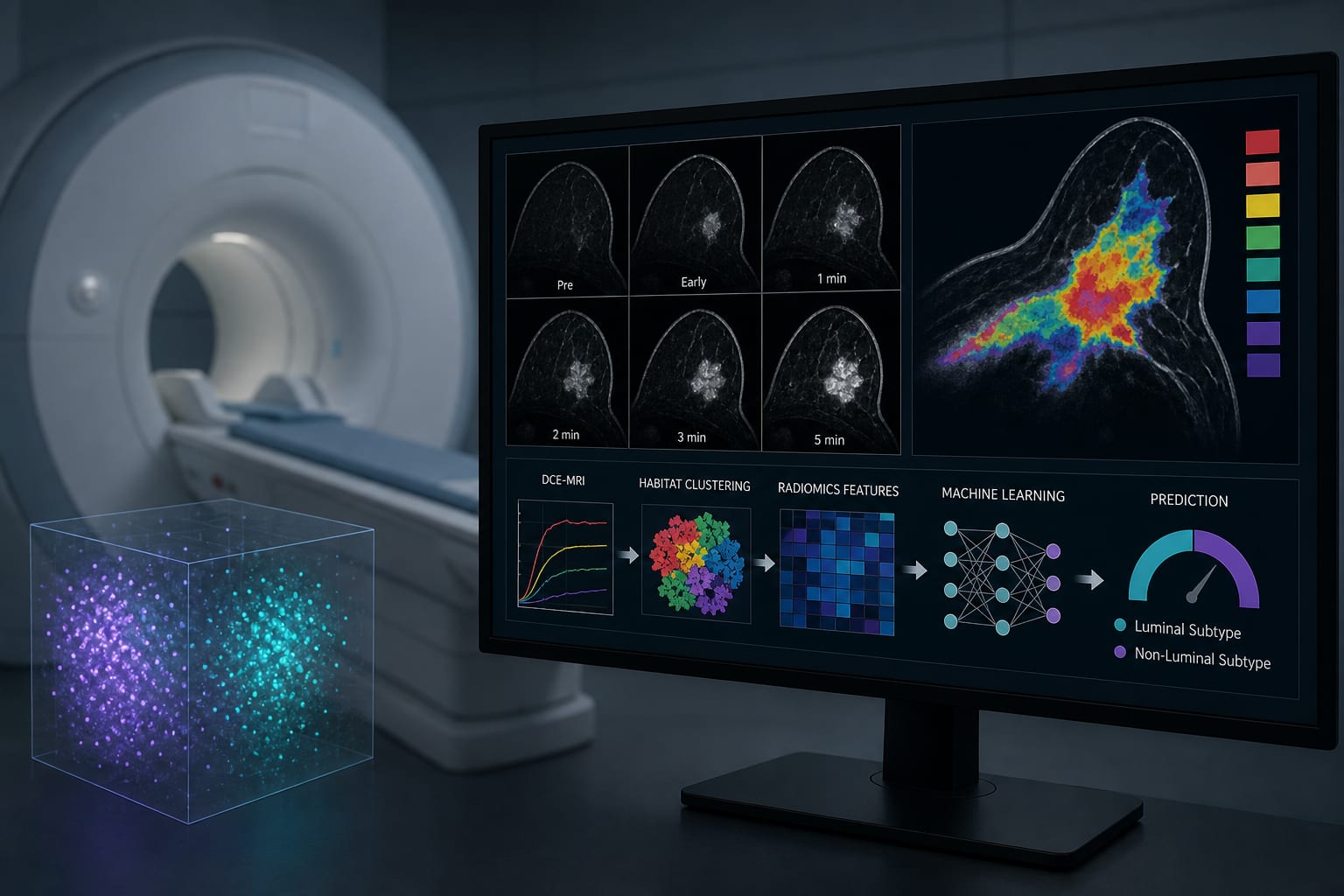
Clinical Scorecard: Utilizing DCE-MRI Habitat Imaging to Distinguish Between Luminal and Non-Luminal Breast Cancer Subtypes: Findings from a Dual-Center Investigation
At a Glance
Category
Detail
Condition
Breast Cancer
Key Mechanisms
Dynamic contrast-enhanced magnetic resonance imaging (DCE-MRI) and habitat imaging for tumor characterization.
Target Population
Patients with invasive breast cancer undergoing surgery.
Care Setting
Dual-center clinical investigation.
Key Highlights
DCE-MRI-based habitat imaging effectively distinguishes luminal from non-luminal breast cancer subtypes.
The stacking model achieved the highest AUC of 0.840 compared to habitat and conventional radiomics models.
Calibration curves indicated good calibration for the stacking model.
SHAP analysis highlighted the significant contribution of habitat-LGBM in the stacking model.
Guideline-Based Recommendations
Diagnosis
Utilize DCE-MRI for preoperative determination of breast cancer molecular subtypes.
Management
Incorporate imaging-based tools for individualized treatment strategies.
Monitoring & Follow-up
Assess tumor heterogeneity using advanced imaging techniques.
Risks
Non-luminal breast cancer is associated with greater risks of recurrence and metastasis.
Patient & Prescribing Data
396 breast cancer patients from two clinical centers.
Luminal tumors are generally responsive to endocrine treatment.
Clinical Best Practices
Employ habitat imaging to enhance quantification of intratumoral heterogeneity.
Combine habitat imaging with traditional radiomics for improved predictive performance.
The goal of this clinical trial is to learn if Adaptive Radiation Therapy (ART) is safe and effective in treating patients with locally advanced pancreatic cancer.