Rule-derived preoperative inflammatory-lymphocyte recovery phenotype and pathological response in resected osteosarcoma: a retrospective cohort study - Scorecard - MDSpire
Conexiant’s news site is now MDSpire News. Learn more
Advertisement
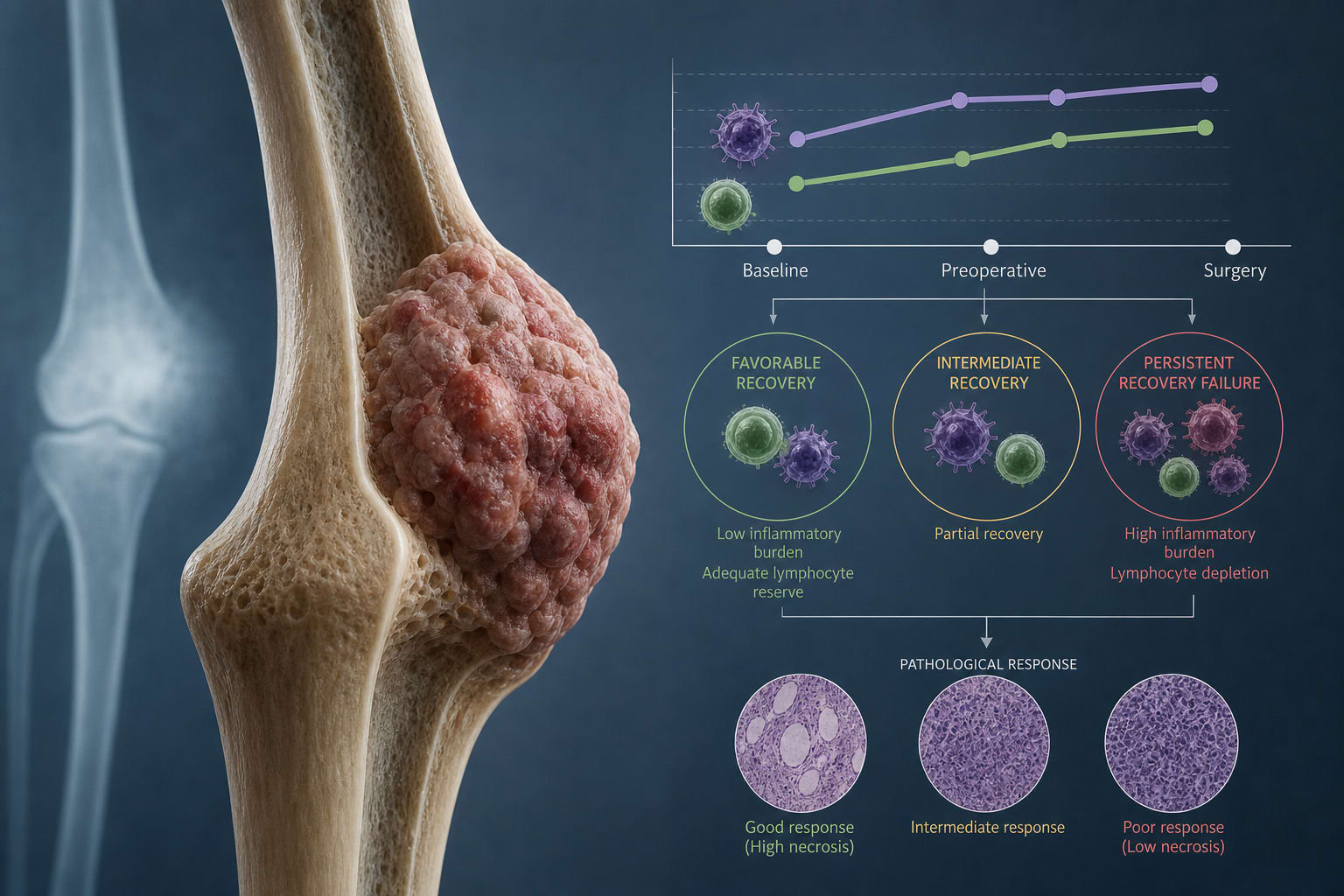
Preoperative Inflammatory-Lymphocyte Recovery Profile and Its Association with Pathological Outcomes in Resected Osteosarcoma: A Retrospective Analysis
Clinical Scorecard: Preoperative Inflammatory-Lymphocyte Recovery Profile and Its Association with Pathological Outcomes in Resected Osteosarcoma: A Retrospective Analysis
At a Glance
Category
Detail
Condition
Osteosarcoma
Key Mechanisms
Preoperative peripheral inflammatory-lymphocyte recovery phenotype associated with pathological response.
Target Population
Patients with osteosarcoma undergoing neoadjuvant chemotherapy and definitive surgery.
Care Setting
Single-center retrospective cohort study.
Key Highlights
54.3% of patients demonstrated poor pathological response.
Persistent recovery failure was associated with a higher risk of poor pathological response (OR 5.72).
Tumor necrosis <90% indicates poor response and greater relapse risk.
The phenotype model produced an AUC of 0.641, lower than the continuous T3 score (AUC 0.665).
External validation of findings is necessary.
Guideline-Based Recommendations
Diagnosis
Pathological response assessment post-surgery is critical for evaluating treatment success.
Management
Neoadjuvant chemotherapy followed by definitive surgery is standard for localized high-grade osteosarcoma.
Monitoring & Follow-up
Regular assessment of inflammatory-lymphocyte recovery during treatment may provide prognostic information.
Risks
Tumor necrosis below 90% is associated with increased relapse risk.
Patient & Prescribing Data
Patients diagnosed with osteosarcoma receiving neoadjuvant chemotherapy.
Dynamic changes in inflammatory and lymphocyte recovery may inform prognosis.
Clinical Best Practices
Utilize peripheral blood biomarkers to assess systemic inflammation and immune reserve.
Integrate recovery phenotype assessments into clinical evaluations.