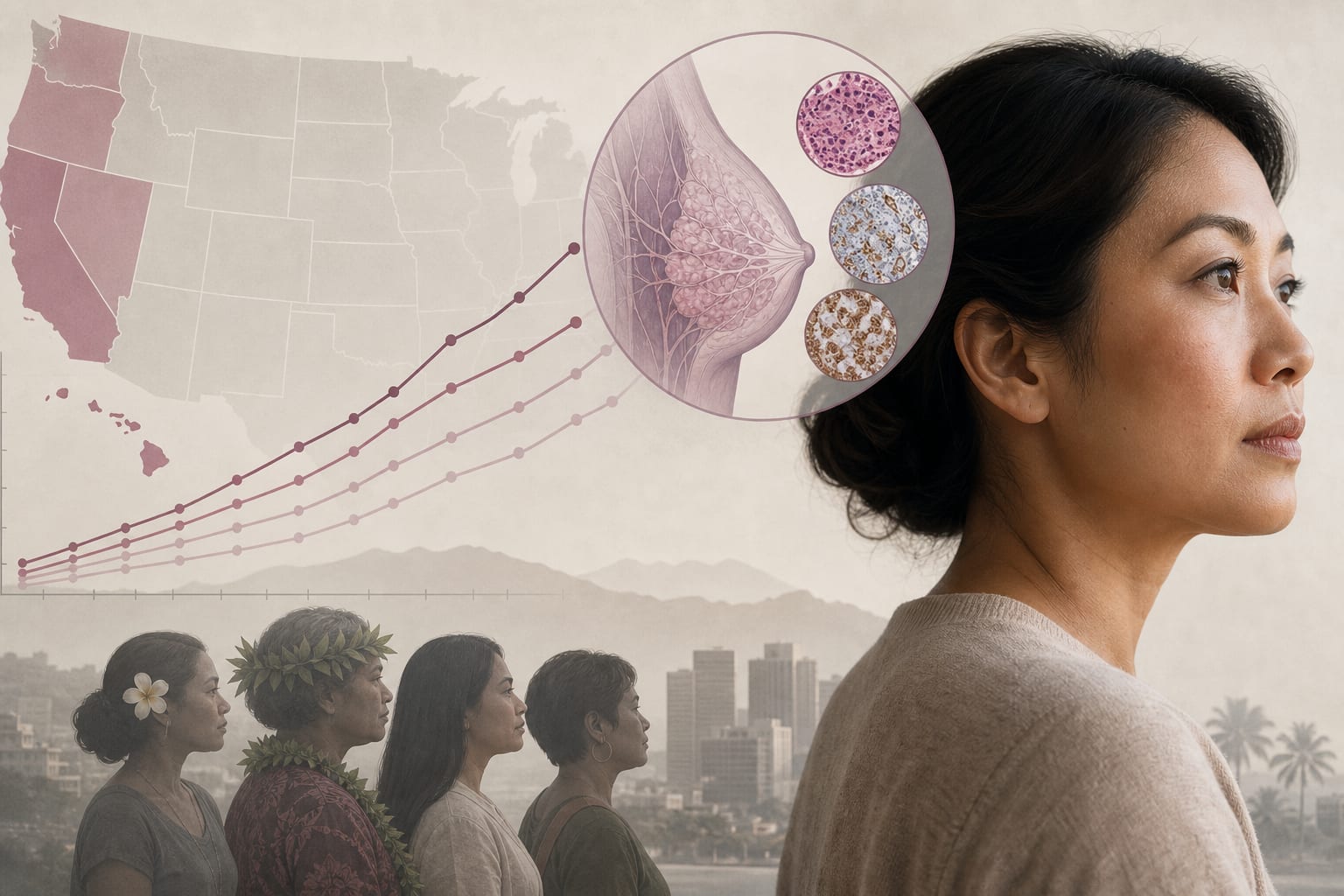
Trends in Breast Cancer Rates Among Asian American, Native Hawaiian, and Pacific Islander Groups
By
Gregory S. Calip
Kent F. Hoskins
Jenny S. Guadamuz
June 30, 2026
Clinical Scorecard: Trends in Breast Cancer Rates Among Asian American, Native Hawaiian, and Pacific Islander Groups
At a Glance
Category Detail
Condition Breast Cancer Key Mechanisms Rising incidence rates, particularly among younger women and aggressive subtypes. Target Population Asian American, Native Hawaiian, and Pacific Islander populations in the US. Care Setting Public health and clinical care.
Key Highlights
Breast cancer incidence is rising across nearly all examined Asian American, Native Hawaiian, and Pacific Islander populations. Significant increases noted among women younger than 50 years and in distant-stage disease. Incidence rates varied more than 3-fold across different ethnic groups. Rising trends in aggressive breast cancer subtypes, including triple-negative and hormone receptor-negative tumors. The study emphasizes the importance of disaggregated data for understanding cancer burden. Guideline-Based Recommendations
Diagnosis
Awareness of rising incidence in younger women should prompt targeted screening and diagnostic efforts. Management
Culturally and linguistically tailored responses are necessary to address barriers to early diagnosis. Monitoring & Follow-up
Ongoing surveillance of breast cancer trends in disaggregated populations is essential. Risks
Structural conditions affecting access to care and screening must be considered in risk assessments. Patient & Prescribing Data
Asian American, Native Hawaiian, and Pacific Islander women.
Need for interventions to improve breast symptom awareness and reduce diagnostic delays.
Clinical Best Practices
Avoid treating Asian American, Native Hawaiian, and Pacific Islander populations as homogeneous in outreach and prevention efforts. Incorporate family history assessments in clinical evaluations. Related Resources & Content