Development and preliminary validation of a WeChat-based auditory-speech rehabilitation system for Mandarin-speaking cochlear implant users - Scorecard - MDSpire
Clinical Scorecard: Creation and initial assessment of a WeChat-based auditory rehabilitation platform for Mandarin-speaking users of cochlear implants
At a Glance
Category
Detail
Condition
Cochlear Implant Rehabilitation
Key Mechanisms
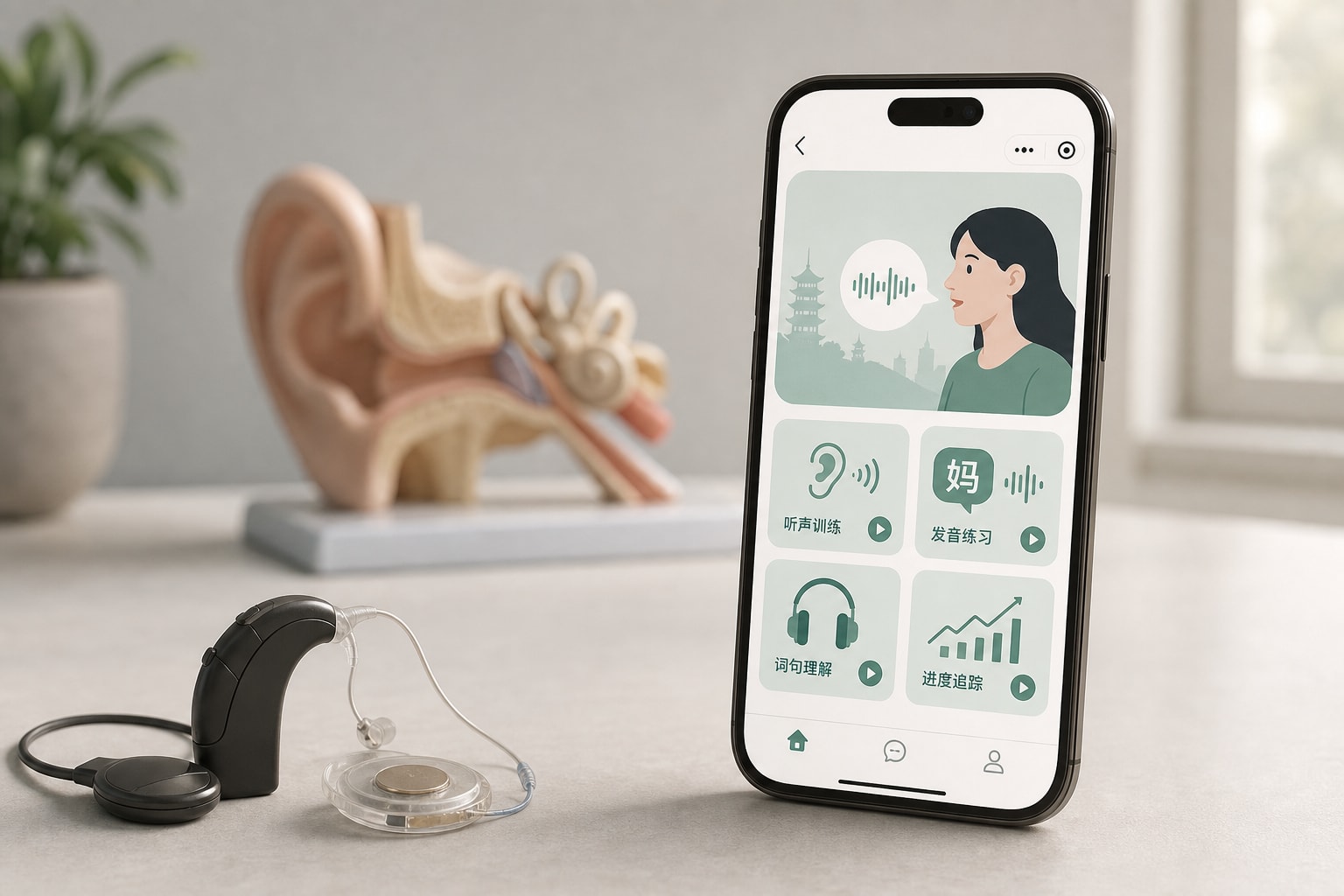
Utilizes a WeChat Mini Program for individualized auditory-speech rehabilitation and assessment.
Target Population
Mandarin-speaking adults with severe to profound sensorineural hearing loss.
Care Setting
Telemedicine delivery and home-based rehabilitation.
Key Highlights
Development of the 'Miao Yan Hui' Mini Program for auditory-speech rehabilitation.
Incorporates a multidimensional assessment framework covering six functional domains.
Supports individualized training plans based on baseline assessments.
Addresses the unique phonological and tonal characteristics of Mandarin.
Facilitates continuous data collection and user engagement through WeChat.
Guideline-Based Recommendations
Diagnosis
Conduct baseline auditory-speech assessments to determine initial functional levels.
Management
Implement individualized daily training plans based on assessment results.
Monitoring & Follow-up
Re-evaluate participants after training cycles to adjust rehabilitation plans.
Risks
Potential variations in device type and recording conditions affecting assessment accuracy.
Patient & Prescribing Data
Mandarin-speaking adults who have undergone cochlear implantation.
Digital remote rehabilitation is feasible and effective for postoperative training.
Clinical Best Practices
Utilize a closed-loop process of assessment, training, and re-evaluation.
Ensure data confidentiality and participant identity protection during assessments.