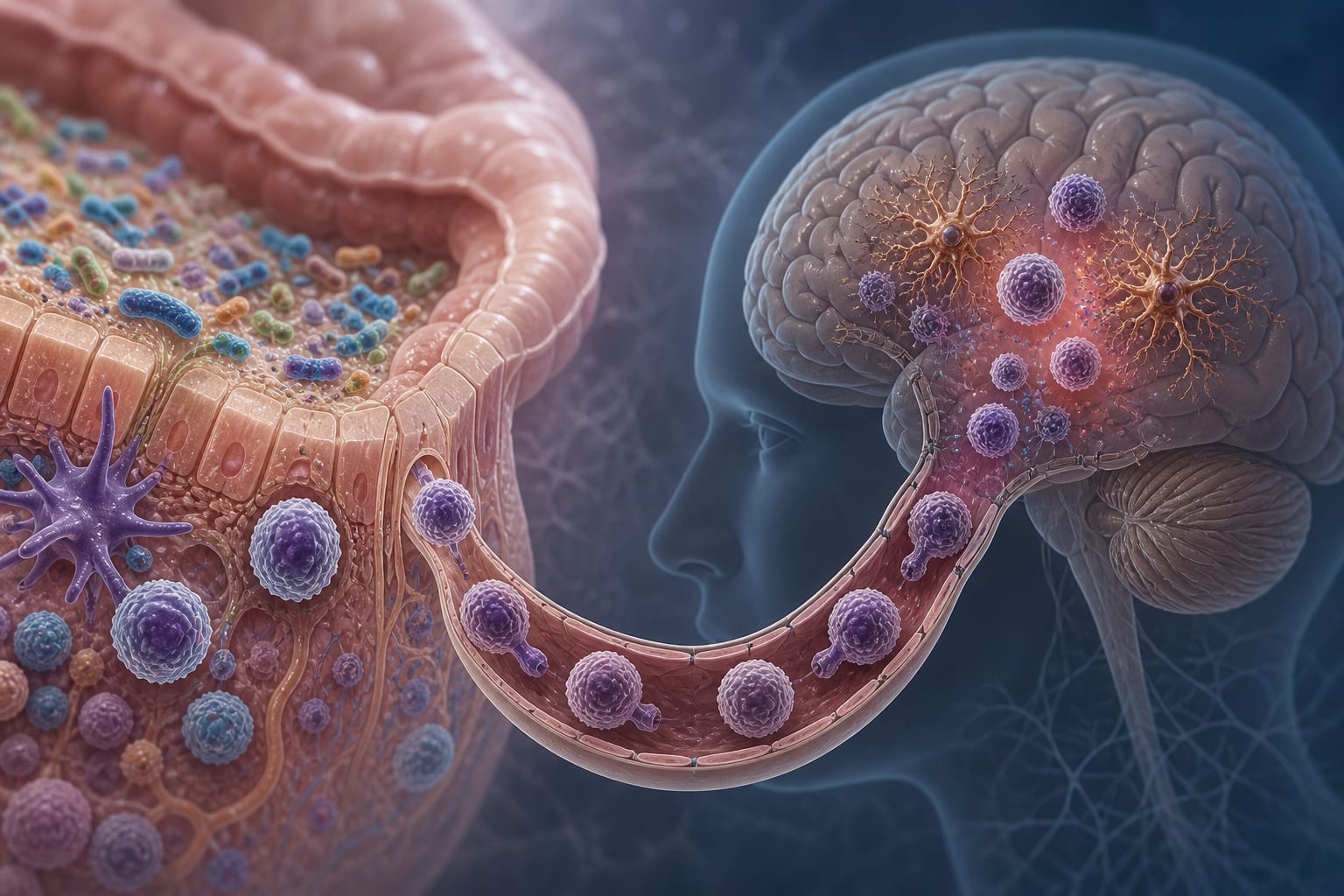
Memory T Cells from the Gut: Crucial Players in Neuroinflammation through the Gut-Brain Connection
-
By
-
Peiyi Liang
-
Songbai Xu
-
Xiying Fu
-
Qianchuang Sun
-
Yicun Wang
-
August 27, 2026
Clinical Scorecard: Memory T Cells from the Gut: Crucial Players in Neuroinflammation through the Gut-Brain Connection
At a Glance
| Category | Detail |
|---|
| Condition | Neuroinflammation |
| Key Mechanisms | Molecular mimicry, bystander activation, sustained epigenetic imprinting |
| Target Population | Individuals with neuroinflammatory disorders such as Alzheimer's disease, Parkinson's disease, and multiple sclerosis |
| Care Setting | Research and clinical settings focusing on gut-brain axis interactions |
Key Highlights
- Memory T cells play a crucial role in mediating neuroinflammation via the gut-brain axis.
- Gut-derived memory T cells can migrate to the CNS and influence neuroinflammatory processes.
- Microbiota composition affects memory T cell phenotypes and their role in neuroinflammation.
- Three principal mechanisms through which memory T cells promote neuroinflammation are identified.
- Gut dysbiosis is linked to altered immune responses and increased neuroinflammatory markers.
Guideline-Based Recommendations
Diagnosis
- Utilize gut microbiota profiling and memory T cell phenotyping for diagnostic insights.
Management
- Consider therapeutic interventions targeting gut microbiota and memory T cells.
Monitoring & Follow-up
- Monitor biomarkers specific to the gut-brain axis in patients with neuroinflammatory disorders.
Risks
- Infection exposure early in life may increase the risk of neuroinflammation and related disorders.
Patient & Prescribing Data
Patients with neuroinflammatory conditions linked to gut-brain axis dysfunction.
Emerging therapies focus on modulating gut microbiota and enhancing memory T cell function.
Clinical Best Practices
- Integrate gut health assessments in the management of neuroinflammatory disorders.
- Evaluate the impact of dietary components on gut microbiota and immune responses.
Related Resources & Content