Deep brain stimulation for pediatric dystonia under general anesthesia with endotracheal intubation: case series in a tertiary hospital - Scorecard - MDSpire
Advertisement
Deep brain stimulation for pediatric dystonia under general anesthesia with endotracheal intubation: case series in a tertiary hospital
Clinical Scorecard: General Anesthesia with Endotracheal Intubation for Deep Brain Stimulation in Pediatric Dystonia: A Case Series from a Tertiary Care Center
At a Glance
Category
Detail
Condition
Pediatric Dystonia
Key Mechanisms
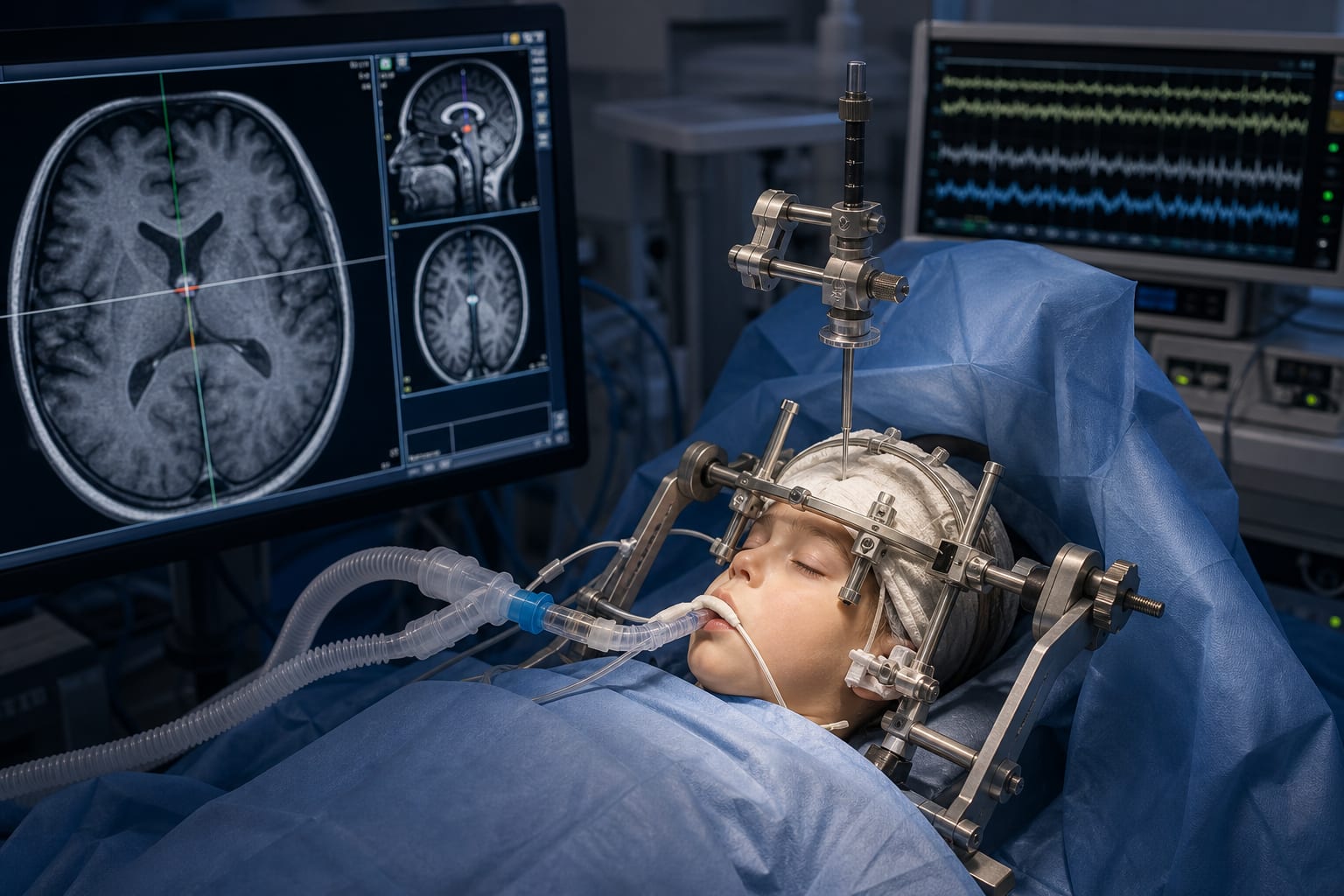
General anesthesia with endotracheal intubation for deep brain stimulation (DBS) surgery.
Target Population
Pediatric patients aged ≤18 years with medically refractory dystonia.
Care Setting
Tertiary care center
Key Highlights
General anesthesia is a feasible choice for pediatric dystonia patients undergoing DBS.
Challenges include potential impacts of general anesthetics on microelectrode recording (MER) quality.
Pediatric dystonia patients often present with comorbidities complicating perioperative management.
Meticulous perioperative monitoring is required to prevent complications.
Clinical reports on anesthetic management for DBS in pediatric dystonia are limited.
Guideline-Based Recommendations
Diagnosis
Definitive diagnosis of dystonia (isolated or combined) is required for DBS surgery.
Management
General anesthesia with endotracheal intubation is recommended for DBS in pediatric patients.
Monitoring & Follow-up
Special attention to perioperative monitoring due to patients' fragility and comorbid conditions.
Risks
Potential adverse effects of general anesthetics on MER quality and perioperative complications.
Patient & Prescribing Data
Pediatric patients aged ≤18 years with medically refractory dystonia.
DBS surgery has shown marked clinical improvements in pediatric dystonia patients.
Clinical Best Practices
Utilize meticulous perioperative monitoring.
Address potential airway difficulties and cardiovascular dysfunction in patients.