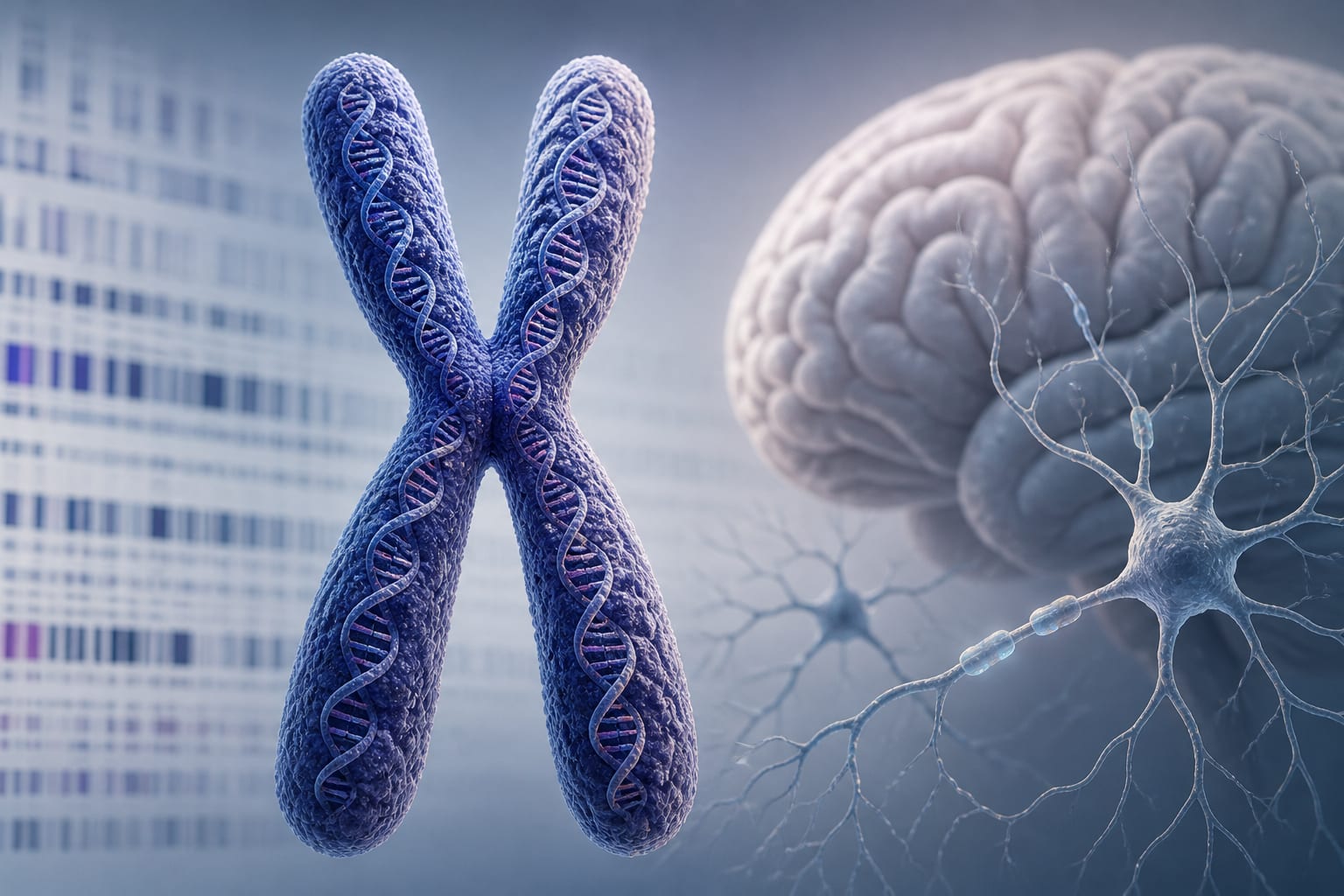
The Role of the X Chromosome in Neurological and Neuropsychiatric Disorders
-
November 27, 2026
Clinical Scorecard: The Role of the X Chromosome in Neurological and Neuropsychiatric Disorders
At a Glance
| Category | Detail |
|---|---|
| Condition | X-chromosome biology and genetic factors associated with neurological and neuropsychiatric disorders |
| Key Mechanisms | X-chromosome-wide association studies can account for sex-specific inheritance patterns and states of X-chromosome inactivation; Rett syndrome is associated with loss-of-function mutations in MECP2, whereas MECP2 duplication syndrome results from MECP2 gain of function. |
| Target Population | The article discusses X-linked genetic factors in neurological disorders, Rett syndrome and MECP2 duplication syndrome, and the lived experience of a person with Rett syndrome and her caregiver. |
| Care Setting | The article covers genetic research, a review of monogenic disorders, and a Q&A about lived experience; it does not specify a clinical care setting. |
Key Highlights
- The X chromosome represents approximately 5% of the human genome and harbours numerous genes associated with susceptibility to neurological and neuropsychiatric disorders.
- Conventional genome-wide association studies are not especially well suited to studying the X chromosome, which has received less attention than autosomes.
- X-chromosome-wide association studies can incorporate sex-specific inheritance patterns and states of X-chromosome inactivation.
- The Perspective reports that X-linked genetic factors may be associated with vulnerability or resilience in neurological disorders and may help explain sex differences in Alzheimer disease, multiple sclerosis and autism spectrum disorder.
- Rett syndrome is a neurodevelopmental disorder with strong female predominance associated with loss-of-function mutations in MECP2; MECP2 duplication syndrome results from MECP2 gain of function and predominantly affects males.
Guideline-Based Recommendations
Diagnosis
Management
Monitoring & Follow-up
Risks
Patient & Prescribing Data
The article discusses Rett syndrome, which has strong female predominance, and MECP2 duplication syndrome, which predominantly affects males; it also includes a caregiver’s account of living with Rett syndrome.
The article reports that X-linked genetic findings may inform the development of personalized therapeutic strategies, but provides no specific prescribing or treatment recommendations.
Clinical Best Practices
Related Resources & Content
Based on findings from:
The X chromosome in neurological disease
Nature Reviews Neurology, 2026.
https://www.nature.com/articles/s41582-026-01288-7
This content is an AI-generated, fully rewritten summary based on a published scholarly article. It does not reproduce the original text and is not a substitute for the original publication. Readers are encouraged to consult the source for full context, data, and methodology.