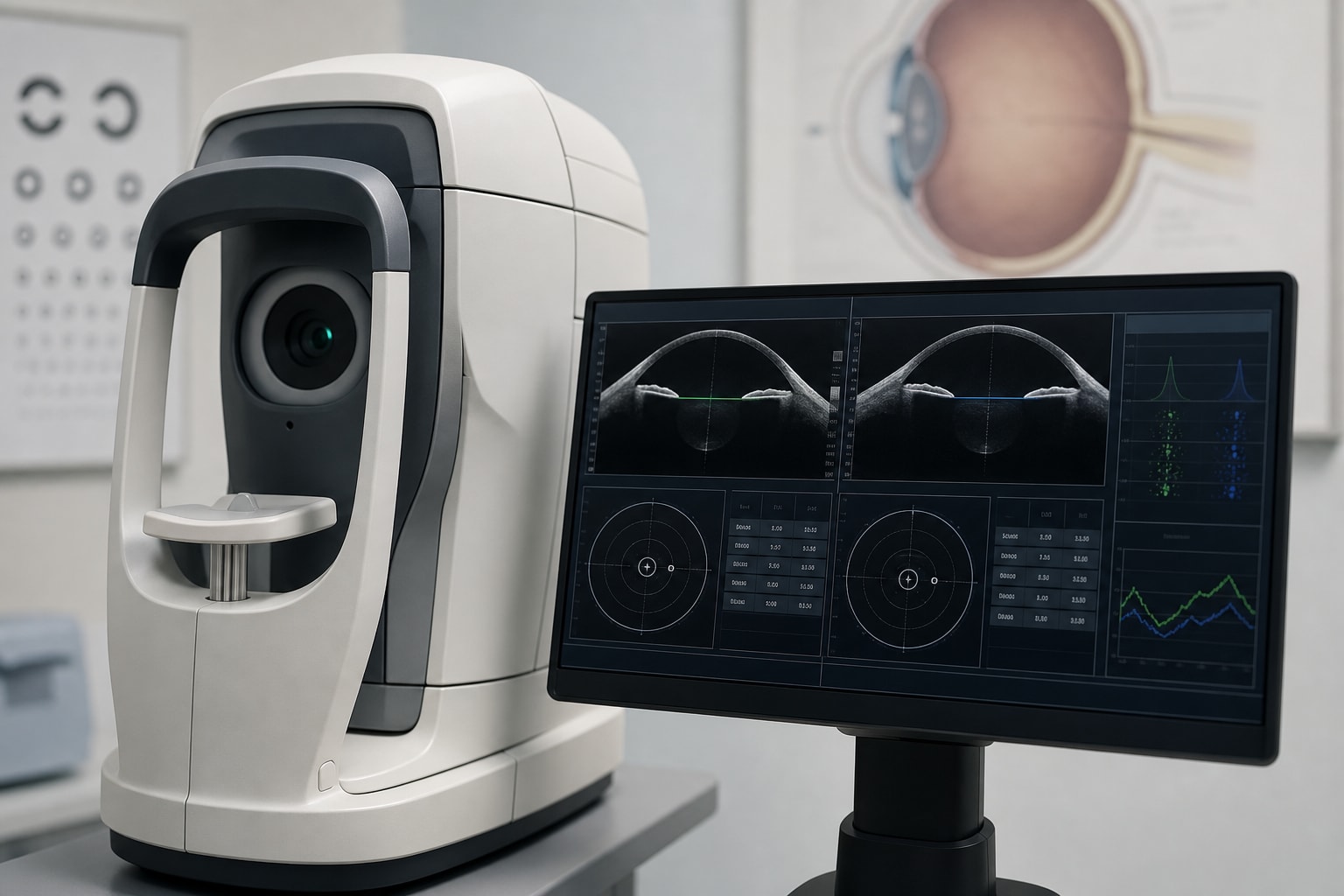
Ocular Biometric Features and Interocular Variability in Pediatric High Myopia: Insights for Early Risk Assessment
-
By
-
Siqi Zhang
-
Xi Wang
-
Zhaoxing Ding
-
Qi Zhao
-
May 25, 2026
Clinical Scorecard: Ocular Biometric Features and Interocular Variability in Pediatric High Myopia: Insights for Early Risk Assessment
At a Glance
| Category | Detail |
|---|
| Condition | |
| Key Mechanisms | |
| Target Population | Children and adolescents under 18 years with spherical equivalent (SE) ≤ -6.00D |
| Care Setting | |
Key Highlights
- Anisometropia observed in 27.7% of patients with | ΔSE| ≥ 2.0D, indicating a need for tailored management strategies.
Guideline-Based Recommendations
Diagnosis
Management
- Implement individualized myopia monitoring and intervention for high-risk patients, such as specific optical corrections or lifestyle modifications.
Monitoring & Follow-up
Risks
Patient & Prescribing Data
Focus on monitoring ocular structural changes, such as AL and AL/CR, rather than relying solely on SE.
Clinical Best Practices
- Incorporate AL/CR into routine assessments for high myopia, with monitoring intervals every 6-12 months.
Related Resources & Content