Clinical Scorecard: Understanding Resistance Mechanisms to Initial Therapy in Diffuse Large B-Cell Lymphoma
At a Glance
Category
Detail
Condition
Key Mechanisms
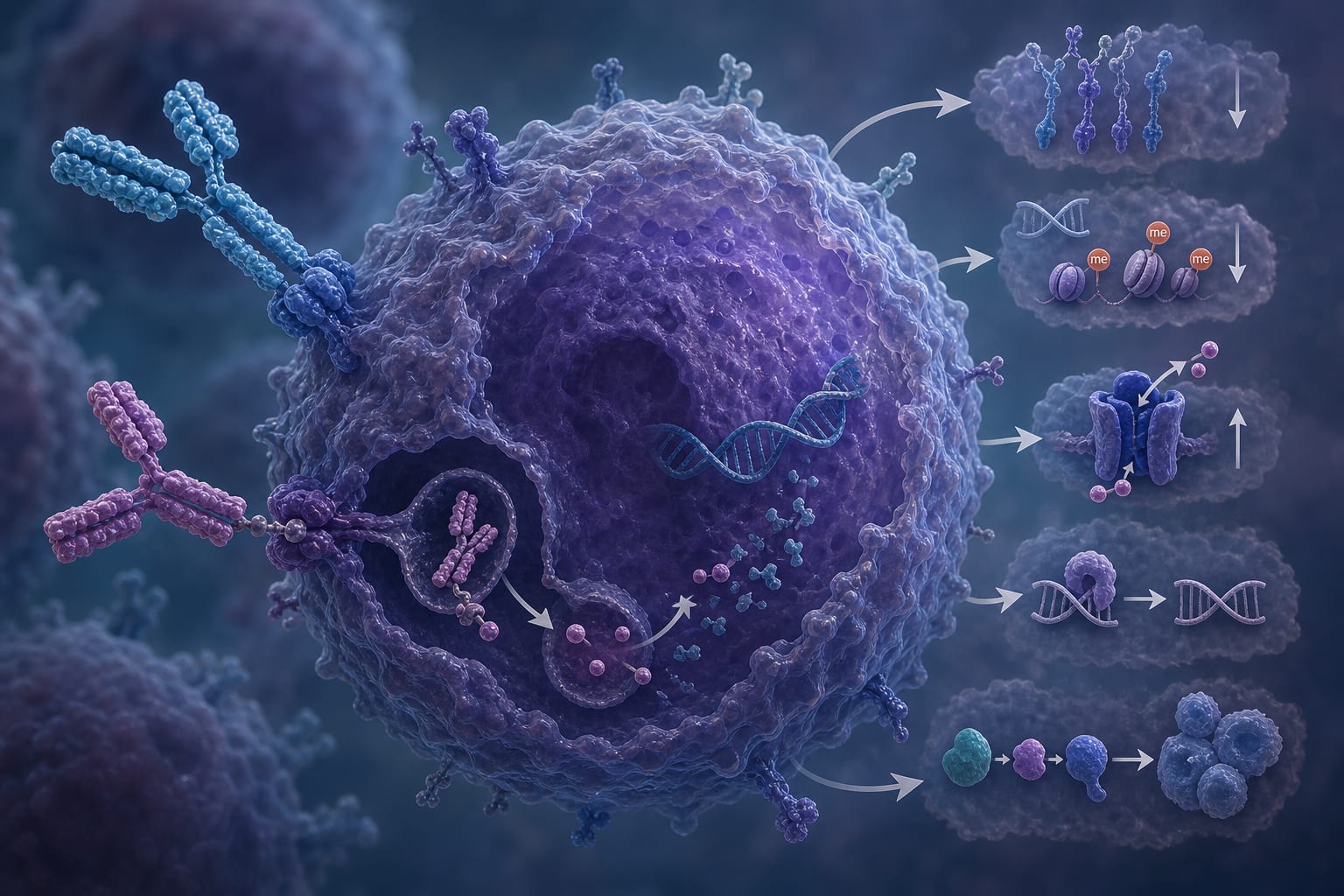
Resistance mechanisms include downregulation of CD79b and CD20, high expression of ABC transporters, and alterations in signaling pathways, which impact treatment efficacy.
Target Population
Care Setting
Key Highlights
30-40% of DLBCL patients develop refractory or relapsed disease after initial therapy, with specific references to studies.
R-CHOP and pola-R-CHP show minimal cross-resistance, allowing for combination therapy; include data from clinical trials.
Polatuzumab vedotin has shown improved progression-free survival in certain DLBCL subtypes; specify the subtypes and trial data.
Guideline-Based Recommendations
Diagnosis
Management
Monitoring & Follow-up
Monitor CD79b and CD20 expression levels to assess potential resistance, ideally every 3 months during treatment.
Risks
Patient & Prescribing Data
Patients with DLBCL, particularly those at risk of treatment resistance.
Combination therapies targeting non-overlapping resistance mechanisms are essential for improving outcomes.