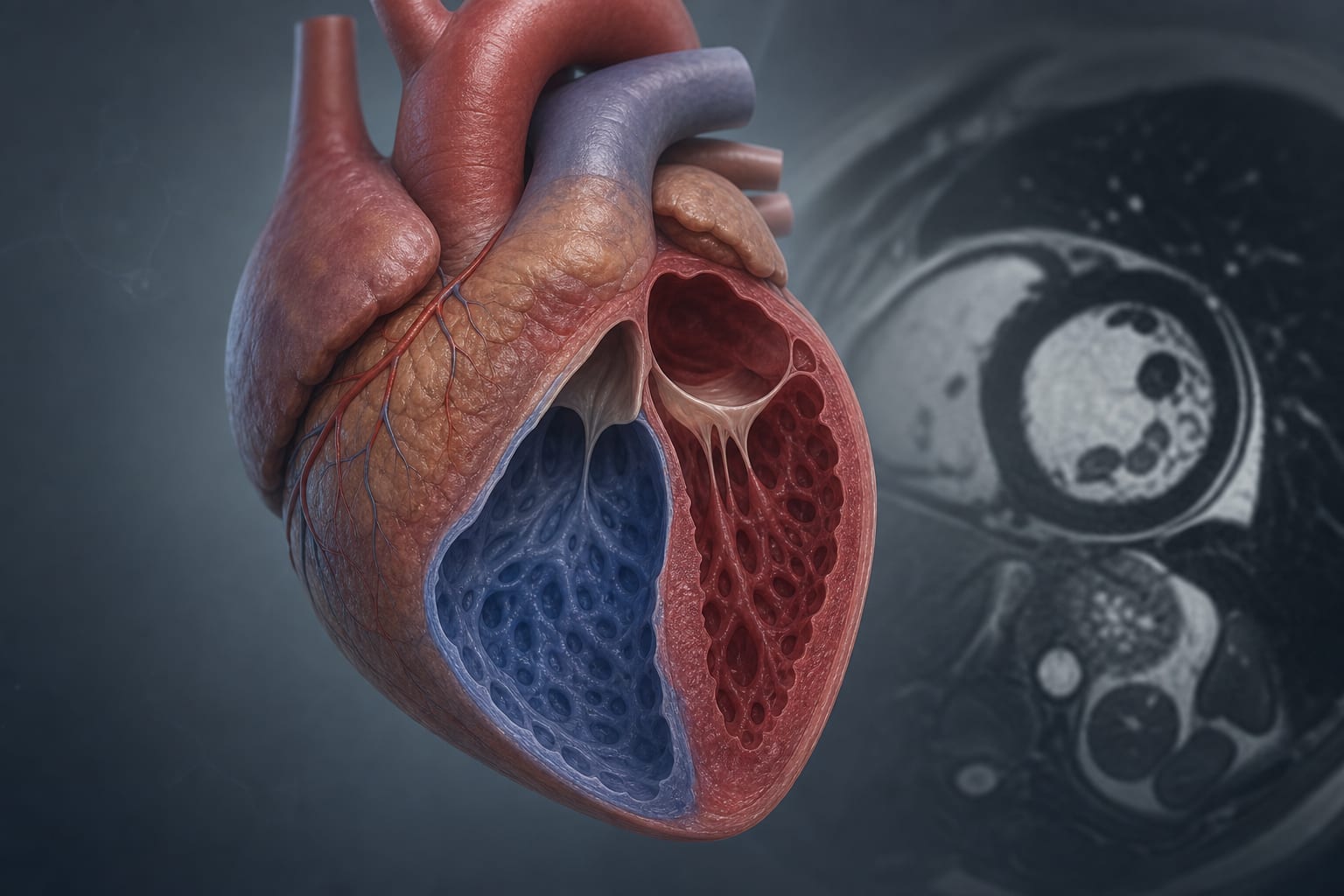
Clinical Scorecard: Right Ventricular Dysfunction as a Neglected Indicator of Sudden Cardiac Death and Arrhythmic Events: A Comprehensive Meta-Analysis
At a Glance
Category
Detail
Condition
Right Ventricular Dysfunction
Key Mechanisms
Association with increased risk of sudden cardiac death (SCD) and ventricular arrhythmias (VAs)
Target Population
Patients with cardiac conditions potentially leading to SCD
Care Setting
Cardiology and emergency care settings
Key Highlights
Sudden cardiac death incidence ranges from 30 to 100 per 10,000 individuals annually.
Left ventricular ejection fraction (LVEF) ≤ 35% is a criterion for ICD implantation.
Approximately one-third of SCD cases occur in patients with LVEF ≤ 35%.
Right ventricular dysfunction is linked to adverse outcomes and increased risk of SCD.
Reduced right ventricular fractional area change (RVFAC) is associated with increased risk of SCD.
Guideline-Based Recommendations
Diagnosis
Assess right ventricular function using echocardiography or cardiac MRI.
Management
Consider ICD implantation in patients with LVEF ≤ 35% and RV dysfunction.
Monitoring & Follow-up
Regularly evaluate RV function in patients at risk for SCD.
Risks
Patients with RV dysfunction may have a higher risk of SCD and VAs.
Patient & Prescribing Data
Patients with cardiac conditions at risk for sudden cardiac death.
ICD therapy may provide survival benefits in patients with RV dysfunction.
Clinical Best Practices
Incorporate RV function assessment in risk stratification for SCD.
Utilize both RV and LV parameters for comprehensive risk evaluation.
by Toshinori Chiba, Amelie Beblo, Nora Wainstejn, Julia Lueg, Robert Hättasch, Felix Hohendanner, Verena Tscholl, Nikolaos Dagres, Gerhard Hindricks, Wilhelm Haverkamp
The proposed framework classified 30% of patients as high or extreme risk, compared with 12% classified as having severe or greater tricuspid regurgitation under established grading schemes.