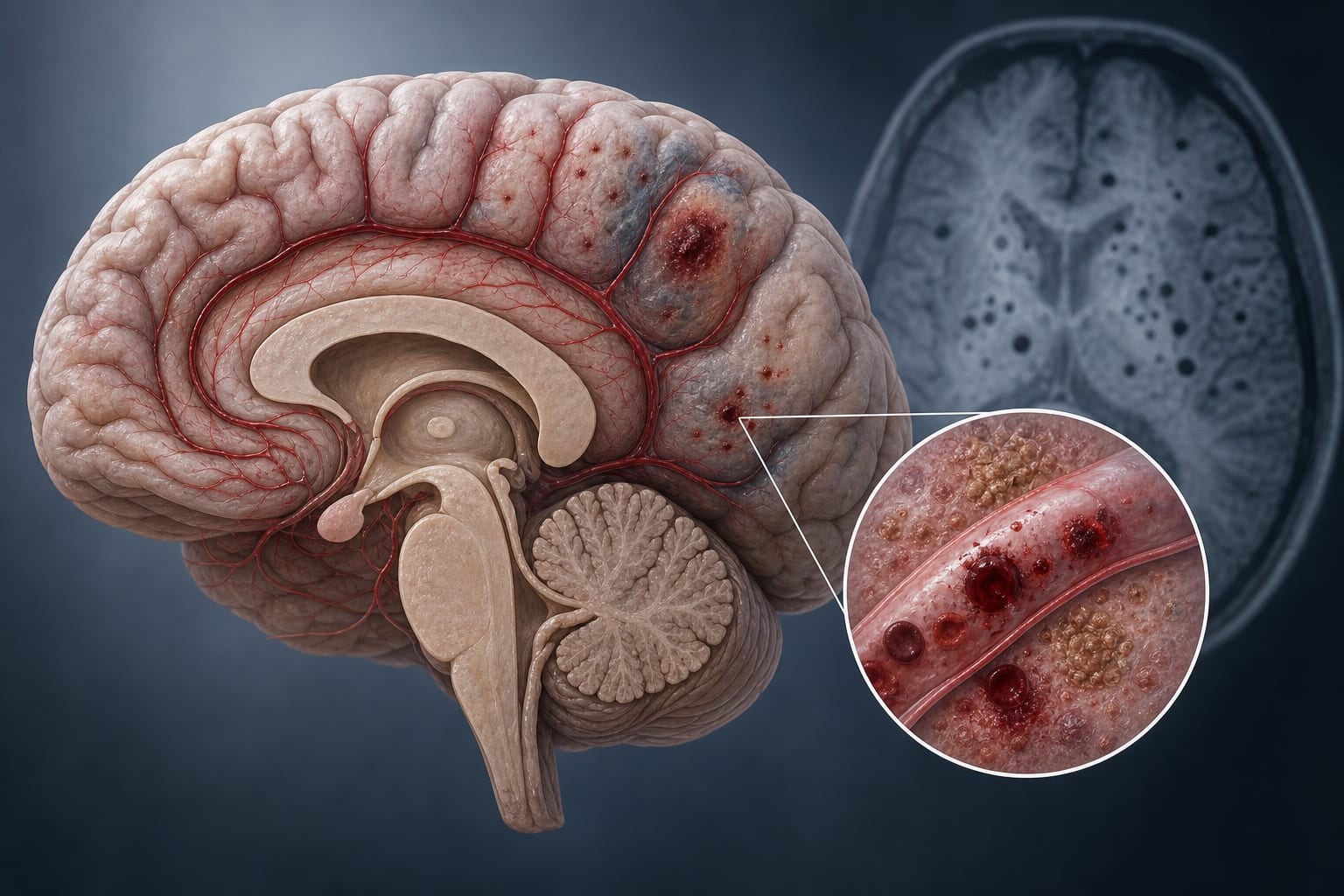
Clinical Scorecard: The Influence of Vascular Wellness on Cognitive Function and Brain Health
At a Glance
| Category | Detail |
|---|---|
| Condition | Cognitive decline and dementia risk |
| Key Mechanisms | Vascular risk factors including hypertension, LDL cholesterol, and blood glucose influence brain health and dementia risk |
| Target Population | Middle-aged and older adults, individuals with hypertension, dyslipidemia, type 2 diabetes mellitus, and those at risk of neurodegenerative diseases |
| Care Setting | Primary care, cardiovascular and endocrinology clinics, community health settings |
Key Highlights
- Untreated hypertension is significantly associated with increased dementia risk; antihypertensive treatment reduces this risk.
- Lower LDL cholesterol levels and statin use are linked to reduced risk of all-cause dementia and Alzheimer's disease dementia.
- GLP-1 receptor agonists and SGLT2 inhibitors in type 2 diabetes are associated with reduced incidence of Alzheimer's disease dementia.
Guideline-Based Recommendations
Diagnosis
- Monitor blood pressure regularly to identify and manage hypertension early.
- Assess lipid profiles including LDL cholesterol levels in at-risk populations.
- Screen for type 2 diabetes mellitus and monitor glycaemic control.
Management
- Implement antihypertensive therapy to achieve systolic blood pressure below 140 mmHg to improve cognitive outcomes.
- Use statins to lower LDL cholesterol aiming for levels below 1.8 mmol/l to reduce dementia risk.
- Consider GLP-1 receptor agonists or SGLT2 inhibitors in type 2 diabetes management to potentially reduce Alzheimer's disease dementia incidence.
Monitoring & Follow-up
- Regular cognitive function assessments in patients with vascular risk factors.
- Ongoing evaluation of blood pressure, lipid levels, and glycaemic control to optimize vascular health.
- Monitor for potential neuroprotective effects of glucose-lowering therapies beyond glycaemic control.
Risks
- Early termination of trials may limit definitive evidence on dementia prevention.
- Unclear mechanisms underlying some drug benefits require further research.
- Potential variability in drug effects among different agents within the same class.
Patient & Prescribing Data
Individuals with hypertension, dyslipidemia, and type 2 diabetes mellitus at risk of cognitive decline and dementia.
Antihypertensives, statins, GLP-1 receptor agonists, and SGLT2 inhibitors show promise in reducing dementia risk, with some agents demonstrating benefits beyond their primary vascular effects.
Clinical Best Practices
- Target vascular risk factors early to reduce long-term dementia risk.
- Use evidence-based pharmacologic interventions to optimize blood pressure, lipid, and glucose control.
- Consider the potential neuroprotective properties of glucose-lowering agents when selecting diabetes therapies.
- Focus on population-level strategies, especially in low and middle-income countries, to improve vascular and brain health affordably.
- Support ongoing research to elucidate mechanisms linking vascular health and neurodegeneration.
References
- SPRINT-MIND trial results
- Meta-analysis on hypertension and dementia risk
- South Korean study on LDL cholesterol and dementia
- Meta-analysis on statins and dementia risk
- Study on GLP-1 receptor agonists, SGLT2 inhibitors, and dementia
- Meta-analysis on glucose lowering drugs and dementia risk
- Brain publication on T2DM and neurodegenerative disease risk
This content is an AI-generated, fully rewritten summary based on a published scholarly article. It does not reproduce the original text and is not a substitute for the original publication. Readers are encouraged to consult the source for full context, data, and methodology.