Cholesterol and docosahexaenoic acid likely protect against alcohol-induced constriction of cerebral arteries via a common pathway - Scorecard - MDSpire
Advertisement
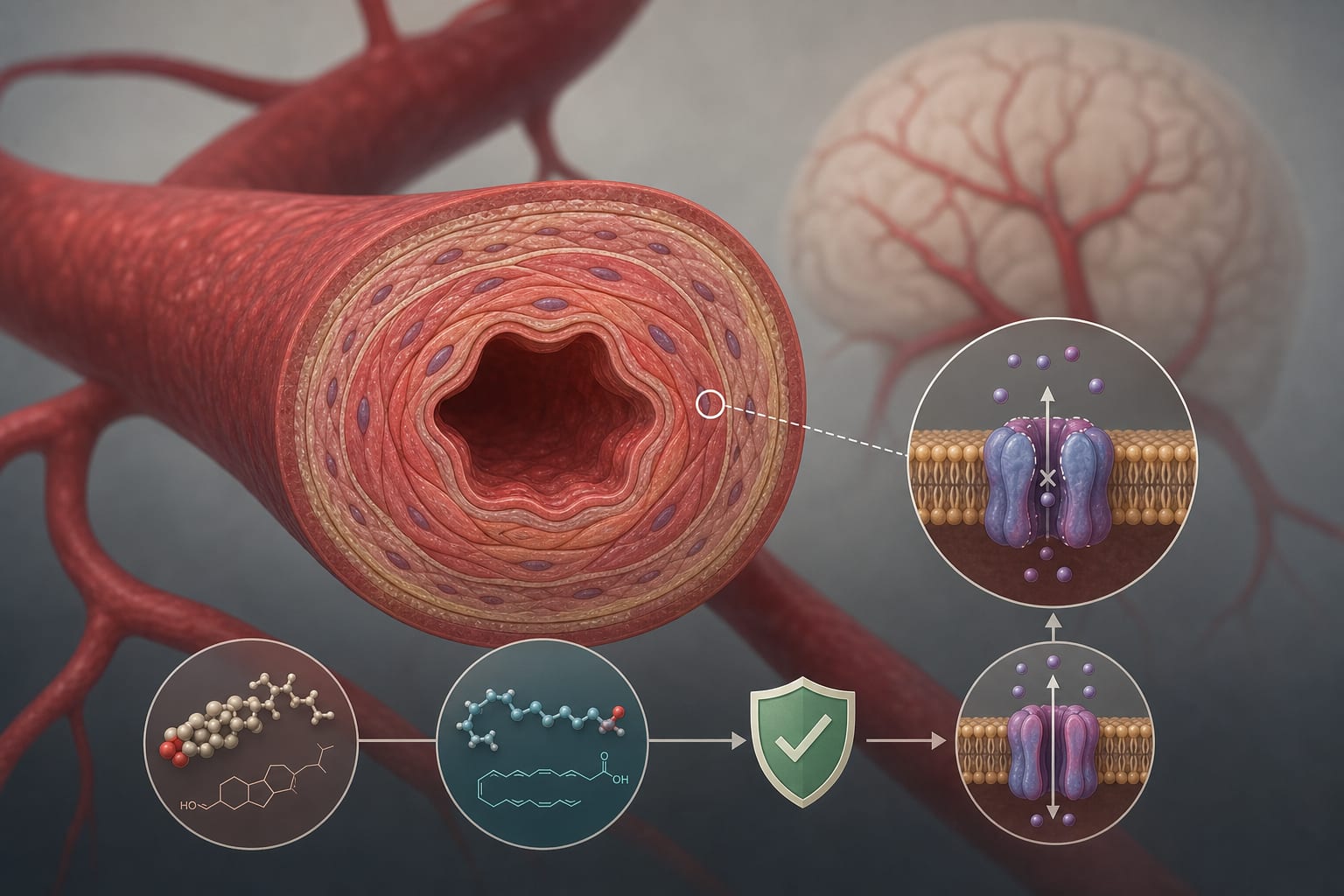
Cholesterol and docosahexaenoic acid may offer protection against alcohol-related constriction of cerebral arteries through a shared mechanism
Clinical Scorecard: Cholesterol and docosahexaenoic acid may offer protection against alcohol-related constriction of cerebral arteries through a shared mechanism
At a Glance
Category
Detail
Condition
Alcohol-induced cerebrovascular constriction
Key Mechanisms
Inhibition of BK channels by alcohol; protective effects of cholesterol and DHA
Target Population
Individuals with excessive alcohol consumption
Care Setting
Preclinical models
Key Highlights
Binge drinking is linked to cerebrovascular dysfunction.
High-cholesterol diet and DHA supplementation protect against alcohol-induced constriction.
DHA protection is sexually dimorphic, depending on the presence of slo1Y450 mutation.
Guideline-Based Recommendations
Diagnosis
Assess alcohol consumption patterns and cerebrovascular health.
Management
Consider dietary interventions such as high-cholesterol diet and DHA supplementation.
Monitoring & Follow-up
Monitor cerebrovascular function in individuals with high alcohol intake.
Risks
Excessive alcohol consumption increases the risk of stroke and cerebrovascular dysfunction.
Patient & Prescribing Data
Individuals at risk of alcohol-related cerebrovascular issues.
High-cholesterol diet and DHA may mitigate alcohol's harmful effects on cerebral arteries.
Clinical Best Practices
Evaluate dietary habits in patients with high alcohol consumption.
Incorporate DHA and cholesterol considerations in treatment plans for cerebrovascular protection.