Development and internal validation of a prediction model for early identification of sepsis-associated acute kidney injury based on admission serum biomarkers: a retrospective cohort study - Scorecard - MDSpire
Advertisement
Development and internal validation of a prediction model for early identification of sepsis-associated acute kidney injury based on admission serum biomarkers: a retrospective cohort study
Clinical Scorecard: Creation and internal validation of a predictive model for the early detection of sepsis-related acute kidney injury using admission serum biomarkers: a retrospective cohort analysis
At a Glance
Category
Detail
Condition
Sepsis-associated acute kidney injury (SA-AKI)
Key Mechanisms
Prediction model using first serum laboratory indicators post-admission
Target Population
Patients diagnosed with sepsis or septic shock aged ≥18 years
Care Setting
Retrospective cohort study in a hospital setting
Key Highlights
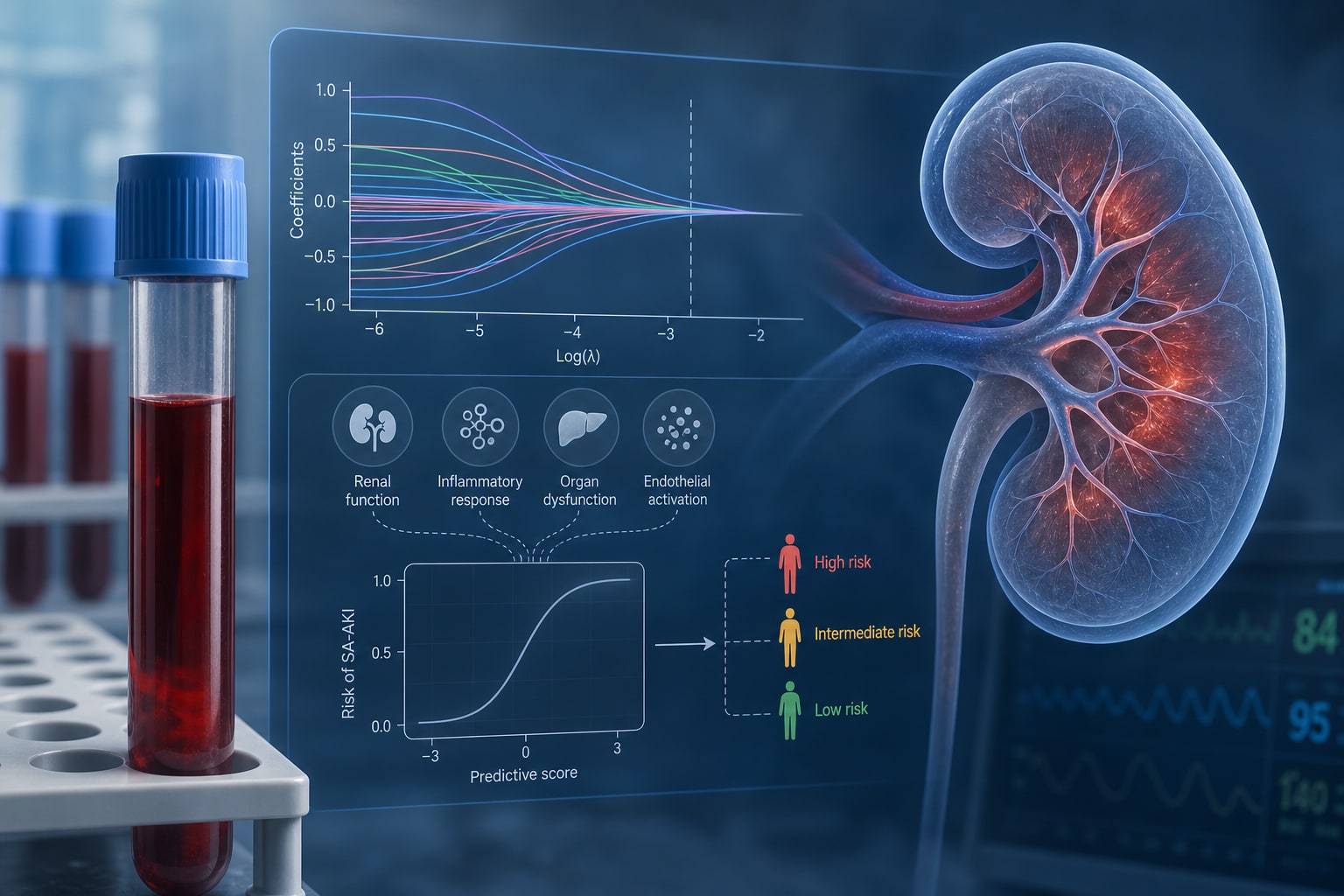
Developed a predictive model for SA-AKI using first serum biomarkers
Model demonstrated favorable discrimination with AUC values of 0.839 and 0.832
Identified 8 independent risk factors for SA-AKI
Nomogram created for individualized risk estimation
Stable performance across age and sex strata
Guideline-Based Recommendations
Diagnosis
SA-AKI defined per 2012 KDIGO criteria
Management
Early identification for timely intervention
Monitoring & Follow-up
Use of first serum laboratory indicators for risk stratification
Risks
Increased mortality and need for renal replacement therapy associated with SA-AKI
Patient & Prescribing Data
Sepsis patients admitted to West China Hospital
Focus on early risk stratification using serum biomarkers
Clinical Best Practices
Utilize first serum laboratory indicators for early detection of SA-AKI
Implement nomogram for bedside risk estimation
Conduct external validation in diverse cohorts before broader implementation