Rethinking white matter–tumor interaction: a tractography based analysis of associations between fractional anisotropy and morphometry in the IFOF and arcuate fasciculus - Scorecard - MDSpire

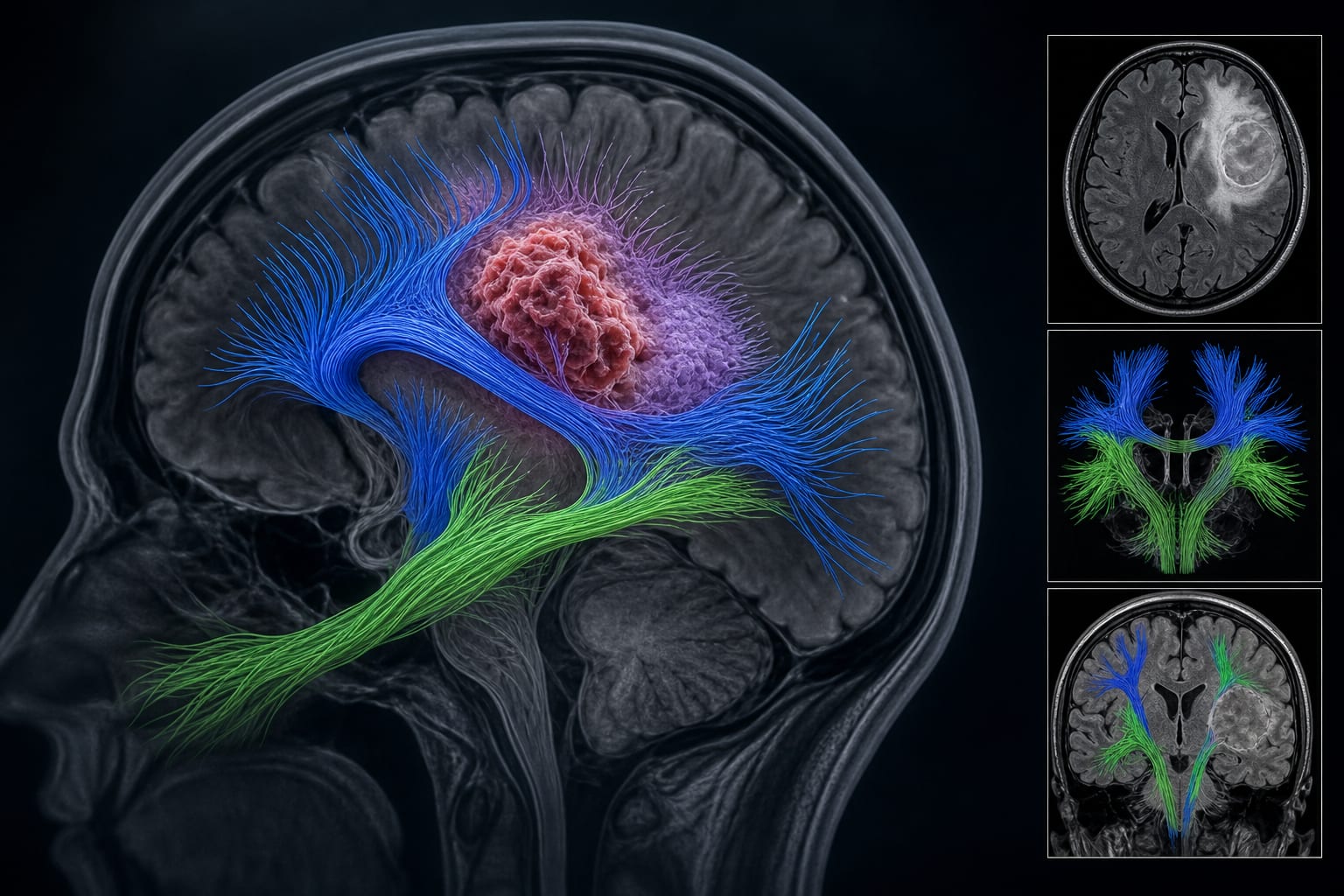
Rethinking white matter–tumor interaction: a tractography based analysis of associations between fractional anisotropy and morphometry in the IFOF and arcuate fasciculus

  • By

  • Roberto Altieri

  • Lorenzo Ugga

  • Andrea Bianconi

  • Stefano Caneva

  • Ferdinando Caranci

  • Giovanni Cirillo

  • Fabio Cofano

  • Sergio Corvino

  • Oreste de Divitiis

  • Giuseppe Maria Della Pepa

  • Donatella Franco

  • Ciro De Luca

  • Pietro Fiaschi

  • Gianluca Galieri

  • Diego Garbossa

  • Giuseppe La Rocca

  • Salvatore Marino

  • Edoardo Mazzucchi

  • Grazia Menna

  • Antonio Mezzogiorno

  • Alberto Morello

  • Alessandro Olivi

  • Michele Papa

  • Daniela Pacella

  • Rosellina Russo

  • Giovanni Sabatino

  • Giovanna Sepe

  • Assunta Virtuoso

  • Giovanni Vitale

  • Giuseppe Vitale

  • Gianluigi Zona

  • Manlio Barbarisi

  • July 7, 2026

  • 0 min

Share

Clinical Scorecard: Reevaluating the Interaction Between White Matter and Tumors: An Analysis of Fractional Anisotropy and Morphometric Associations in the IFOF and Arcuate Fasciculus Using Tractography

At a Glance

CategoryDetail
ConditionWhite Matter Anatomy and Tumor Interaction
Key MechanismsFractional anisotropy (FA) as an index of white matter integrity and its influence on morphometric characteristics of the inferior fronto-occipital fasciculus (IFOF) and arcuate fasciculus (AF).
Target PopulationPatients aged ≥ 18 years with glioblastoma, low-grade glioma, brain metastases, or meningioma.
Care SettingRetrospective multicenter study across six Italian Neurosurgical Units.

Key Highlights

  • Study investigates the relationship between white matter tracts and tumor histotypes.
  • FA is used to assess white matter integrity in relation to tumor proximity.
  • Tractography techniques employed include deterministic tractography with standardized post-processing.

Guideline-Based Recommendations

Diagnosis

  • Histological and/or molecular diagnosis confirming GBM, LGG, brain metastasis, or WHO grade I meningioma.

Management

  • Involvement of a multidisciplinary team for preoperative tractography assessments.

Monitoring & Follow-up

  • Preoperative neuroimaging including contrast-enhanced MRI and DTI sequences.

Risks

  • Reduced FA may lead to premature streamline termination affecting tract volume reconstruction.

Patient & Prescribing Data

1,294 patients who underwent surgery for intracranial tumors.

Study based on anonymized clinical and imaging data from routine diagnostic and surgical procedures.

Clinical Best Practices

  • Utilize standardized post-processing workflows for tractography analyses.
  • Ensure comprehensive preoperative imaging to assess tumor proximity to white matter tracts.

Related Resources & Content

Original Source(s)

Related Content