Assessing Glycolysis-Related Biomarkers for Sensitivity to Radiotherapy in Head and Neck Squamous Cell Carcinoma
By
Bilan Xie
Hainan Yang
Chunyuan Lin
Jinzhi Lai
June 29, 2026
Clinical Scorecard: Assessing Glycolysis-Related Biomarkers for Sensitivity to Radiotherapy in Head and Neck Squamous Cell Carcinoma
At a Glance
Category Detail
Condition Head and Neck Squamous Cell Carcinoma (HNSC) Key Mechanisms Glycolysis activity influences radiotherapy sensitivity and resistance. Target Population Patients with Head and Neck Squamous Cell Carcinoma undergoing radiotherapy. Care Setting Oncology clinical practice.
Key Highlights
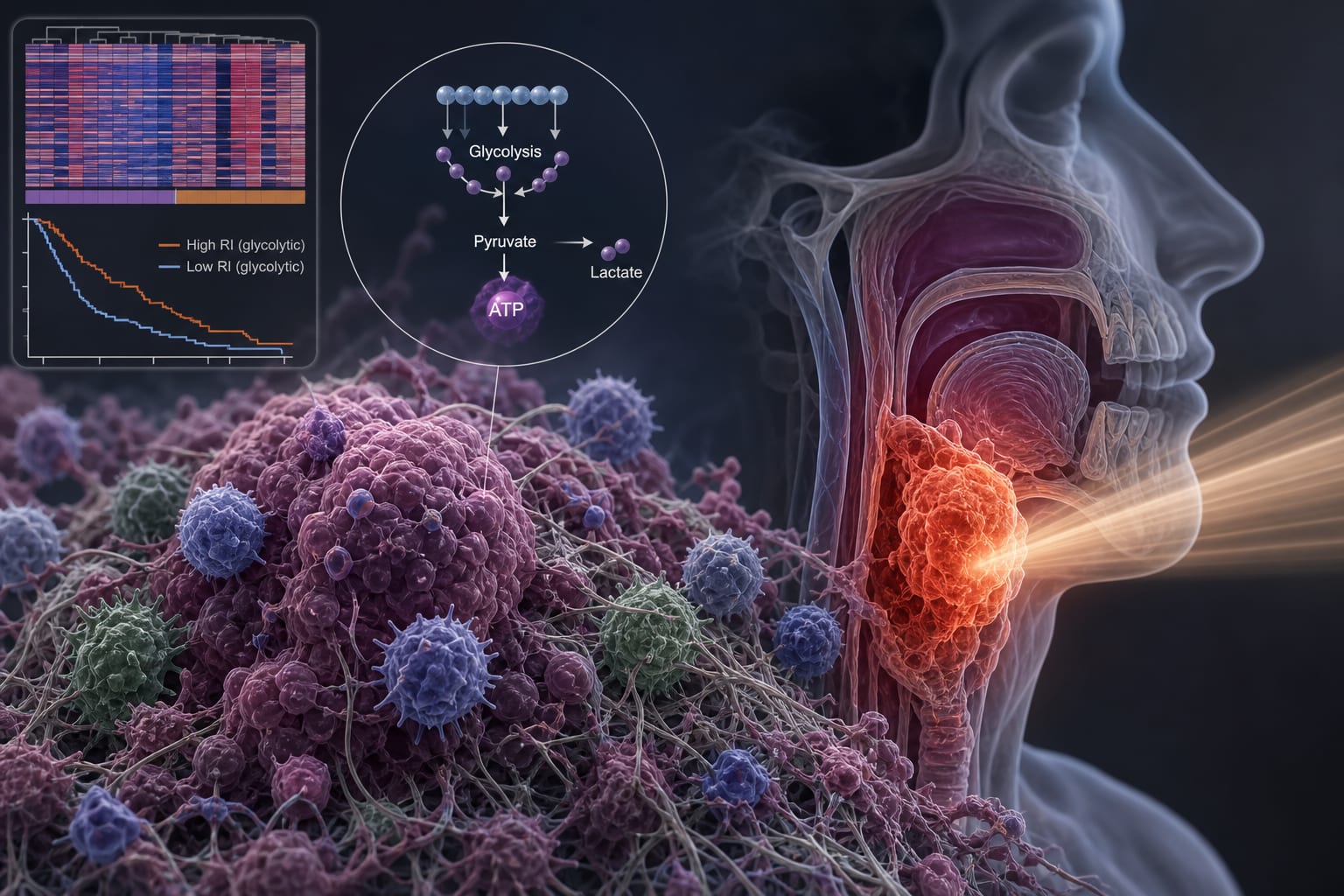
Low glycolytic activity correlates with improved overall survival post-radiotherapy. High glycolytic activity is associated with radio-resistance. A glycolysis-associated radiosensitivity index (RI) stratifies patients into responders and non-responders. RS tumors show higher immune cell infiltration and lower TIDE scores. RR tumors exhibit increased sensitivity to chemotherapy agents. Guideline-Based Recommendations
Diagnosis
Utilize glycolysis-related gene expression to assess radiotherapy sensitivity. Management
Consider glycolytic activity when planning radiotherapy and immunotherapy. Monitoring & Follow-up
Monitor glycolysis-associated biomarkers to predict treatment responses. Risks
High glycolytic activity may indicate potential radio-resistance. Patient & Prescribing Data
491 patients with primary HNSC tumors.
Glycolysis activity can guide personalized treatment strategies.
Clinical Best Practices
Incorporate glycolysis-associated biomarkers in treatment planning. Evaluate immune microenvironment profiles alongside glycolytic activity. Related Resources & Content