Clinical Scorecard: Evaluation of the Left Atrioventricular Coupling Index via Echocardiography: Methodological Techniques and Strategies for Clinical Application
At a Glance
Category
Detail
Condition
Left Atrioventricular Coupling Index (LACI)
Key Mechanisms
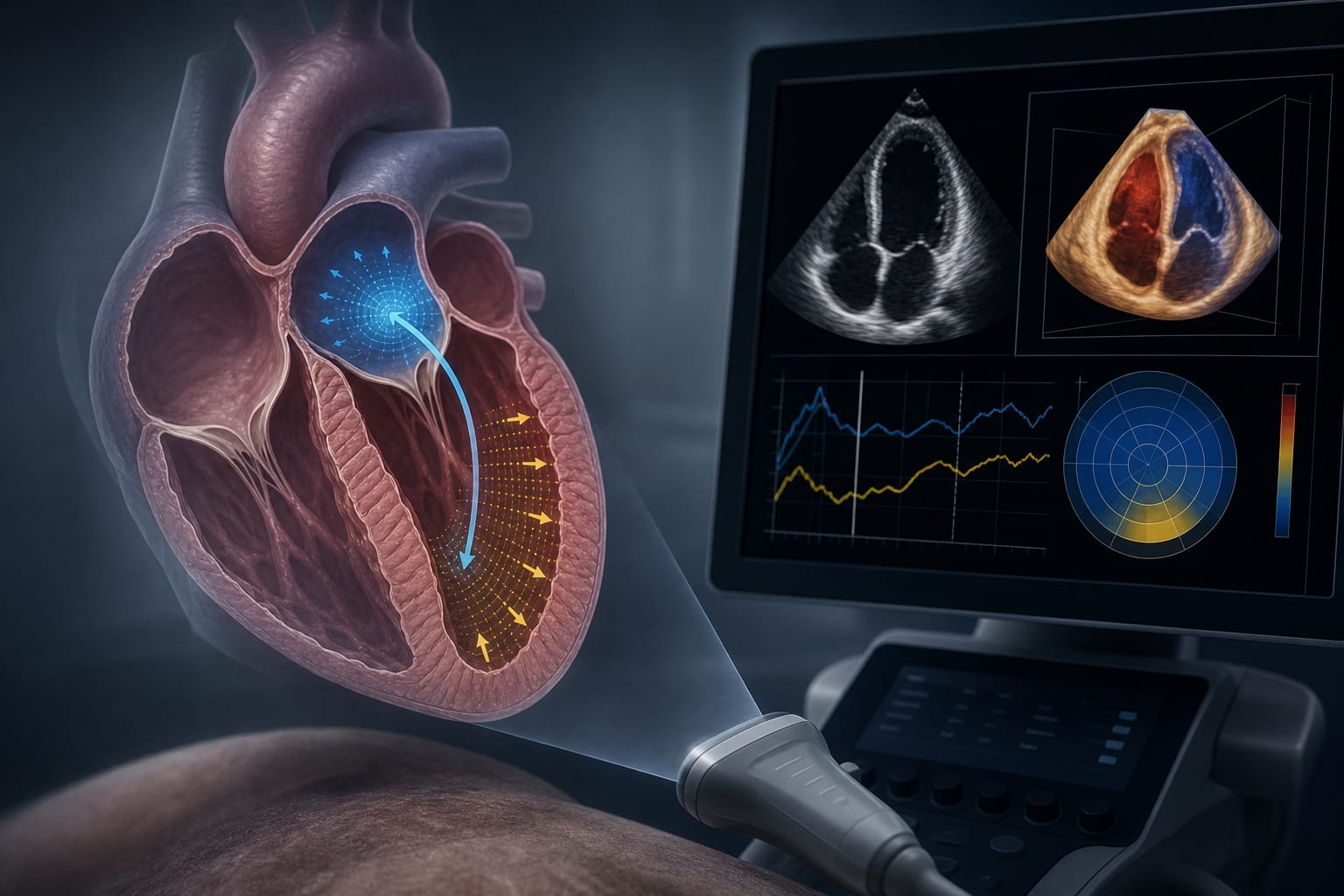
Ratio of left atrial end-diastolic volume to left ventricular end-diastolic volume reflecting diastolic function.
Target Population
Patients with heart failure with preserved ejection fraction (HFpEF).
Care Setting
Echocardiography departments.
Key Highlights
LACI serves as a sensitive indicator of left ventricular compliance and left atrial load.
Two-dimensional echocardiography is optimal for screening; RT-3DE shows highest diagnostic consistency.
LACI abnormalities can precede left ventricular ejection fraction decline.
Standardization challenges include absent cross-platform calibration and fragmented reference values.
AI-assisted analysis shows potential but requires multicenter validation.
Guideline-Based Recommendations
Diagnosis
Utilize LACI for assessing diastolic function in patients with HFpEF.
Management
Focus on establishing standardized measurement protocols for LACI.
Monitoring & Follow-up
Implement quality control measures for LACI assessment in echocardiography.
Risks
Technical heterogeneity and inconsistent thresholds may hinder clinical application.
Patient & Prescribing Data
Adults with suspected diastolic dysfunction.
LACI may guide treatment decisions based on diastolic function assessment.
Clinical Best Practices
Adopt a phased approach for transitioning LACI from research to routine clinical use.
Encourage cross-manufacturer standardization of LACI measurement techniques.
Establish population-specific reference values for LACI.