Editorial: Advancements in Biomarkers and Their Role in Forecasting and Personalizing Treatment for Inflammatory Bowel Diseases
-
By
-
Arianna Dal Buono
-
Olga Maria Nardone
-
Rocio Ferreiro-Iglesias
-
June 17, 2026
Clinical Scorecard: Advancements in Biomarkers and Their Role in Forecasting and Personalizing Treatment for Inflammatory Bowel Diseases
At a Glance
| Category | Detail |
|---|
| Condition | Inflammatory Bowel Diseases (IBD) |
| Key Mechanisms | Emerging biomarkers, multi-omic approaches, AI-driven strategies |
| Target Population | Patients with IBD |
| Care Setting | Clinical and research settings |
Key Highlights
- Need for reliable biomarkers for diagnosis and prognosis in IBD
- Potential of non-invasive biomarkers for earlier diagnosis and risk stratification
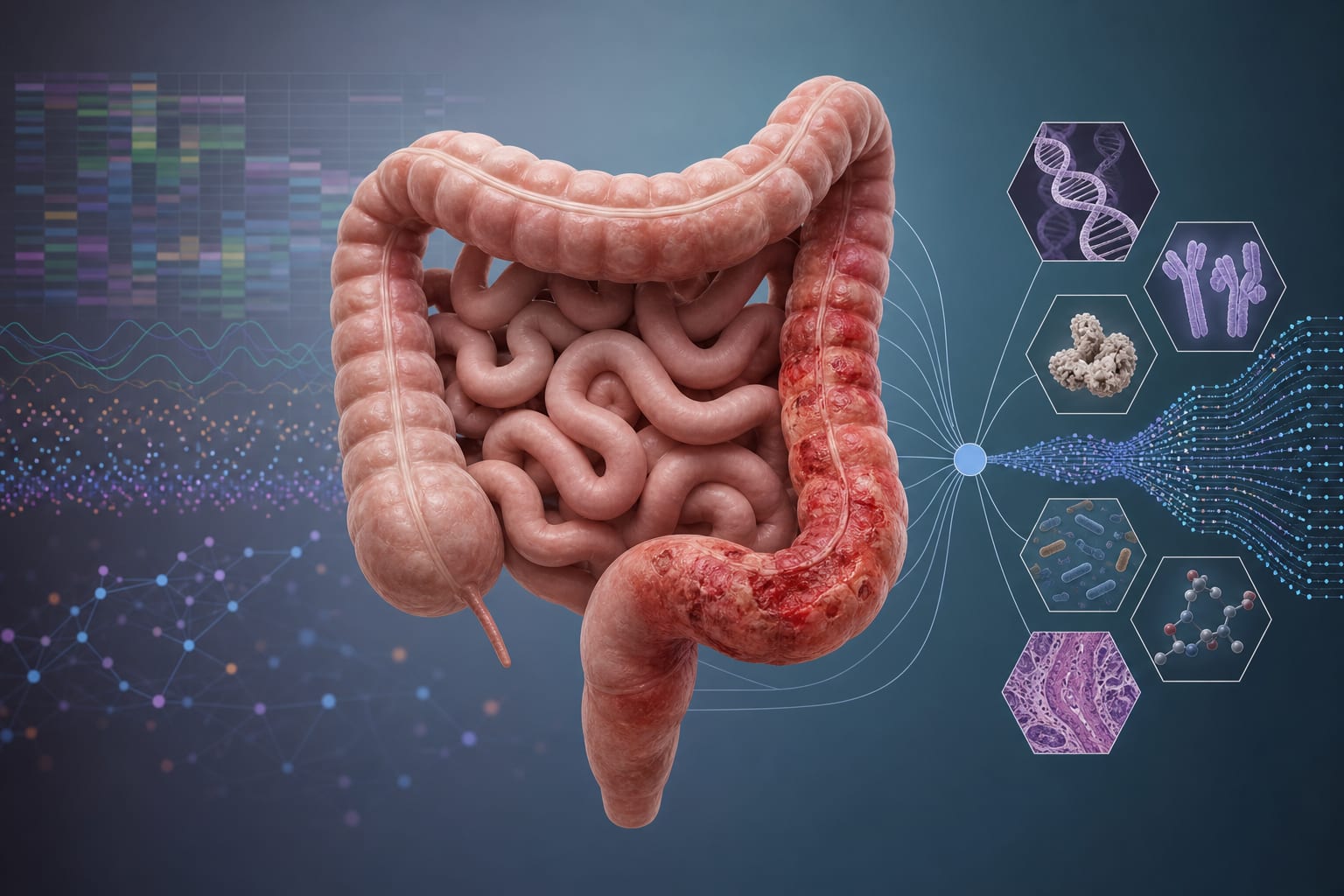
- Integration of multi-omics and AI to improve disease stratification and treatment personalization
- Shift from reactive management to predictive and biologically informed strategies
- Importance of validating and standardizing biomarker approaches before routine implementation
Guideline-Based Recommendations
Diagnosis
- Use of antibodies targeting integrin αvβ6 for ulcerative colitis diagnosis
- Evaluation of triglyceride-glucose index for IBD risk assessment
Management
- Application of multi-omic analyses to optimize biologic selection
- Monitoring biomarker dynamics during treatment transitions
Monitoring & Follow-up
- Utilization of peripheral inflammatory markers for prognosis in Crohn’s disease and ulcerative colitis
Risks
- Identification of patients at risk for complicated disease phenotypes using baseline stool TIMP-2 levels
Patient & Prescribing Data
Individuals diagnosed with IBD
Biomarkers may guide personalized treatment strategies and improve therapeutic response prediction
Clinical Best Practices
- Incorporate multi-dimensional biomarker models for disease monitoring
- Utilize AI-driven models for complex biomarker dataset interpretation
- Focus on biologically informed tools for earlier intervention
Related Resources & Content