RHOA at the intersection of inflammation-driven and sporadic colorectal cancer
-
By
-
Sofia Elena Muccioli
-
Laura Hidalgo-García
-
Phuong A Ngo
-
Markus F Neurath
-
Rocío López-Posadas
-
July 9, 2026
-
Clinical Scorecard: RHOA's Role in Inflammation-Related and Sporadic Colorectal Cancer
At a Glance
| Category | Detail |
|---|
| Condition | Colorectal Cancer (CRC) |
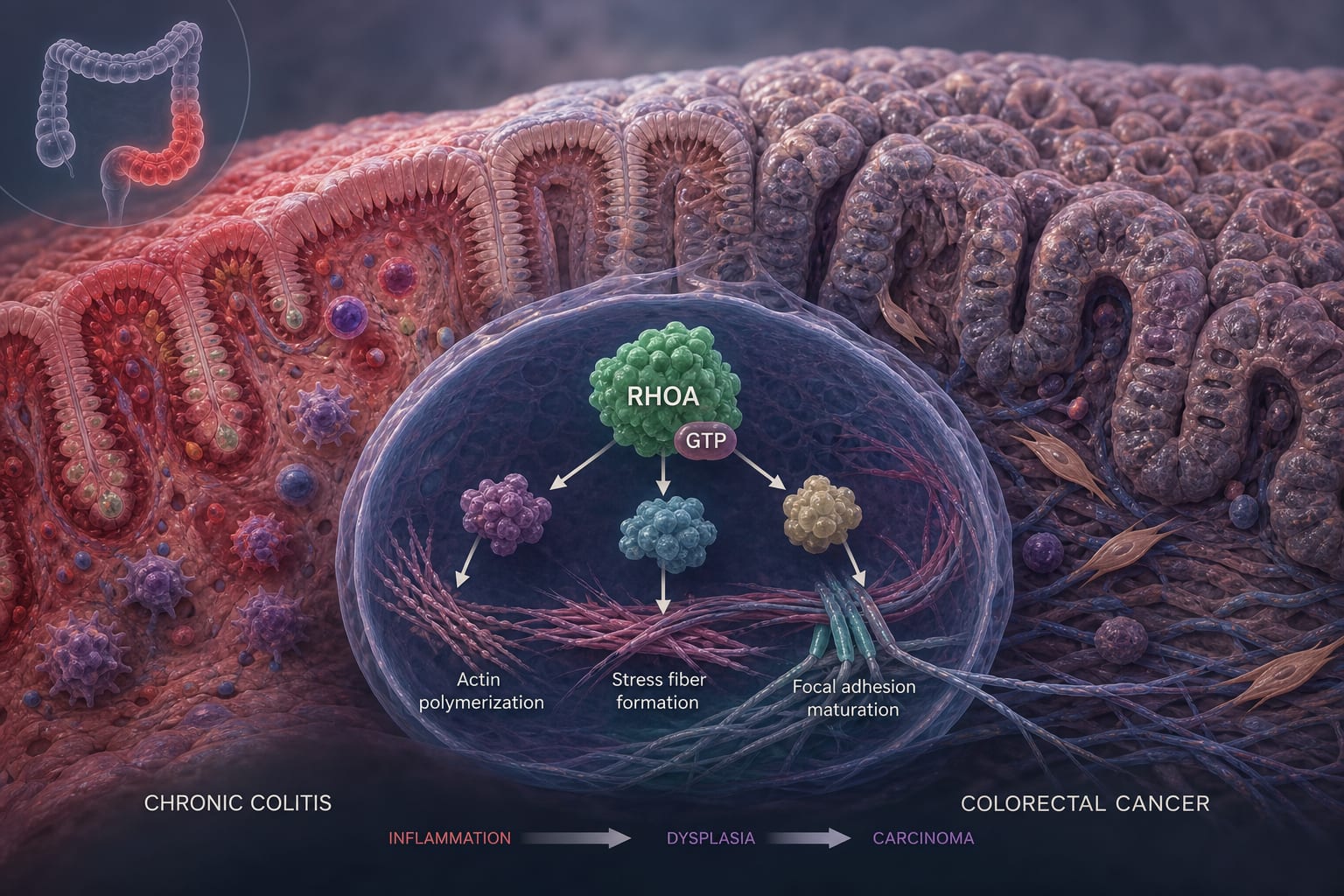
| Key Mechanisms | RHOA regulates cytoskeleton dynamics and is involved in oncogenic pathways related to CRC and colitis-associated cancer (CAC). |
| Target Population | Patients with colorectal cancer, particularly those under 50 and those with inflammatory bowel diseases (IBDs). |
| Care Setting | Oncology and gastroenterology clinics. |
Key Highlights
- Colorectal cancer accounts for approximately 10% of all malignant tumors and is the second leading cause of cancer-related death.
- Colitis-associated cancer (CAC) arises from chronic inflammation and has a worse prognosis compared to sporadic CRC.
- RHOA's role in cancer is controversial, acting as both a tumor promoter and suppressor depending on context.
- Distinct genetic features exist between sporadic CRC and CAC, with implications for treatment and prognosis.
- Therapeutic targeting of RHOA and related proteins may offer new opportunities for CRC management.
Guideline-Based Recommendations
Diagnosis
- Clinical symptoms of CRC include changes in bowel habits, rectal bleeding, abdominal pain, weight loss, fatigue, iron deficiency, and anemia.
Management
- Consider molecular subtyping for patient stratification and treatment interventions.
Monitoring & Follow-up
- Monitor for specific genetic mutations associated with CRC and CAC for tailored therapeutic approaches.
Risks
- Increased risk of CRC in patients with inflammatory bowel diseases compared to the general population.
Patient & Prescribing Data
Patients diagnosed with colorectal cancer, particularly those with inflammatory bowel diseases.
Understanding RHOA's function may help identify limitations in developing novel therapeutic targets.
Clinical Best Practices
- Utilize whole-exome sequencing to identify genetic alterations in CRC and CAC.
- Focus on the inflammatory context when assessing RHOA's role in tumor development.
Related Resources & Content