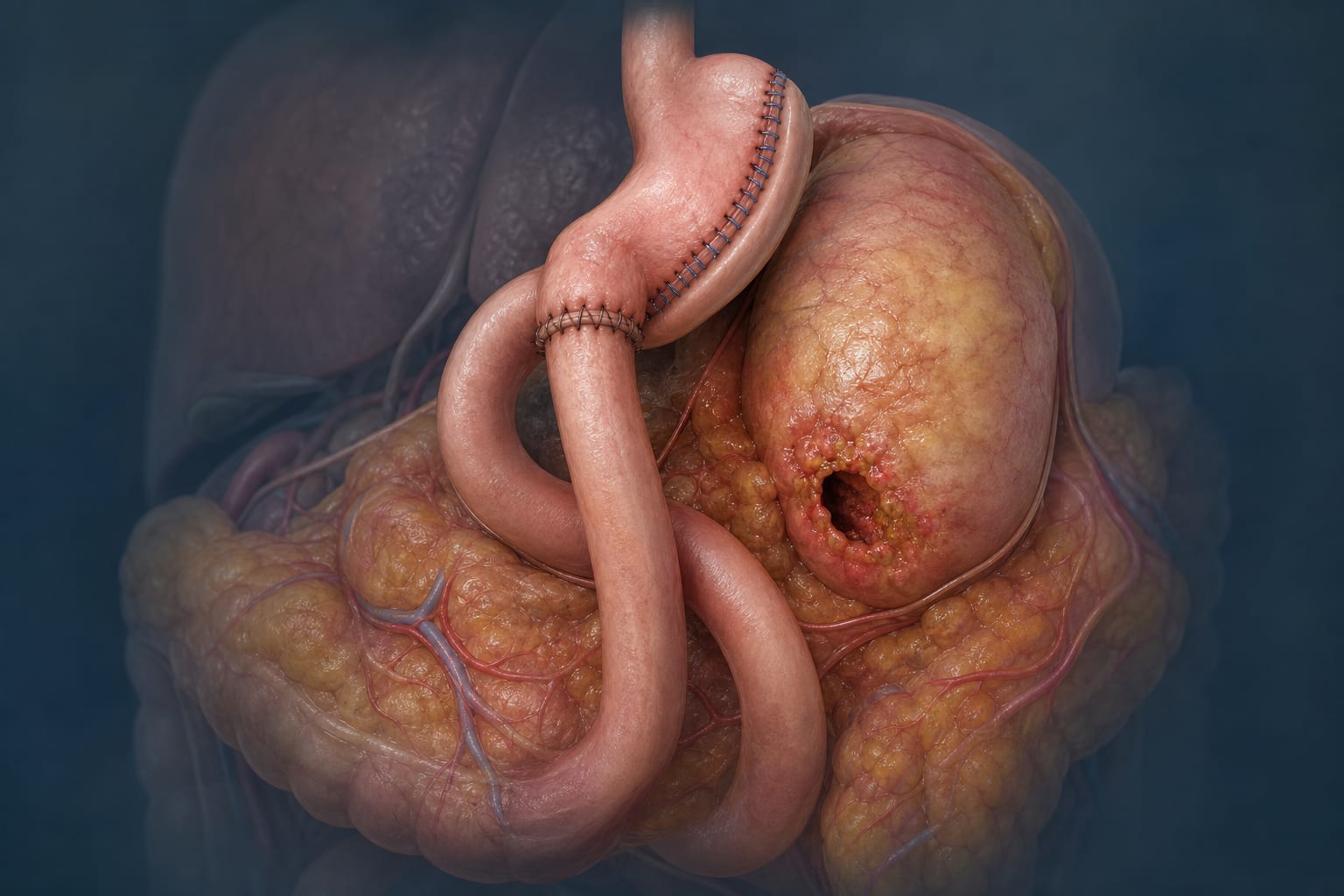
Clinical Scorecard: Association of Vitamin D Levels and Parathyroid Hormone Post Roux-en-Y Gastric Bypass: Findings from a Five-Year Longitudinal Study
At a Glance
Category
Detail
Condition
Secondary hyperparathyroidism (SHPT) and vitamin D deficiency after Roux-en-Y gastric bypass (RYGB)
Key Mechanisms
Altered gastrointestinal anatomy affects calcium and vitamin D absorption, influencing parathyroid hormone (PTH) regulation and bone metabolism
Target Population
Patients with morbid obesity undergoing RYGB surgery
Care Setting
Postoperative follow-up in specialized obesity surgery clinics
Key Highlights
PTH frequently elevates after RYGB and tends to increase over time, potentially impacting bone mineral density.
Vitamin D deficiency (S-25(OH)D < 50 nmol/l) is common postoperatively despite supplementation, with SHPT remaining prevalent.
Optimal vitamin D levels post-RYGB may need to be higher than in nonsurgical populations to reduce SHPT prevalence.
Guideline-Based Recommendations
Diagnosis
Define SHPT as PTH > 7.0 pmol/l with normal or low ionized calcium (≤ 1.35 mmol/l).
Assess serum 25-hydroxyvitamin D (S-25(OH)D) levels, grouping into <50, 50–74, 75–99, and ≥100 nmol/l categories.
Regularly monitor PTH, S-25(OH)D, and ionized calcium during postoperative follow-up.
Management
Recommend daily supplementation with calcium carbonate (≥ 1000 mg) and vitamin D (≥ 600 IU), adjusting doses to maintain S-25(OH)D ≥ 50 nmol/l or ≥ 75 nmol/l in SHPT cases.
Use multivitamins containing cholecalciferol (200 IU) and combination tablets with calcium carbonate 500 mg and cholecalciferol 400 IU.
Supplement with oral iron and intramuscular vitamin B12 as part of the regimen.
Monitoring & Follow-up
Conduct follow-up visits at 6 weeks, 6 months, 1 year, 2 years, 3–4 years, and 5 years postoperatively.
Measure PTH, S-25(OH)D, ionized calcium, and bone-specific alkaline phosphatase (B-ALP) to assess bone turnover.
Adjust supplementation based on blood values to prevent SHPT and maintain bone health.
Risks
Persistent SHPT may lead to increased bone turnover and decreased bone mineral density.
Vitamin D insufficiency or deficiency post-RYGB can exacerbate SHPT despite supplementation.
Noncompliance with supplementation increases risk of nutritional deficiencies and related complications.
Patient & Prescribing Data
Morbidly obese patients undergoing RYGB surgery with high follow-up adherence
Calcium and vitamin D supplementation is standard, but SHPT remains prevalent, indicating need for individualized dosing and monitoring to achieve optimal vitamin D thresholds.
Clinical Best Practices
Exclude patients with primary hyperparathyroidism and elevated creatinine before interpreting PTH levels.
Use consistent and standardized assays for PTH, S-25(OH)D, and ionized calcium measurements, applying necessary calibrations for method changes.
Define compliance as intake of calcium ≥ 500 mg and vitamin D ≥ 600 IU at least 5 days per week.
Aim for maintaining S-25(OH)D levels ≥ 50 nmol/l in general and ≥ 75 nmol/l in patients with SHPT.
Incorporate bone turnover markers like B-ALP in long-term monitoring to assess bone health.