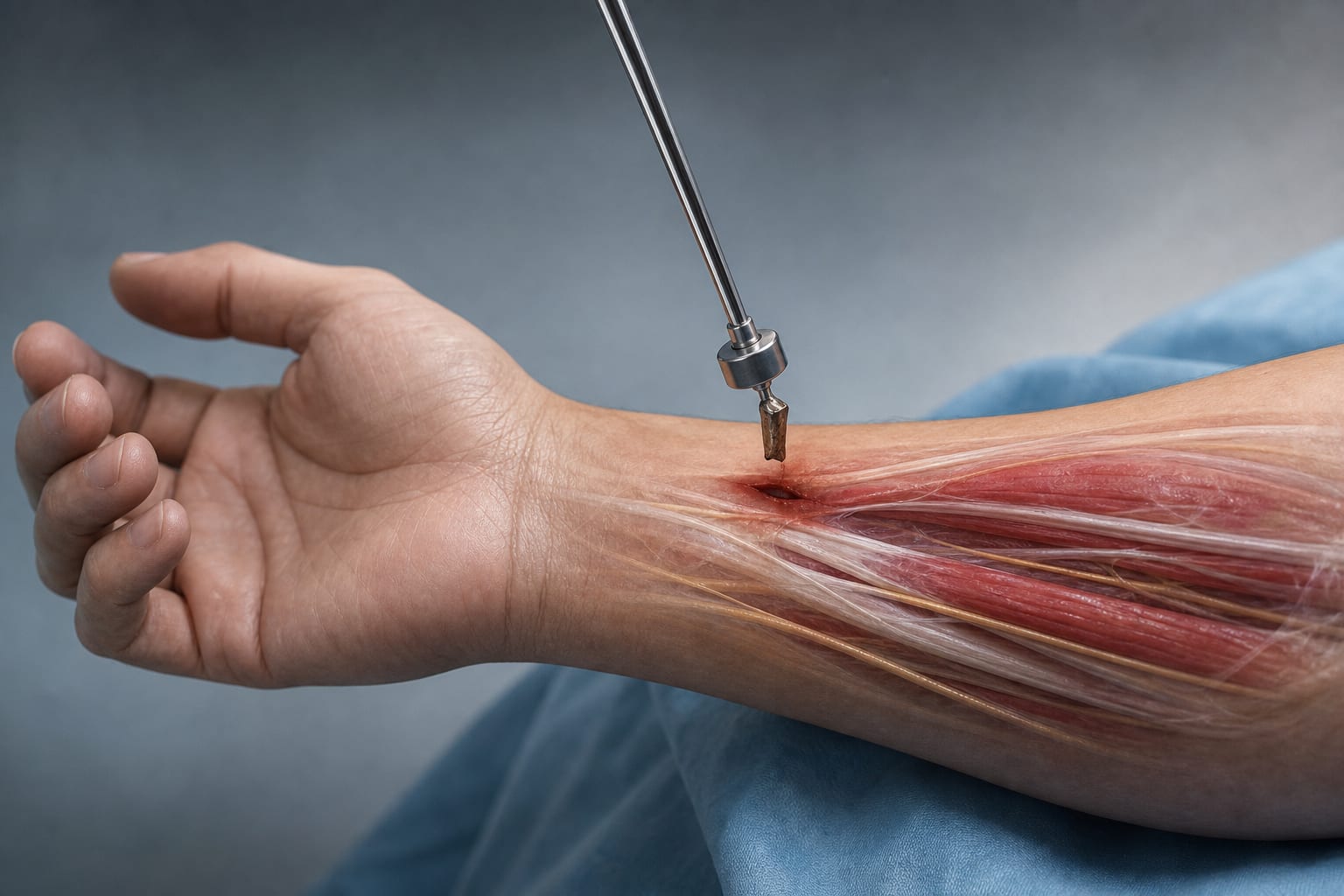
Neodymium magnet-assisted retrieval of metallic foreign bodies in the upper extremity: a descriptive surgical technique series
-
By
-
Okyar Altas
-
Kemal Zencirli
-
Kagan Cevlik
-
Dogan Kiral
-
Alperen Korucu
-
Alperen Elibol
-
July 15, 2026
Clinical Scorecard: Utilization of Neodymium Magnets for the Extraction of Metallic Foreign Bodies in the Upper Limb: A Series of Surgical Techniques
At a Glance
| Category | Detail |
|---|
| Condition | Retained metallic foreign bodies (MFBs) in the upper extremity |
| Key Mechanisms | Neodymium magnets assist in the retrieval of ferromagnetic MFBs through minimal incisions, reducing the need for extensive dissection. |
| Target Population | Patients with radiographically confirmed ferromagnetic MFBs in the upper extremity |
| Care Setting | Dedicated hand surgery practice |
Key Highlights
- 100% procedural success rate in 15 cases
- Mean operative duration of 3.13 minutes
- Low fluoroscopy utilization with an average of 0.88 images per case
- 80% of patients underwent superficial mini-incisions
- Uncomplicated short-term wound healing in all patients
Guideline-Based Recommendations
Diagnosis
- Radiographic confirmation of MFB in the upper extremity
Management
- Utilization of neodymium magnets for retrieval of ferromagnetic MFBs
Monitoring & Follow-up
- Assessment of wound healing and potential complications post-procedure
Risks
- Potential for chronic pain, wound infection, and neurovascular injury during retrieval
Patient & Prescribing Data
15 consecutive patients with upper extremity MFBs
Neodymium magnet-assisted retrieval is a feasible technique with low complication rates.
Clinical Best Practices
- Employ neodymium magnets for minimally invasive retrieval of ferromagnetic MFBs
- Utilize imaging to confirm MFB location prior to surgery
- Consider superficial mini-incisions to minimize tissue trauma
Related Resources & Content