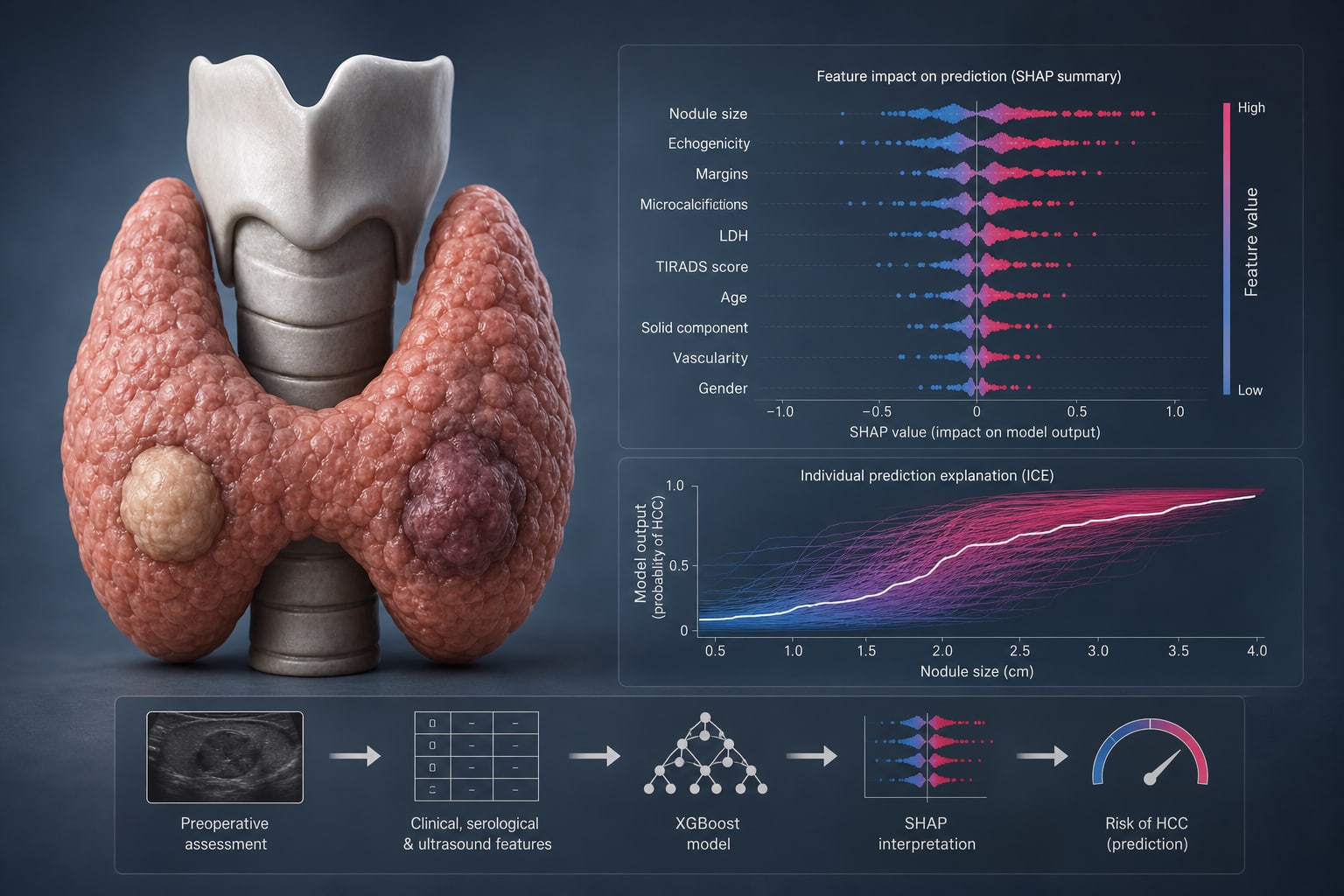
Clinical Scorecard: Interpretable Machine Learning Techniques for Preoperative Distinction Between Hürthle Cell Carcinoma and Adenoma: A SHAP-Enhanced Methodology
At a Glance
Category
Detail
Condition
Hürthle cell neoplasms
Key Mechanisms
Machine learning algorithms, specifically XGBoost, utilizing clinical, serological, and ultrasonographic variables for diagnosis.
Target Population
Patients with Hürthle cell adenoma (HCA) or Hürthle cell carcinoma (HCC).
Care Setting
Clinical decision support systems in preoperative assessment.
Key Highlights
XGBoost model achieved an AUC of 0.911, outperforming logistic regression.
SHAP analysis identified key predictors for malignancy: vascularity grade, absent halo sign, and elevated serum thyroglobulin.
The model enhances diagnostic accuracy and assists in clinical decision-making.
Guideline-Based Recommendations
Diagnosis
Utilize machine learning models for preoperative differentiation between HCA and HCC.
Management
Implement SHAP-enhanced models to guide surgical decision-making.
Monitoring & Follow-up
Regularly evaluate model performance and update based on new data.
Risks
Consider potential complications from unnecessary thyroidectomies.
Patient & Prescribing Data
554 patients with confirmed Hürthle cell neoplasms.
Machine learning models can reduce unnecessary surgeries by improving diagnostic accuracy.
Clinical Best Practices
Incorporate advanced machine learning techniques in clinical settings for thyroid neoplasm diagnosis.
Utilize interpretable models to enhance clinician understanding of diagnostic predictions.