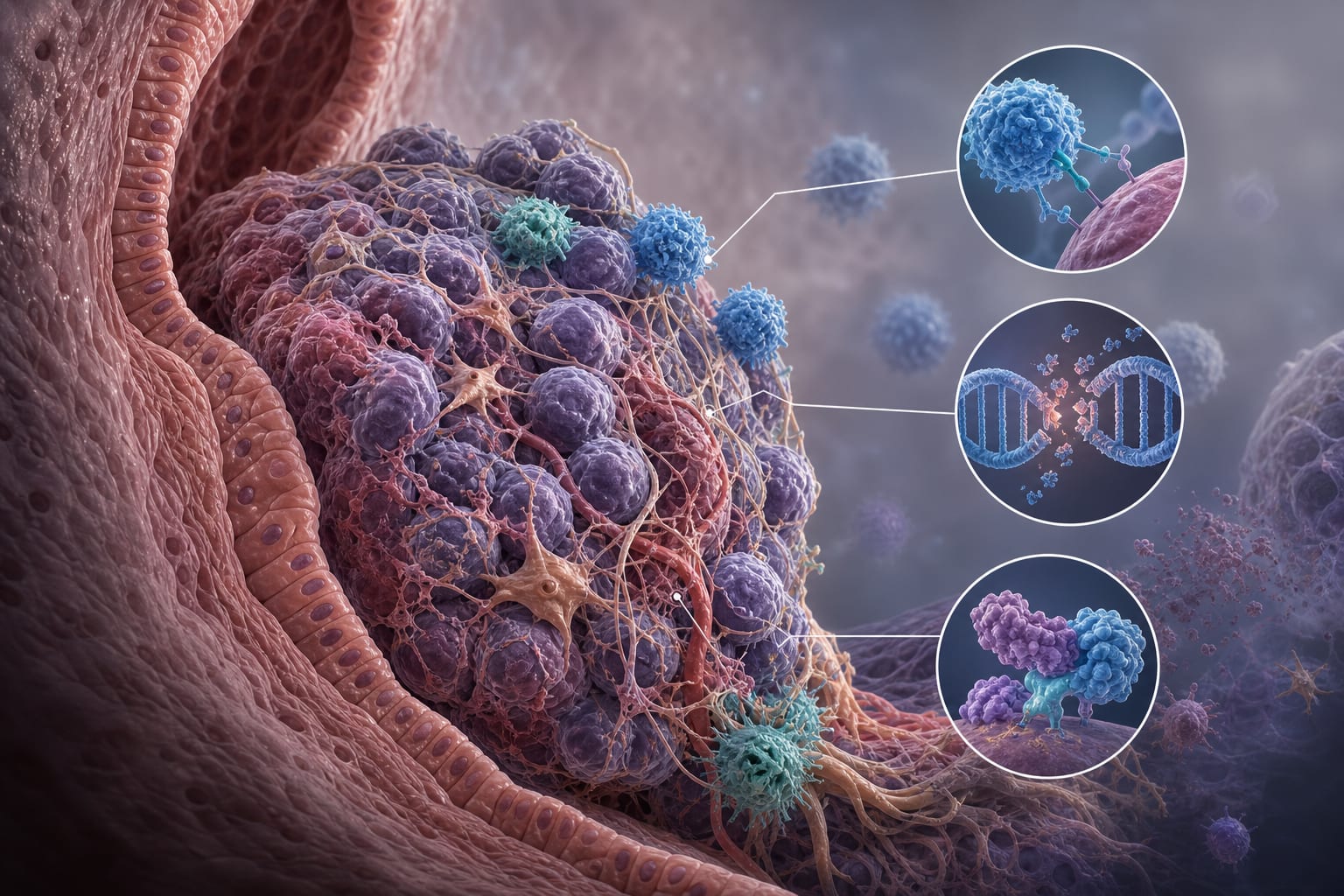
Clinical Scorecard: A comprehensive model demonstrates the influence of ERK/p38-mediated dormancy on tumor-immune interactions and the outcomes of immunoediting
At a Glance
Category
Detail
Condition
Cancer cell dormancy
Key Mechanisms
ERK and p38 signaling pathways
Target Population
Cancer patients experiencing immune evasion and dormancy
Care Setting
Oncology and immunotherapy
Key Highlights
Tumor dormancy is a heterogeneous phenotype influenced by ERK/p38 signaling.
Increased p38 activation promotes immune evasion under immune pressure.
p38 inhibition enhances tumor sensitivity to immune-mediated killing.
The model predicts tumor-immune dynamics regimes: elimination, equilibrium, and escape.
Phenotypic plasticity is crucial for understanding immunoediting.
Guideline-Based Recommendations
Diagnosis
Assess tumor phenotypes for immune susceptibility.
Management
Consider targeting ERK/p38 signaling pathways in treatment strategies.
Monitoring & Follow-up
Monitor changes in tumor phenotype in response to therapy.
Risks
Increased p38 activity may lead to immune evasion.
Patient & Prescribing Data
Patients with tumors exhibiting dormancy and immune escape.
Therapies should consider the dynamic nature of tumor dormancy.
Clinical Best Practices
Utilize phenotype-structured models to understand tumor-immune interactions.
Incorporate signaling pathway analysis in treatment planning.