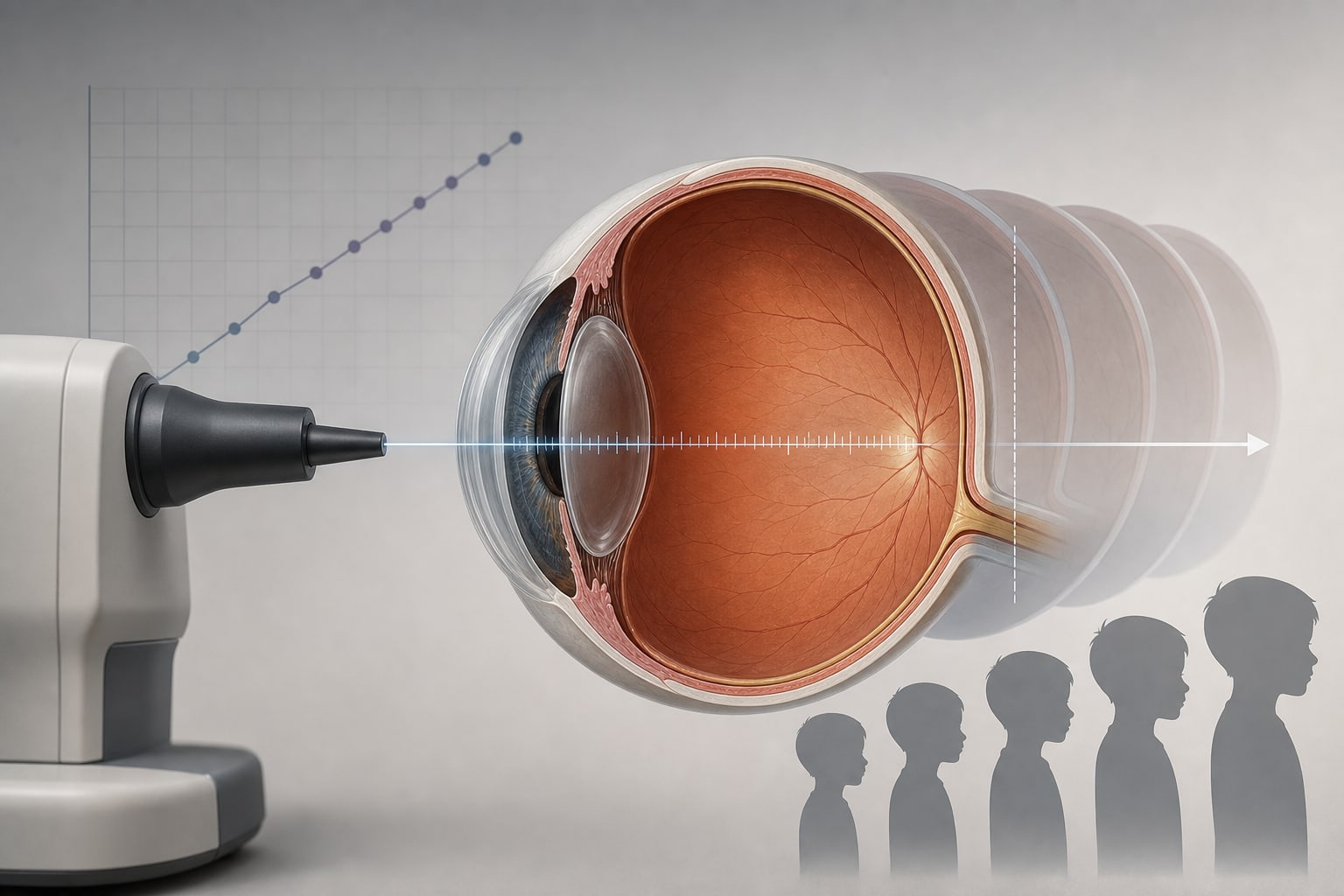
Contact Lenses as Optical Interventions for Myopia Management
The latest in our myopia series from The European Myopia Network
-
By
-
Sotiris Plainis
-
Beata Tapaszto
-
Andrzej Grzybowski
-
September 8, 2026
-
Clinical Scorecard: Contact Lenses as Optical Interventions for Myopia Management
At a Glance
| Category | Detail |
|---|
| Condition | Myopia Management |
| Key Mechanisms | Modification of the optical environment to slow excessive axial elongation through retinal image quality alteration. |
| Target Population | Pediatric patients with myopia. |
| Care Setting | Pediatric eye care. |
Key Highlights
- Modern contact lenses aim to slow axial elongation, not just correct refractive error.
- Orthokeratology reshapes the cornea to achieve clear vision and reduce axial elongation.
- Soft myopia-control lenses employ diverse optical strategies to influence retinal image quality.
- Choroidal thickness may serve as an early biomarker of treatment response.
- Clinical performance varies by lens design and individual eye characteristics.
Guideline-Based Recommendations
Diagnosis
- Evaluate refractive error and ocular growth patterns in pediatric patients.
Management
- Consider optical interventions like orthokeratology and soft myopia-control lenses for myopia management.
Monitoring & Follow-up
- Regular follow-up to assess lens fitting, centration, and treatment effects.
Risks
- Inter-individual variability in treatment efficacy and potential for different outcomes based on lens design.
Patient & Prescribing Data
Children with myopia.
Orthokeratology can slow axial elongation by 40-60%, while soft lenses can reduce it by 30-60%.
Clinical Best Practices
- Assess and customize lens fitting based on individual optical characteristics.
- Monitor choroidal thickness as a potential biomarker for treatment response.
- Evaluate the optical treatment profile beyond conventional fitting parameters.
Related Resources & Content