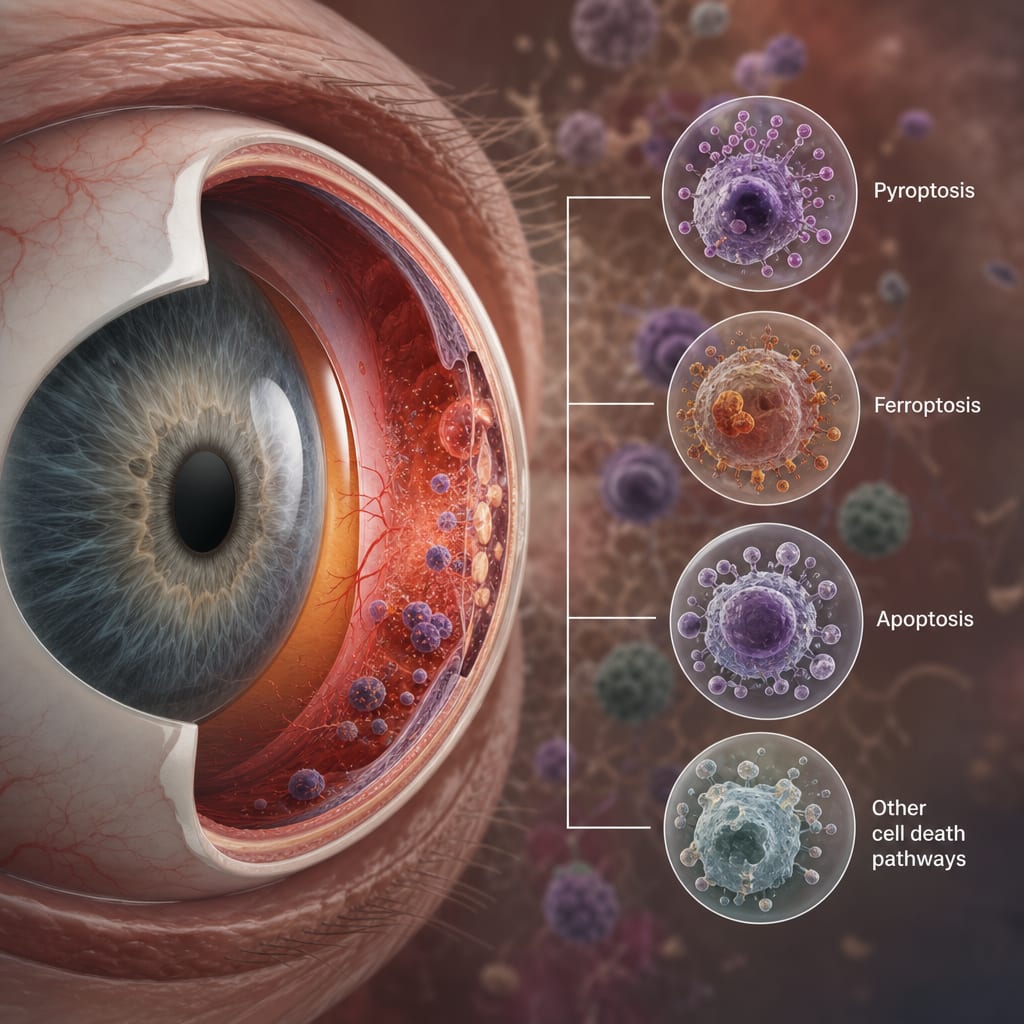
Mechanisms of Cell Death in Uveitis: Exploring Pyroptosis, Ferroptosis, Apoptosis, and More
By
Jianxin Liu
Liming Mao
Guoqing Chen
Liang Zou
Yi Shi
Lingxi Jiang
Jiayu Meng
May 5, 2026
Clinical Scorecard: Mechanisms of Cell Death in Uveitis: Exploring Pyroptosis, Ferroptosis, Apoptosis, and More
At a Glance
Category Detail
Condition Key Mechanisms Involves pyroptosis, ferroptosis, apoptosis, NETosis, autophagic cell death, and necroptosis, each contributing uniquely to uveitis pathology. Target Population Care Setting
Key Highlights
Cell death mechanisms play critical roles in uveitis pathogenesis. Pyroptosis and necroptosis contribute to inflammation and tissue damage. Therapeutic strategies targeting cell death pathways show promise for uveitis management. Elevated IL-1β levels correlate with uveitis disease activity. Research into cell death mechanisms aids in biomarker development. Understanding the interplay between different cell death mechanisms is crucial. Guideline-Based Recommendations
Diagnosis
Evaluate clinical history and symptoms of intraocular inflammation. Consider laboratory tests such as PCR and serology to identify infectious or autoimmune causes. Management
Monitoring & Follow-up
Risks
Patient & Prescribing Data
Combination therapies targeting multiple cell death pathways, such as inhibitors of pyroptosis and apoptosis, may enhance treatment efficacy.
Clinical Best Practices
Incorporate assessment of cell death mechanisms in uveitis management. Utilize biomarkers for monitoring disease activity and treatment response. Consider personalized treatment approaches based on underlying cell death pathways. Encourage interdisciplinary collaboration for comprehensive uveitis management. Related Resources & Content