The Potential of Ambient AI Innovations in Healthcare Education: Benefits and Safeguards
By
Shirin Shafazand
Umar Bowers
Sudha Jayaraman
September 8, 2026
Clinical Scorecard: The Potential of Ambient AI Innovations in Healthcare Education: Benefits and Safeguards
At a Glance
Category Detail
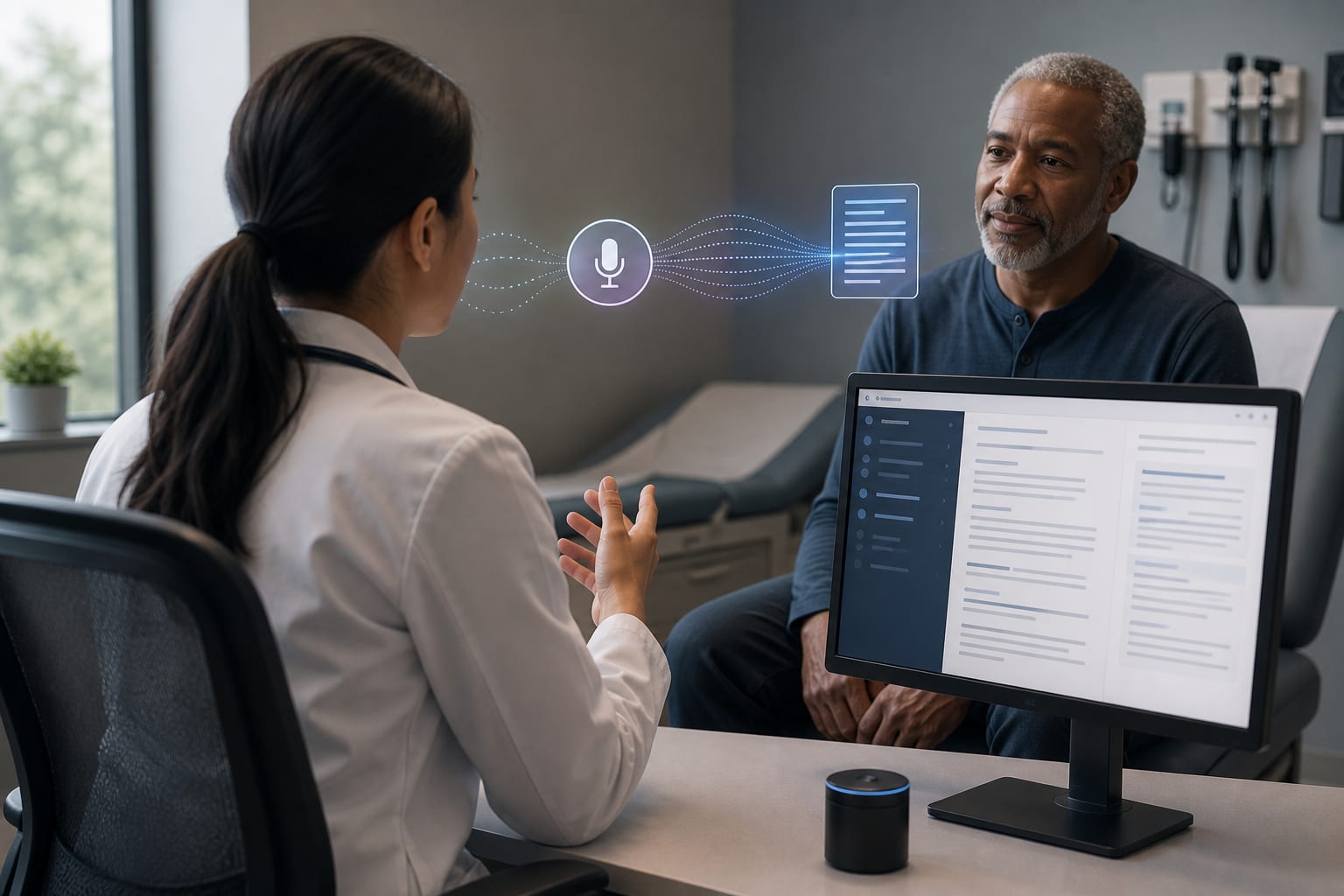
Condition Ambient AI in Clinical Care and Medical Education Key Mechanisms Recording patient-provider conversations, extracting relevant information, and organizing clinical notes. Target Population Medical trainees and healthcare providers. Care Setting Clinical workflows and medical education environments.
Key Highlights
Ambient AI reduces administrative burden and provider burnout. Initial evaluations show improved provider job satisfaction and patient engagement. Concerns exist regarding the accuracy and quality of AI-generated documentation. Potential educational benefits for medical trainees in developing clinical skills. Need for careful monitoring of AI integration in medical education. Guideline-Based Recommendations
Diagnosis
Management
Deployment of ambient AI should follow a guided process grounded in implementation science. Monitoring & Follow-up
Monitor the effects of ambient AI on clinical documentation and reasoning skills in medical education. Risks
Consider the safety and health consequences of omission and commission errors in AI documentation. Patient & Prescribing Data
Healthcare providers and medical trainees utilizing ambient AI.
Ambient AI may enhance engagement and reduce cognitive load during patient interactions.
Clinical Best Practices
Implement ambient AI tools with deliberate guardrails to mitigate risks. Encourage critical evaluation of AI-generated notes by medical trainees. Related Resources & Content
Sarraf B, Ghasempour A. Impact of artificial intelligence on electronic health record-related burnouts among healthcare professionals. Shah SJ, Crowell T, Jeong Y, et al. Physician perspectives on ambient AI scribes. Zolnoori M, Vergez S, Xu Z, et al. Evaluating automatic speech recognition system performance. Ng JJW, Wang E, Zhou X, et al. Evaluating the performance of artificial intelligence-based speech recognition. Chen JL, Tran HN, Brickner LA, et al. Integration of ambient AI scribe technology in internal medicine residency clinic.