Development and validation of a multimodal predictive model based on clinical, biochemical, and quantitative dual-energy CT parameters: for predicting the benignity and malignancy of thyroid nodules - Scorecard - MDSpire
Advertisement
Development and validation of a multimodal predictive model based on clinical, biochemical, and quantitative dual-energy CT parameters: for predicting the benignity and malignancy of thyroid nodules
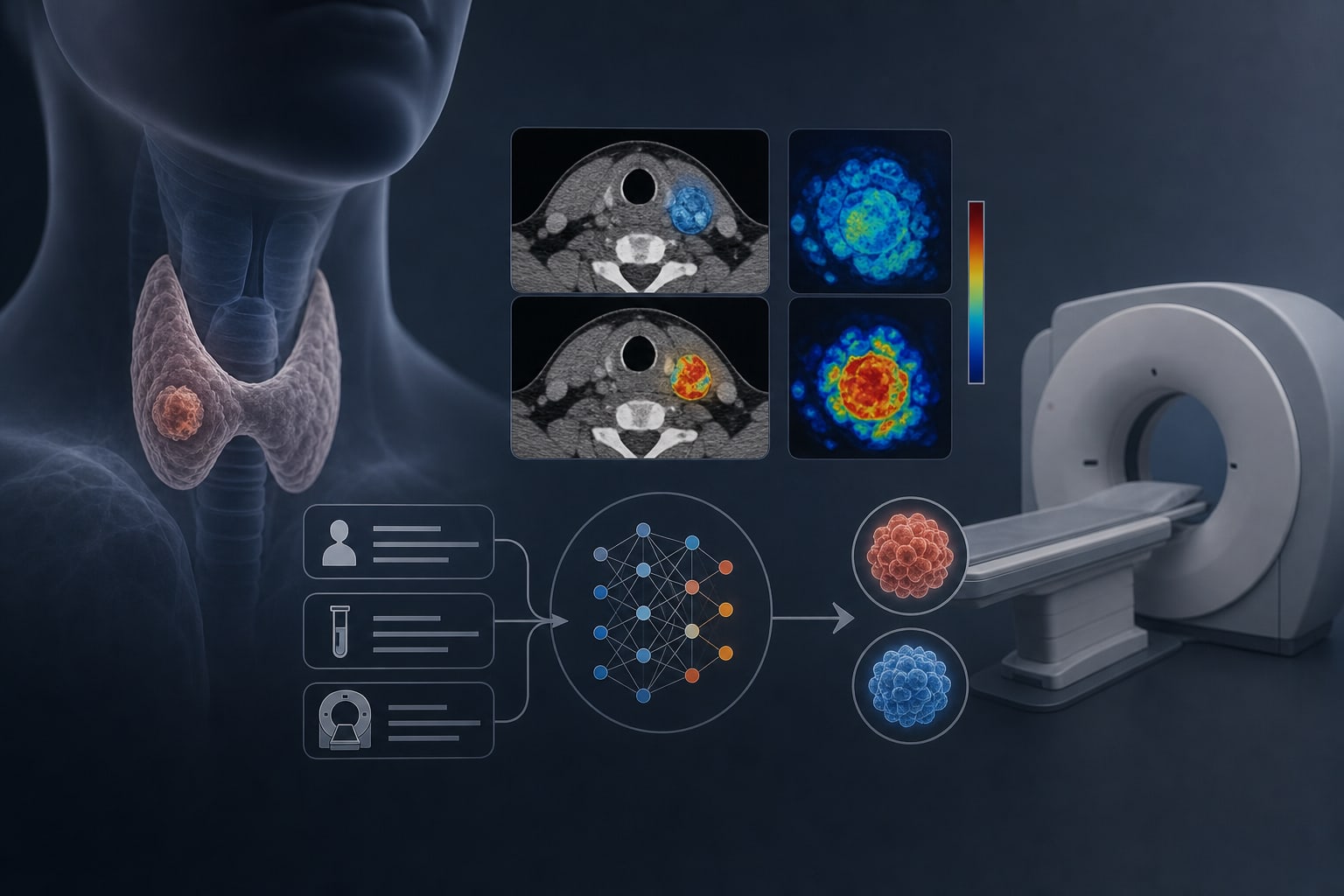
Clinical Scorecard: Creation and assessment of a comprehensive predictive model utilizing clinical data, biochemical indicators, and quantitative dual-energy CT metrics for distinguishing between benign and malignant thyroid nodules
At a Glance
Category
Detail
Condition
Thyroid Nodules
Key Mechanisms
Integration of clinical characteristics, biochemical markers, and quantitative dual-energy CT parameters.
Target Population
Patients with thyroid nodules
Care Setting
Clinical assessment and preoperative evaluation
Key Highlights
Developed a predictive model using clinical, biochemical, and DECT data.
Model demonstrated good discriminative performance with AUC of 0.866 in training cohort.
Independent predictors of malignancy included age, TSH, and thyroid nodule volume.
Guideline-Based Recommendations
Diagnosis
Utilize fine-needle aspiration biopsy (FNAB) as the gold standard for evaluation.
Management
Implement multimodal predictive models to improve risk stratification.
Monitoring & Follow-up
Identify low-risk nodules suitable for monitoring and those requiring closer evaluation.
Risks
Indeterminate FNAB results may necessitate surgical resection for definitive diagnosis.
Patient & Prescribing Data
172 patients with thyroid nodules (87 malignant, 85 benign).
Integration of clinical and biochemical information is crucial for accurate preoperative differentiation.
Clinical Best Practices
Incorporate advanced imaging techniques in the assessment of thyroid nodules.
Utilize quantitative parameters from DECT for better characterization of nodules.