Environmental and family correlates of daily TV-watching time in children with autism spectrum disorder and typically developing children - Scorecard - MDSpire
Conexiant’s news site is now MDSpire News. Learn more
Advertisement
Influence of Environmental and Familial Factors on Daily Television Viewing in Children with Autism Spectrum Disorder Compared to Typically Developing Peers
Clinical Scorecard: Influence of Environmental and Familial Factors on Daily Television Viewing in Children with Autism Spectrum Disorder Compared to Typically Developing Peers
At a Glance
Category
Detail
Condition
Autism Spectrum Disorder (ASD)
Key Mechanisms
Environmental and familial factors influencing daily television watching time.
Target Population
Children aged 3 to 6 years with ASD and typically developing peers.
Care Setting
Pediatric care and family engagement contexts.
Key Highlights
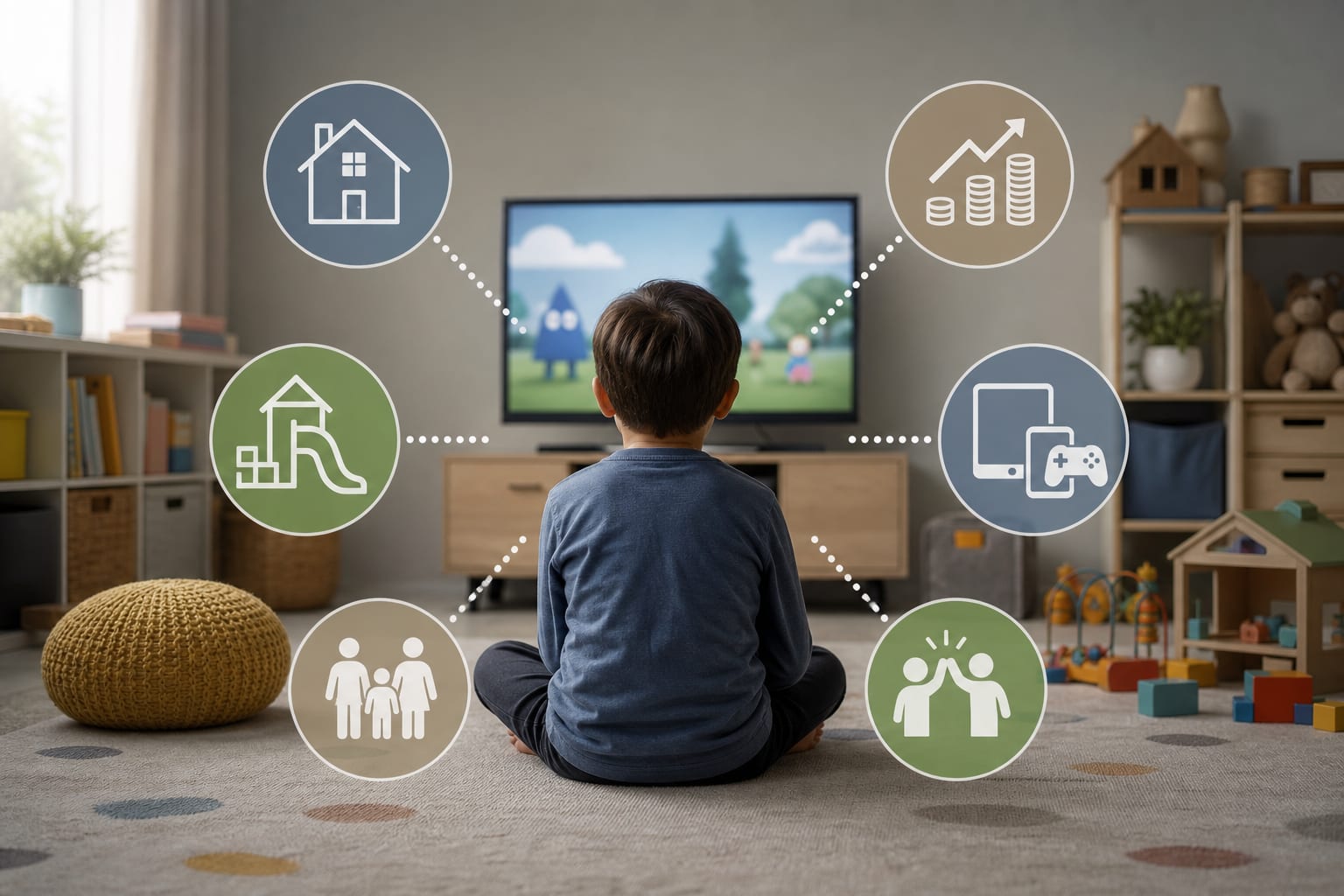
Lower socioeconomic status and absence of indoor play spaces are associated with increased TV watching time.
Higher family interaction time during holidays reduces TV watching time in children with ASD.
Daily electronic device usage significantly predicts longer TV watching time across groups.
Children with ASD watched slightly less TV daily than typically developing children.
Emphasizes the protective role of family engagement against excessive screen time.
Guideline-Based Recommendations
Diagnosis
Consider developmental status when assessing screen time behaviors.
Management
Encourage structured family engagement to promote healthier media habits.
Monitoring & Follow-up
Monitor daily electronic device usage and indoor play space availability.
Risks
Excessive television watching time is associated with adverse cognitive, language, and social-emotional development outcomes.
Patient & Prescribing Data
Children aged 3 to 6 years with ASD and typically developing peers.
Targeted strategies to encourage healthier media habits are needed.
Clinical Best Practices
Promote family interaction during holidays to reduce screen time.
Assess environmental factors such as indoor play space availability.
In a survey of 420 Italian adults, psychological distress showed stronger associations than autistic traits with problematic internet and mobile phone use, although both were associated with higher digital-use scores.